
TRDE: Bridging the Gap in Social Network Topic Analysis through Unified Modeling
Topic Analysis Model for Online Social Network
This paper introduces TRDE (Topic Recovering Detection Evolution), a generalized framework for comprehensive topic analysis in Online Social Networks (OSNs). It integrates three critical components—Information Recovery, Topic Detection, and Topic Evolution—to address the challenges of short, fragmented, and multi-source social media data.
TL;DR
The explosion of short-form social media (Twitter, Weibo, etc.) has rendered traditional official-news-centric topic models obsolete. This paper proposes the TRDE Model, a generalized framework that unifies Information Recovery, Topic Detection, and Topic Evolution. By formalizing these three pillars into a single mathematical system, the authors provide a roadmap for handling the fragmented and noisy nature of modern digital discourse.
Problem & Motivation: The Fragmentation Crisis
Historically, Topic Detection and Tracking (TDT) relied on rich, long-form content with high logical consistency. However, Online Social Networks (OSNs) present a "fragmentation crisis":
- Short Text & Noise: Messages are brief, arbitrary, and context-dependent.
- Low Reliability: Unlike official media, user-generated content is multi-source and often contradictory.
- Isolated Solutions: Current research often tackles "detection" or "clustering" in isolation, failing to see how recovery impacts evolution.
The authors' insight is that topic analysis is not a single step but a tripartite pipeline where the quality of information recovery directly determines the accuracy of temporal tracking.
Methodology: The TRDE Framework
The core of the paper is the Topic Recovering Detection Evolution (TRDE) model. It defines a topic through a set of features and three specific transformational method sets:
1. Information Recovery ()
Before detecting a topic, the model enriches the content. It uses criterion functions to decide if a word should be expanded via a Knowledge Base (like Wikipedia) or if messages should be merged into a "session."
2. Topic Detection ()
Once the text is enriched, the model maps recovered messages into topic distributions. This accommodates both Vector Space Models (VSM) and Probabilistic Models (like LDA).
3. Topic Evolution ()
The final stage tracks how focus shifts over time slices, using similarity functions to link topics across the temporal axis.
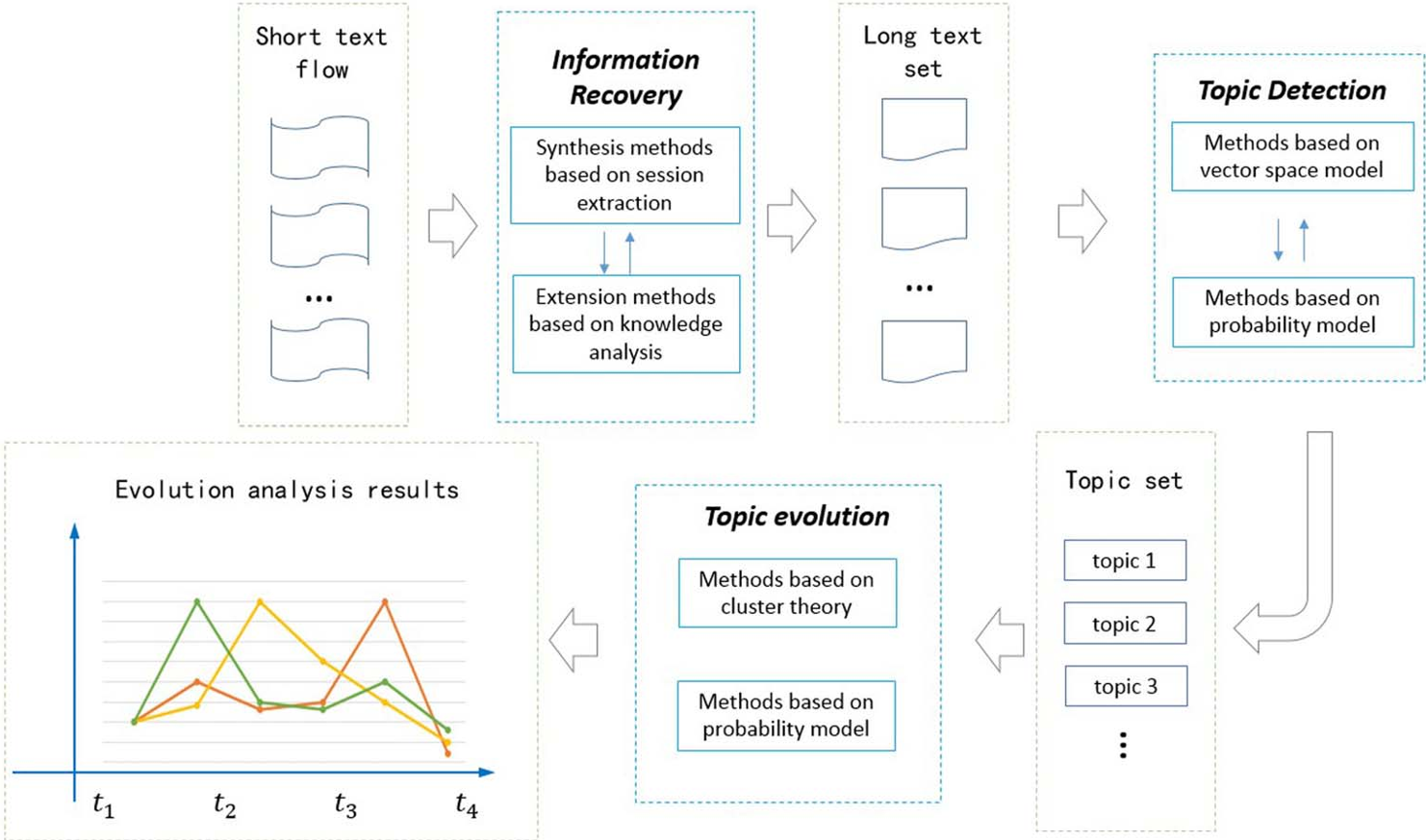 Figure 1: The holistic flow from raw information to evolutionary insights.
Classical Methods Mapping
The brilliance of TRDE lies in its generalization. The authors prove that famous algorithms are simply specific configurations of the TRDE parameters:
- LDA (Latent Dirichlet Allocation): Represented as a probability-based instantiation of the Topic Detection set ().
- DTM (Dynamic Topic Model): A time-window-based instantiation of the Topic Evolution set ().
- Wikipedia-based Expansion: A knowledge-heavy version of the Information Recovery set ().
By adjusting weight factors (), researchers can pivot the model to prioritize different features, such as user influence or temporal proximity.
Experimental Insights & Future Trends
The paper synthesizes decades of research into three critical future challenges for the field:
- Real-time Response: Moving from offline batch processing to low-latency "online" scene analysis.
- Dataset Standardization: Addressing the lack of authoritative, annotated datasets for diverse platforms like WeChat or Forums.
- Multi-source Fusion: How to maintain topic coherence when the same event is discussed across different social platforms with unique data structures.
Critical Analysis & Conclusion
Takeaway: The TRDE model is a significant step toward a "Grand Unified Theory" of social media analysis. It moves the conversation beyond "how to cluster" to "how to manage the entire lifecycle of a topic."
Limitations: While the framework is mathematically sound, the paper stays largely at the theoretical/summary level. Implementing a TRDE-based system in production would require careful tuning of the weight factors, which are often sensitive to the specific platform dynamics (e.g., the "burstiness" of Twitter vs. the "depth" of Forums).
Future Outlook: As we move into the era of LLMs, the "Information Recovery" phase of TRDE could be revolutionized by generative embedding, potentially making the reliance on static Knowledge Bases like Wikipedia obsolete.