
SocialRank: Why Your Friends' Search History is the Future of Personalized Results
Topic-Driven SocialRank: Personalized search result ranking by identifying similar, credible users in a social network
This paper introduces Topic-Driven SocialRank, a personalized search ranking algorithm that leverages social network information. By identifying similar and credible users through a combination of profile similarity, friendship distance, and prestige, the method enhances search relevance, significantly outperforming standard Google search baselines.
TL;DR
The "Topic-Driven SocialRank" algorithm moves beyond simple keyword matching and basic social connections. By calculating a user's credibility and similarity on a per-topic basis, it re-ranks search results to prioritize content validated by "experts" in your own social circle. It achieves a 14% boost in search satisfaction over traditional engines by solving the problem of query ambiguity.
The "Jaguar" Problem: Beyond Algorithms
When you search for "Jaguar," are you looking for a luxury vehicle or a predatory cat? Standard search engines rely on global popularity, often failing to capture your specific intent.
The authors argue that the missing link is the Human Element. We naturally trust information shared by people who are:
- Similar to us (Shared profile attributes).
- Credible in a specific field (Topic-based authority).
- Socially connected (Trusting a friend of a friend).
Methodology: The Anatomy of SocialRank
Unlike previous models that treat all social links equally, SocialRank uses a Maximum Entropy (MaxEnt) approach to combine four distinct signals:
- TSIM (Topic-Driven Similarity): This captures your "Temporal Interest." If you’ve been looking at travel blogs recently, your profile weights shift toward the "Travel" topic.
- FR (Friendship): Measures the distance between you and another user (Hops) and the type of link (Unidirectional vs. Reciprocal).
- PR (Prestige): Not all friends are equal. Prestige measures a user's "In-degree Centrality"—how many people look to them as a source of information.
System Architecture
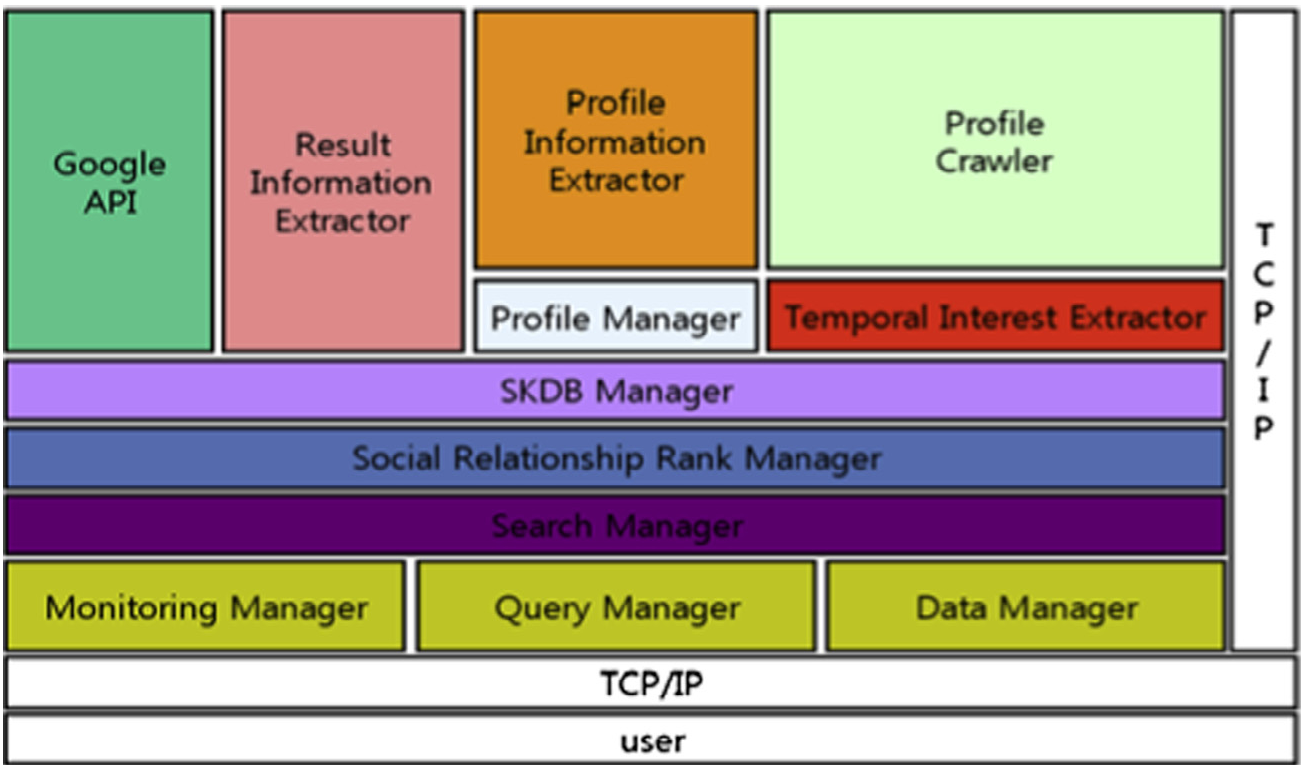
The proposed "SMART Finder" system acts as a middleware between the user and traditional search APIs (like Google), re-ordering results based on the SocialRank of users who previously interacted with those links.
Key Insight: The Topic Association Matrix
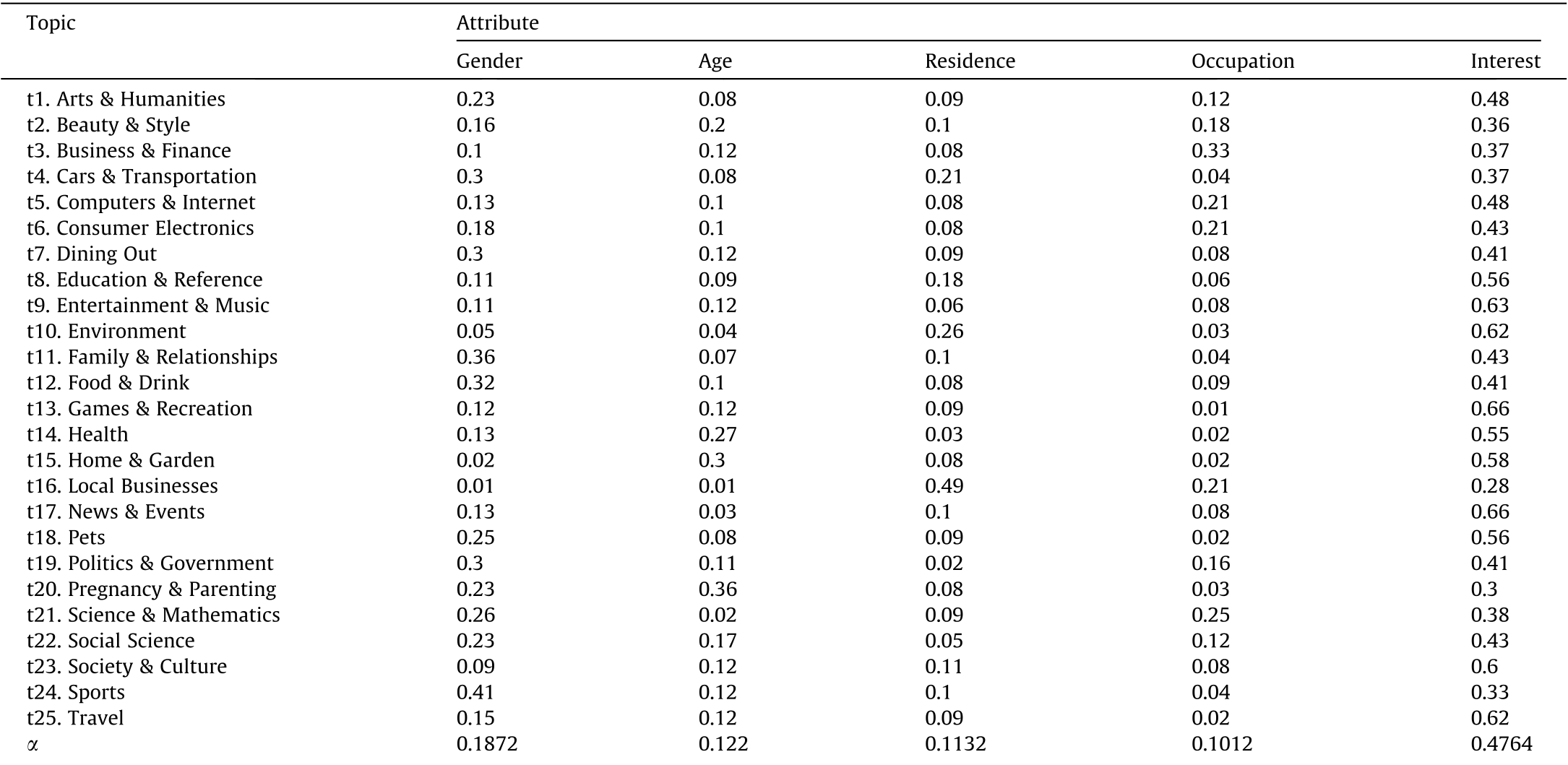
One of the paper's most sophisticated contributions is the Topic-Attribute Association Matrix. The authors discovered that certain demographics influence search interests differently depending on the topic. For example, "Occupation" is a heavy weight for "Business & Finance" queries, while "Gender" might be more influential for "Beauty & Style."
Experimental Results: Proving the Human Factor
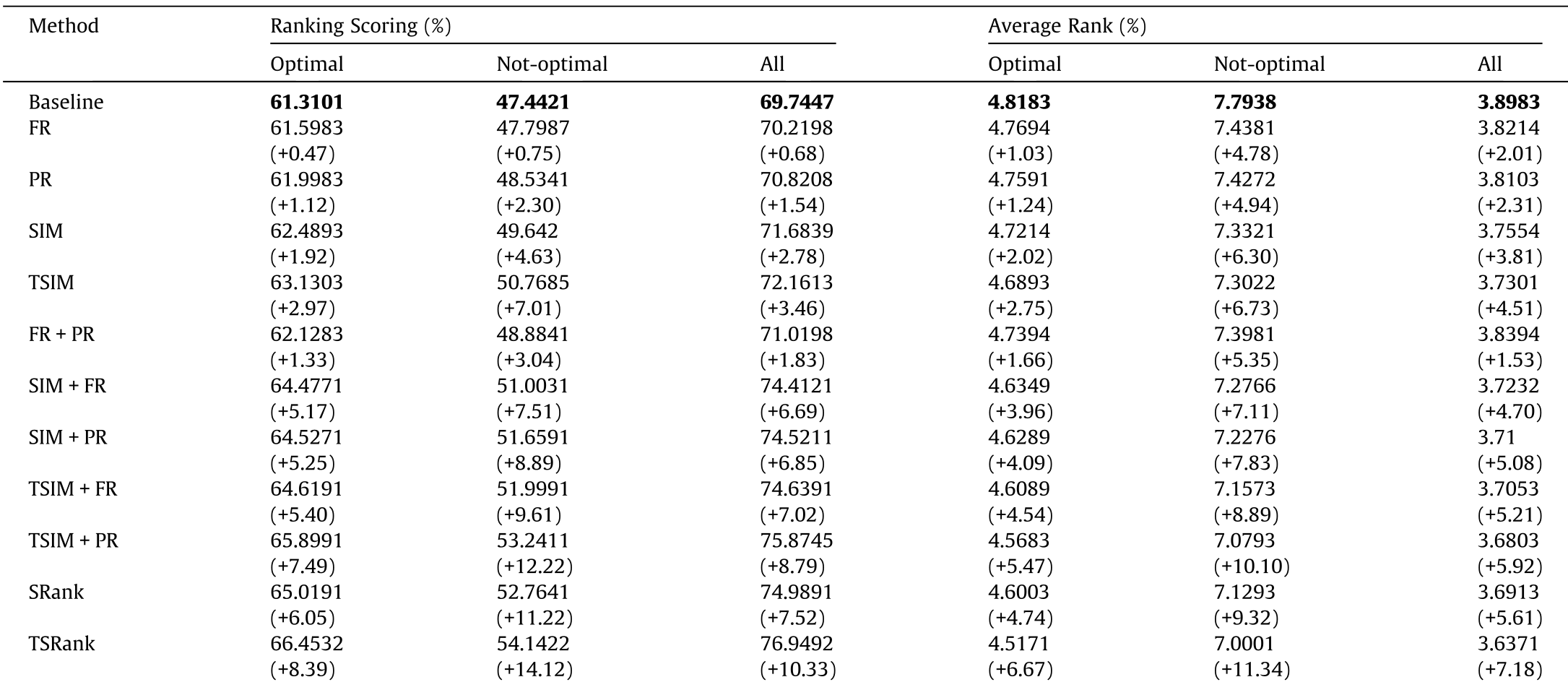
The study compared eleven different strategy variations. The findings were clear:
- TSRank (Full Model): Highest performance across the board.
- The Power of TSIM: Profile similarity was found to be more influential than the raw network structure (friendship hops) alone. This suggests that what a person is like matters more than how you know them when it comes to search relevance.
Critical Analysis & Conclusion
Takeaway
SocialRank effectively bridges the gap between Social Network Services (SNS) and Information Retrieval. Its strength lies in its granularity—treating credibility as a fluid, topic-specific variable rather than a static "Global Rank."
Limitations
- Privacy: Accessing detailed user profiles and click-logs poses significant privacy challenges in today's regulatory environment (GDPR/CCPA).
- Real-time Scaling: Calculating MaxEnt weights across a massive, shifting social graph in real-time is computationally expensive.
Future Outlook
As we move into an era of AI agents, SocialRank offers a blueprint for how personal assistants might filter the "noise" of the internet by prioritizing sources within our trusted "Cognitive Neighborhood."