
Beyond LDA: Leveraging the Louvain Method for Robust Topic Modeling in Social Media
Topic Modeling based on Louvain method in Online Social Networks
2016-05-17
Summary
Problem
Method
Results
Takeaways
Abstract
This paper introduces a novel Topic Modeling framework for Online Social Networks (OSNs) by conceptualizing topics as communities within a word co-occurrence graph. Utilizing the Louvain method for modularity optimization and the Adaptive Distribution of Vocabulary Frequencies (ADVF) for noise reduction, the approach effectively identifies natural discourse versus spam-driven "artificial" topics across Twitter and YouTube datasets.
## TL;DR
Researchers have developed a new way to map social media conversations by treating topics as "communities" in a mathematical graph. By combining the **Louvain Method** for community detection with **ADVF** for noise filtering, this approach not only extracts clear themes from messy Twitter and YouTube data but also acts as a BS-detector, distinguishing between real human topics and artificial spam.
## The Noise Challenge in OSNs
Traditional Topic Modeling (like Latent Dirichlet Allocation) was designed for "proper" documents—think news articles or academic papers. When applied to Online Social Networks (OSNs), these models often crash and burn. Why?
1. **Extreme Brevity**: Tweets are too short to provide rich statistical word distributions.
2. **Linguistic Noise**: Slang, abbreviations, and typos break standard NLP pipelines.
3. **Spam Pollution**: Bots repeatedly post the same keywords to hijack trends, creating "artificial" topics that drown out real human conversation.
The authors' insight is simple yet powerful: if words belong to a topic, they will naturally "huddle" together in a graph. If they are forced together by a bot, the shape of that huddle (its density) will look fundamentally different.
## Methodology: The Graph-Based Blueprint
The proposed framework moves away from purely probabilistic models and into the realm of **Network Science**.
### 1. Adaptive Noise Filtering (ADVF)
Instead of just removing common "stopwords," the authors use **ADVF (Adaptive Distribution of Vocabulary Frequencies)**. This is an evolution of Zipf’s Law. It maps the frequency of words and identifies those that deviate from the expected "natural" distribution—effectively sniping out noise before the graph is even built.
### 2. The Louvain Method for Detection
The core engine is the **Louvain Method**, an algorithm famous for finding communities in massive networks.
* **Nodes**: Individual keywords.
* **Edges**: Connections between words based on how often they appear in the same post.
* **Modularity (Q)**: The algorithm optimizes for "Modularity," a metric that ensures nodes within a community are tightly linked, while connections between different communities are sparse.
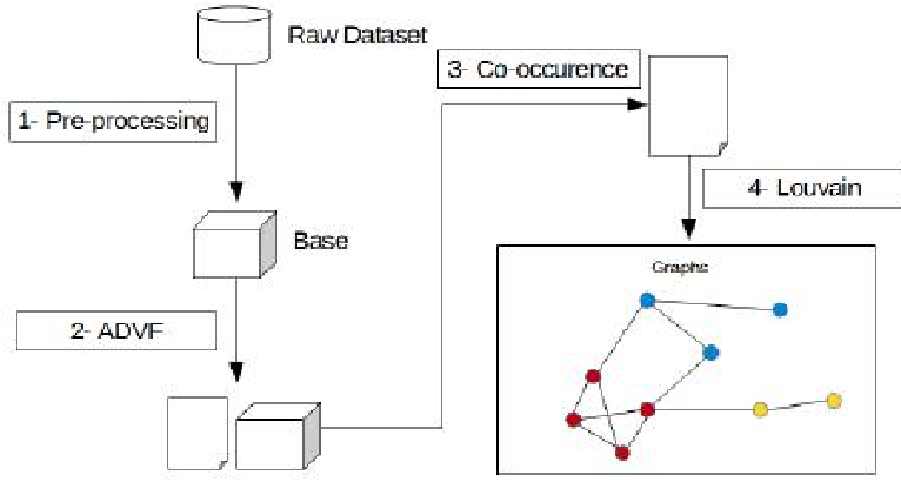
*Figure 1: The system architecture from raw text to topic identification.*
## Detecting the "Artificial" Topic
One of the most impressive feats of this methodology is the ability to classify a topic as **Natural** or **Artificial**.
* **Natural Topics**: Usually have a "centroid" (a main word like *Game of Thrones*) with many specific sub-links. The graph is relatively sparse because humans use a variety of language.
* **Artificial Topics**: Often seen in spam bot activity where every word is linked to every other word in a repetitive template. This results in a **Density of 1.0**, a digital red flag for "non-human" interaction.
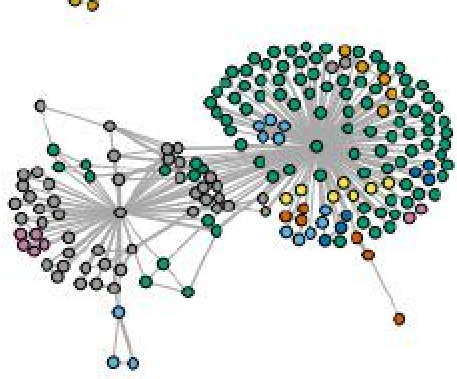
*Figure 2: Visualizing how words cluster into distinct thematic communities.*
## Experiments & SOTA Comparison
The authors tested their method against five datasets, including a "Game of Thrones" Twitter set and a YouTube dataset.
**The TF-IDF Baseline Failure**:
Standard TF-IDF (Term Frequency-Inverse Document Frequency) was used as a baseline. It failed spectacularly on Twitter data, identifying random terms like `{9000x}` or `{babaye}` simply because they appeared frequently in short bursts. These terms had no semantic link to the actual themes.
**Proposed Method Success**:
The Louvain-based approach successfully clustered logical topics. For the keyword "Christmas" (*Natal*), it didn't just find the keyword; it discovered sub-topics like "Party" (*festa*) and "December" (*dezembro*), providing a much more nuanced view of the conversation.
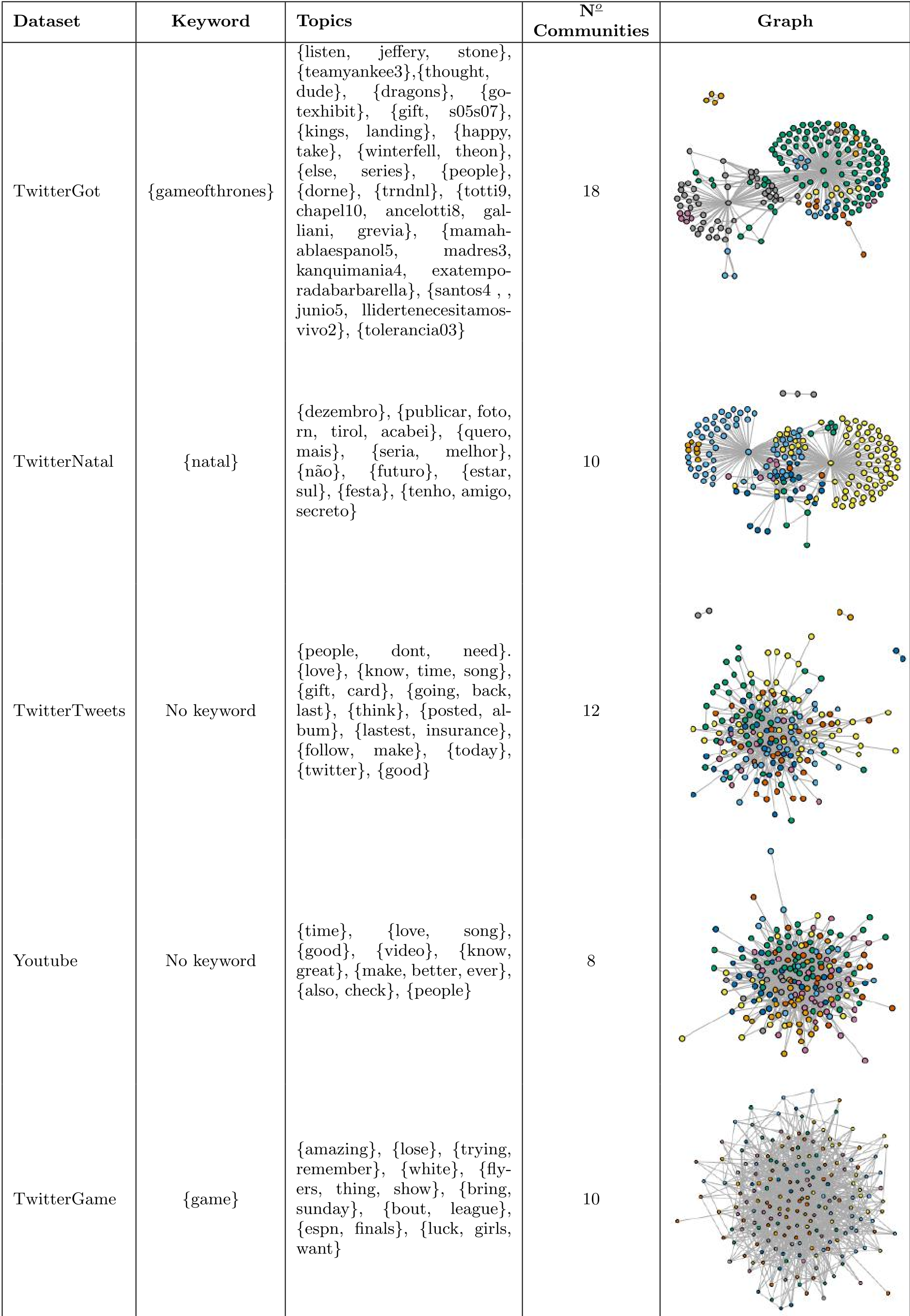
*Table 1: Topics extracted across diverse datasets.*
## Critical Insight & Future Work
The true value of this work lies in its **structural approach to semantics**. By treating language as a social network of words, we can apply robust physics-based metrics (modularity, density) to solve linguistic problems.
**Limitations**: The authors admit that some bot accounts (like "Trendinalia") are sophisticated. They post structures that look "natural" to a density metric but are still artificial in content. Future research will likely need to integrate sentiment analysis or temporal patterns to catch the most advanced bots.
## Conclusion
This research provides a scalable, O(n log n) complexity solution that is perfect for the high-velocity data of the modern web. It moves us closer to an OSN analytics tool that doesn't just tell us *what* is being said, but *who* (human or bot) is really driving the conversation.