
Digital Hegemony: Decoding the Hashtag Wars of the 2019 Indian Elections
Topical Focus of Political Campaigns and its Impact: Findings from Politicians' Hashtag Use during the 2019 Indian Elections
This study analyzes the topical focus of the 2019 Indian general election via a large-scale examination of 1,208 hashtags used by 7,382 politicians. Using a custom ML pipeline called NivaDuck, the researchers quantified the strategic shift toward nationalism and religion, identifying distinct engagement patterns between the ruling BJP and opposition INC parties.
TL;DR
By analyzing over 600,000 tweets from 7,382 politicians, researchers from Microsoft Research India uncovered the mechanics of digital political dominance. The study reveals a stark contrast: the ruling BJP focused on self-promotion and "flooding the zone" to dominate trends, while the opposition INC relied on aggressive attacks and high per-tweet engagement. Ultimately, the BJP’s ability to pivot from "Development" to "Nationalism" and "Religion" reshaped the electoral discourse.
Problem: The Blind Spots of Political Analytics
Most political social media research focuses on high-profile "elites" (MPs or Presidential candidates). However, in a country like India, the real digital war is fought by thousands of regional leaders and "grassroots" digital activists. Previous methodologies failed to capture this vast, multilingual network, leaving a gap in our understanding of how national "message discipline" is actually enforced across a diverse party structure.
Methodology: The NivaDuck Pipeline
To bridge this gap, the authors developed NivaDuck, a two-stage ML classification pipeline designed to identify political actors who aren't on official lists.
- Primary Classifier: Analyzes Twitter profile descriptions.
- Secondary Classifier: Analyzes tweet content using n-grams and Logistic Regression.
This allowed them to build a database of 18,500+ verified politicians, ensuring the study reflected collective party output rather than just the tweets of a few leaders.
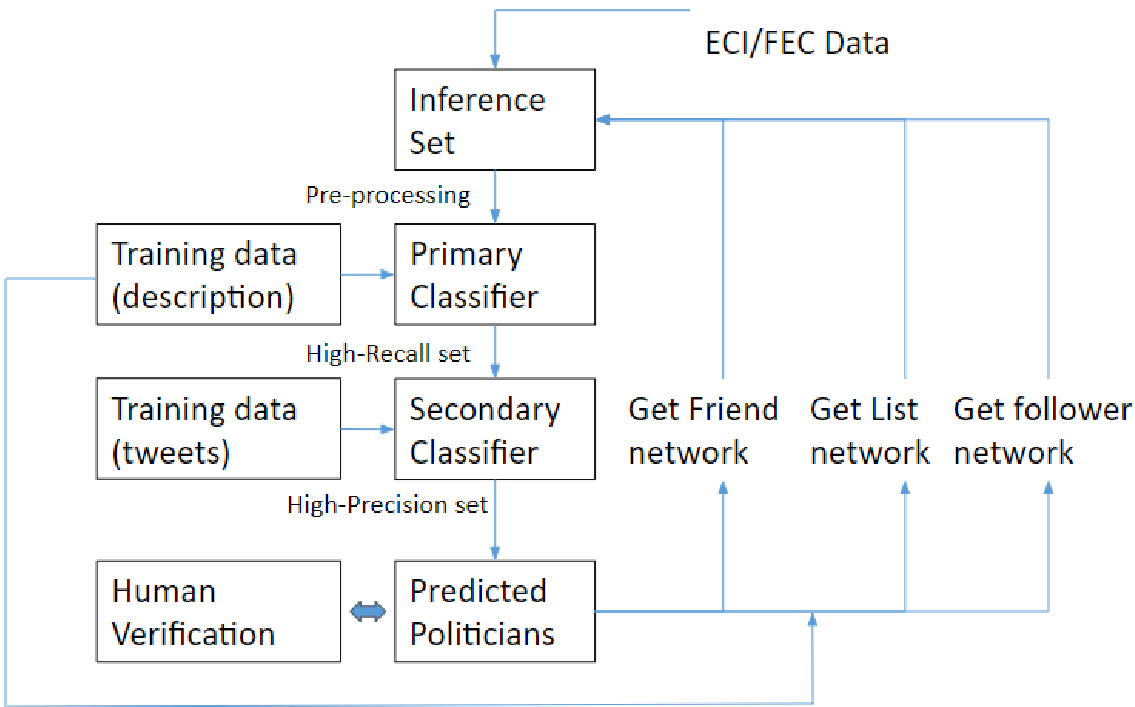 Figure 1: The NivaDuck ML pipeline for identifying political actors.
Key Insights: Promotion vs. Attack
The researchers categorized hashtags into a typology: Nationalism, Development, Corruption, and Religion.
1. The Asymmetry of Strategy
The data showed a profound strategic divide. The BJP acted as a "Narrative Setter"—it was 4.8 times more likely to promote its own brand than the INC. In contrast, the INC adopted a "Challenger" stance, prioritizing attacks (like the #ChowkidarChorHai campaign) over self-promotion.
2. Retweets vs. Trends: The Quality vs. Quantity Paradox
This is perhaps the most significant finding for modern political strategists:
- INC Success: Higher average retweet counts. Their messages were "sticky" and resonated deeply with their base.
- BJP Success: Higher trend scores. By mobilizing a larger number of politicians to tweet simultaneously, the BJP "flooded" Twitter's algorithms, ensuring their hashtags stayed on the front page of the platform.
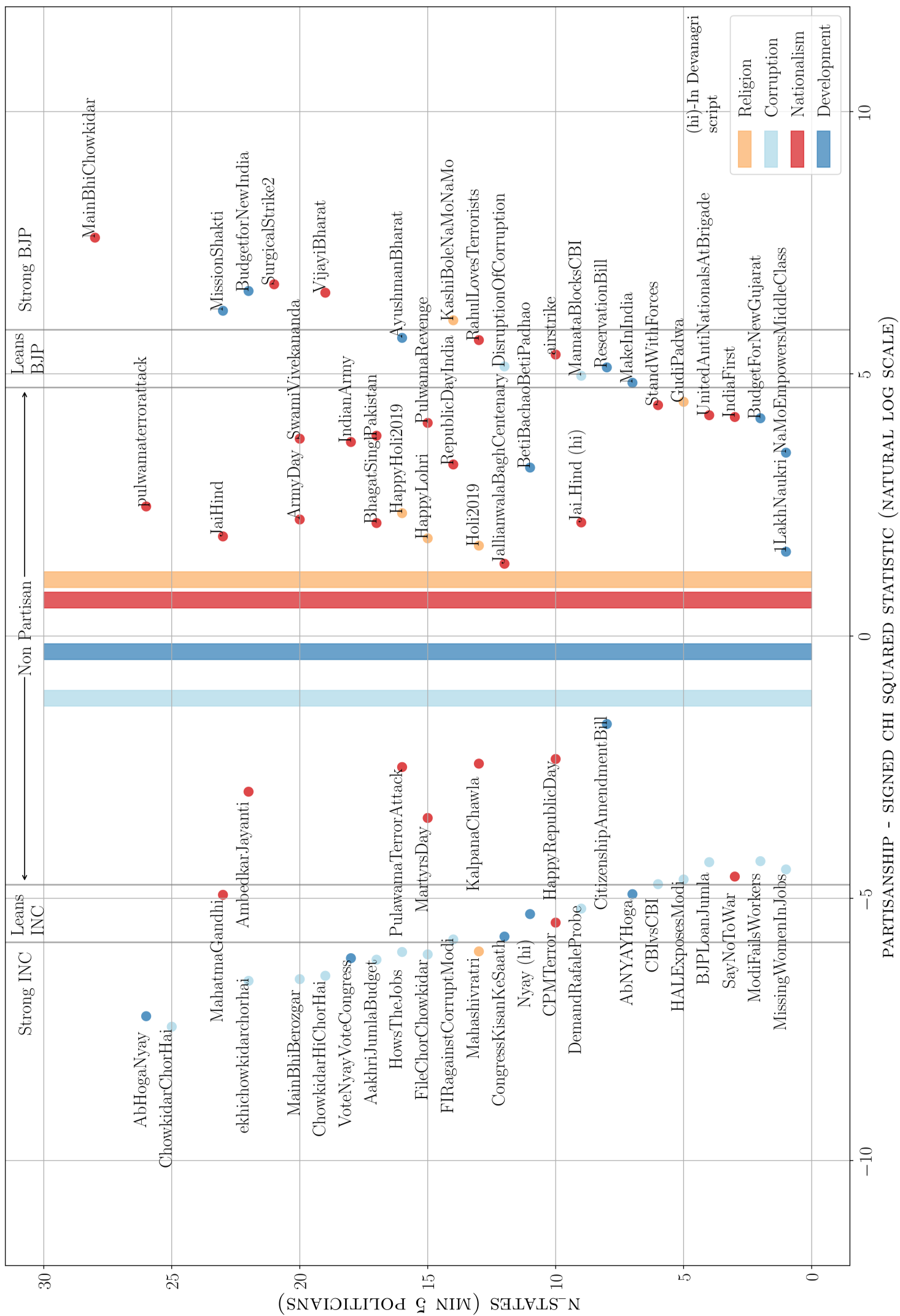 Figure 2: Partisan scores across different categories. Note the high density of BJP-leaning hashtags in Nationalism and Religion.
The "Chowkidar" Case Study
The study highlights the #MainBhiChowkidar (I too am a gatekeeper) campaign as a masterclass in digital counter-offensive. When the opposition attacked using the word "Chowkidar" (gatekeeper) as a pejorative, the BJP reclaimed the term, turning a specific attack into a viral badge of honor for its entire base. This demonstrated how a broad user-base can neutralize the affective value of specific opposition messages.
Critical Analysis & Conclusion
This work provides empirical proof of the "nationalistic shift" in Indian digital politics. It shows that in a polarized environment, the ability to control the topics of conversation—shifting from economic "Development" to emotional "Nationalism"—is as important as the content of the tweets themselves.
Limitations: The study focuses exclusively on hashtags. While hashtags provide vital "networking affordances," they don't capture the nuance of tweet text or "meta-tweets" (tweets about other tweets).
Future Outlook: As AI-driven natural language inference improves, the next step will be analyzing the sentiment and irony within these tweets. For researchers and product teams, this paper serves as a blueprint for monitoring organized political campaigns in the era of digital polarization.