
Beneath the Surface of Silver Surfers: The Topology of Senior Social Networks
Topological analysis of an online social network for older adults
This paper presents a topological analysis of "TouchTown," a closed online social network (OSN) specifically designed for older adults (aged 65+). By examining 226 weeks of blog and post data, the study identifies unique structural patterns and information cascades, achieving a characterization of how a specific demographic interacts within a virtual space.
TL;DR
This research dives into the "TouchTown" network, a digital portal for retirement communities, to map how older adults navigate the blogosphere. Unlike the power-law-driven landscapes of MySpace or X (formerly Twitter), the researchers discovered a network characterized by high "cliquishness," short path lengths, and a preference for linear "chain" information flows over complex social "stars."
Background: Beyond the General Web
By 2050, one in five Americans will be an older adult. Yet, digital infrastructure is often built with a "one size fits all" approach. The authors argue that topological structures—the math behind who connects to whom—differ significantly when a network is populated by users aged 65 to 98. While email remains a staple for this group, blogging and social networking represent a new frontier of digital engagement.
The Problem: The Demographic Blind Spot
Most OSN research focuses on massive, open datasets (like Flickr or YouTube or LiveJournal). These networks typically follow a Power-Law distribution, where a few "super-users" have the most influence. However, these models fail to describe "closed communities"—private networks where access is restricted. Does a network of retirees behave like a mini-segment of the general web, or is its DNA fundamentally different?
Methodology: Mapping the Cascades
The study analyzed data from 21 retirement communities between 2003 and 2007. The core of their analysis relied on two distinct network types:
- The Blog Network: Nodes represent individual blogs/websites, showing a "star" topology centered around the TouchTown portal.
- The Post Network: A more granular look at individual posts and their replies.
A key innovation was the study of Cascades—the shape of information flow.
- Chain Cascades: Users reply to the last post in a topic (linear).
- Star Cascades: Multiple users reply to a single source post (conversational).
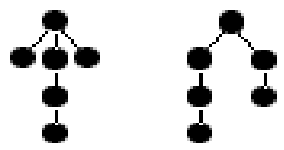 Figure 1: Visual representation of cascades (post-reply subgraphs extracted from the network).
Key Results: Different Shapes for Different Lives
The statistical profile of TouchTown revealed several surprises:
- High Clustering (Cliquishness): The average clustering coefficient was 0.4, significantly higher than the Web (0.1) or YouTube (0.14). This suggests that in senior communities, the "mutual friend" effect is incredibly strong—if User A knows B and C, B and C are very likely to know each other.
- The Dominance of Chains: Unlike the general population, which thrives on star-shaped conversations, 58.4% of non-trivial cascades were chains. This indicates that seniors use blogs primarily to pass along information rather than to maintain deep, multi-person dialogues.
- Speed of Interest: Popularity is fleeting. Most interactions occur within the first 24 hours, as shown in the in-link decay graph.
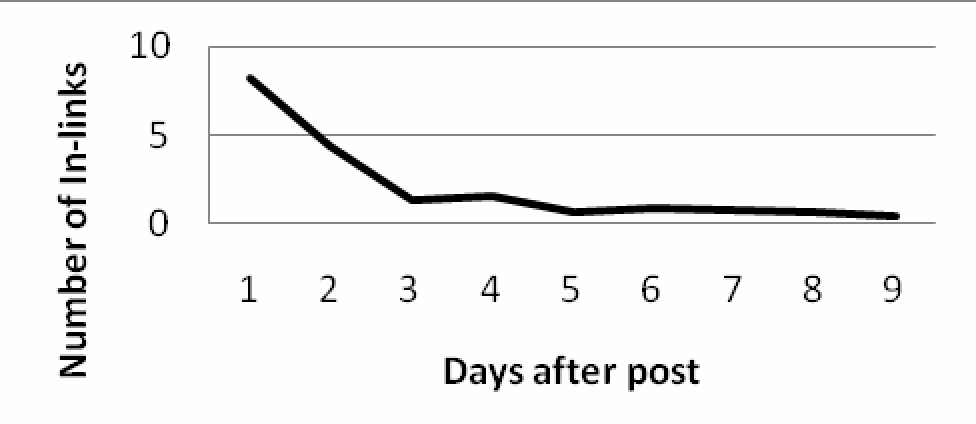 Figure 2: The rise and fall of post popularity over time.
Critical Insight & Future Outlook
The most striking takeaway is the rejection of the standard power-law. Because TouchTown is a closed community, its distribution was heavily skewed and required a Box-Cox transformation to normalize.
Why does this matter? If older adults use social networks primarily for information dissemination (Chains) rather than social buzzing (Stars), search engine algorithms and UI designs for this demographic should stop trying to mimic "Facebook clones." Instead, they should focus on:
- Streamlined information retrieval: Prioritizing the latest "link" in a chain.
- Privacy-first closed architectures: Facilitating the high-clustering, trust-based interactions that are already happening naturally.
Limitations: As the authors note, the "closed" nature of the network means we only see links going out, not coming in from the wider web. Additionally, retirement community residents represent a specific socio-economic slice of the older adult population.
Conclusion
This paper serves as a vital reminder that the "Global Brain" of the internet is actually a collection of distinct demographic organs. The way a 19-year-old uses a blog to build an online persona is mathematically and topologically different from a 80-year-old using a blog to share community transit schedules. Understanding these "Chain" vs. "Star" preferences is the first step toward a more inclusive digital world.