
Toward Personalized Activity Recognition: The Power of the Semipopulation Approach
Toward Personalized Activity Recognition Systems With a Semipopulation Approach
The paper proposes a "Semipopulation" approach for Human Activity Recognition (HAR), introducing a hybrid model combining Bayesian Networks (BNs) and Support Vector Machines (SVMs). By leveraging a pool of pre-trained models from existing users and selecting the best fits using a small amount of new user data, it achieves a SOTA accuracy of 83.4%.
TL;DR
Researchers have developed a "Semipopulation" framework that bypasses the need for massive user labeling in Activity Recognition (HAR). By picking and choosing the best-trained models from a "pool" of other people—much like an organ donor system for algorithms—the system achieves 83.4% accuracy, outperforming both generic "one-size-fits-all" models and personalized models built from scratch.
Context: The Personalization Paradox
In the world of wearable tech, we face a dilemma. You want your smartwatch to know exactly when you are walking, sitting, or falling. However, your "walking" looks different from mine.
- Population Models: Average everyone together. Result? High variance and low accuracy for the individual.
- Individual Models: Train only on your data. Result? You have to spend hours labeling your own life, or the model "overfits" and fails the moment you change shoes.
The authors of this paper suggest a middle ground: The Semipopulation Approach.
Methodology: The Hybrid "Donor" System
The core innovation lies in how the system "borrows" intelligence from others. Instead of retraining, it evaluates a "pool" of existing models from 28 diverse participants.
1. The Strategy: Multipersonalization (MP)
Instead of finding one person who "moves like you," the MP strategy finds a "donor" for every specific activity. Maybe Participant A's "sitting" model fits you best, but Participant B's "walking" model is your perfect match.
2. The Architecture: BNs + SVMs
The system uses a clever hybrid hierarchy:
- Bayesian Networks (BNs): Act as the "scouts," providing a probability distribution of what the activity might be.
- Support Vector Machines (SVMs): Act as the "specialists." The system orders them based on the BN results. If the BN thinks there is a 90% chance you are cycling, the "Cycling SVM" gets to speak first.
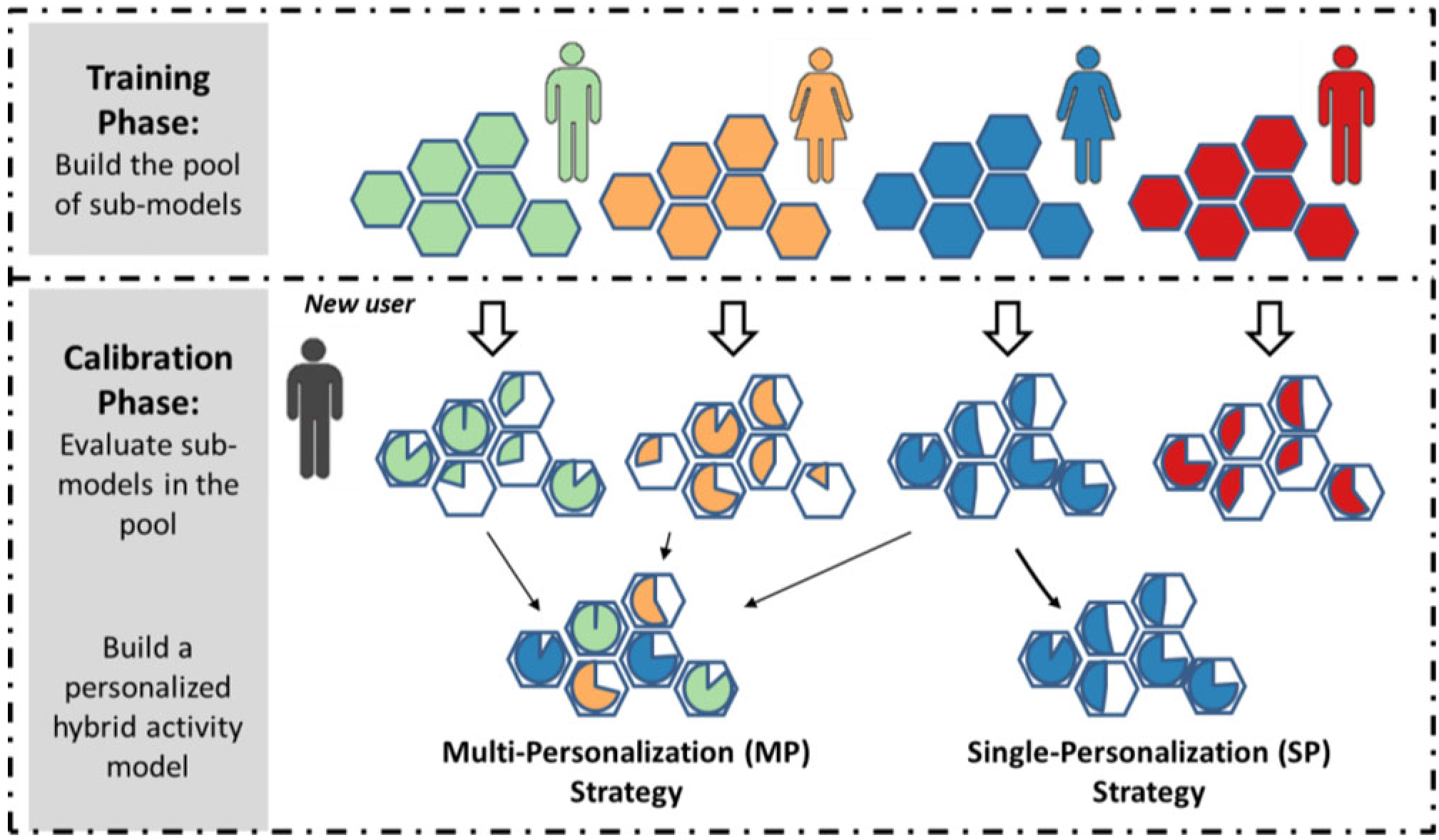 Figure 1: The Hybrid Model combining BNs for probability estimation and SVMs for final classification.
Key Results: Intuition Trumps Demographics
The study yielded a surprising insight that challenges common sense: Physically similar people do not necessarily move similarly.
- The Height Factor: While age and weight were poor predictors for matching models, height was the only demographic that showed some predictive power for model selection.
- Efficiency: The system only needed 22 minutes of data to outperform an individual model that had 1.5 hours of training data.
- SOTA Performance:
- Semipopulation (MP): 83.4% Accuracy
- Population Model: 77.7% Accuracy
- Individual Model: 77.3% Accuracy
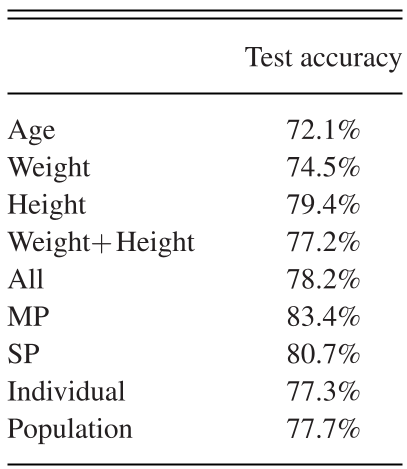 Table 1: Performance comparison showing the Semipopulation MP strategy as the clear winner.
Critical Analysis & Conclusion
This work proves that "model sharing" is a viable path for the future of ubiquitous computing. It effectively addresses the Bias-Variance Tradeoff—using BNs to lower variance and SVMs to lower bias.
Limitations: The current setup is "sensor-heavy" (using Wii remotes, BioHarnesses, and smartphones). For a consumer product, the challenge will be reducing this to a single device (like a smartwatch) while maintaining the 83.4% accuracy threshold.
Final Takeaway: The "Semipopulation" approach suggests that the best way to understand a new user is not to study them in isolation, but to see where they fit within a diverse "library" of human movement behaviors.