
Toward Trustworthy Crowdsourcing: Solving Selfishness and Malice in SIoT
840_Toward trustworthy crowdsourcing in the social internet of things.
This paper introduces a trustworthy crowdsourcing framework within the Social Internet of Things (SIoT) paradigm. It leverages a social-aware message forwarding mechanism and a reputation-based auction mechanism to mitigate DoS/DDoS attacks and ensure reliable data acquisition in distributed environments.
TL;DR
As the Internet of Things (IoT) evolves into the Social Internet of Things (SIoT), the human-like relationships between devices offer new opportunities for crowdsourcing. However, these networks are plagued by "social selfishness" and malicious DDoS attacks. This paper proposes a trustworthy crowdsourcing framework that uses social-aware data forwarding and reputation-based auctions to ensure that tasks are handled by reliable nodes and data reaches its destination despite network hostility.
The Problem: When Smart Objects Turn Selfish
Modern crowdsourcing moves from central servers to the edge, turning mobile devices into "sensing entities." Yet, two major hurdles remain:
- Social Selfishness: Nodes often prioritize their own energy and storage, refusing to forward packets for "strangers" (nodes with no social link), leading to localized Denial of Service (DoS).
- Malicious Hoarding: Some participants accept a vast number of tasks to claim rewards but fail to return valid results, effectively launching a DDoS attack on the system's task capacity.
Methodology: The Trust Infrastructure
The authors break the solution into two core pillars: Social Awareness and Reputational Economics.
1. Social-Aware Data Transmission
To combat selfish forwarding, the paper introduces a community-based hierarchy.
- SPM (Social Pressure Metric): Measures direct one-hop friendship.
- RSPM (Relative Social Pressure Metric): Measures two-hop relationships via relays.
- Forwarding Logic: Packets are only replicated and shared within a "Friendship Community" or handed over to "Inter-community" nodes if they have a stronger social link to the destination.
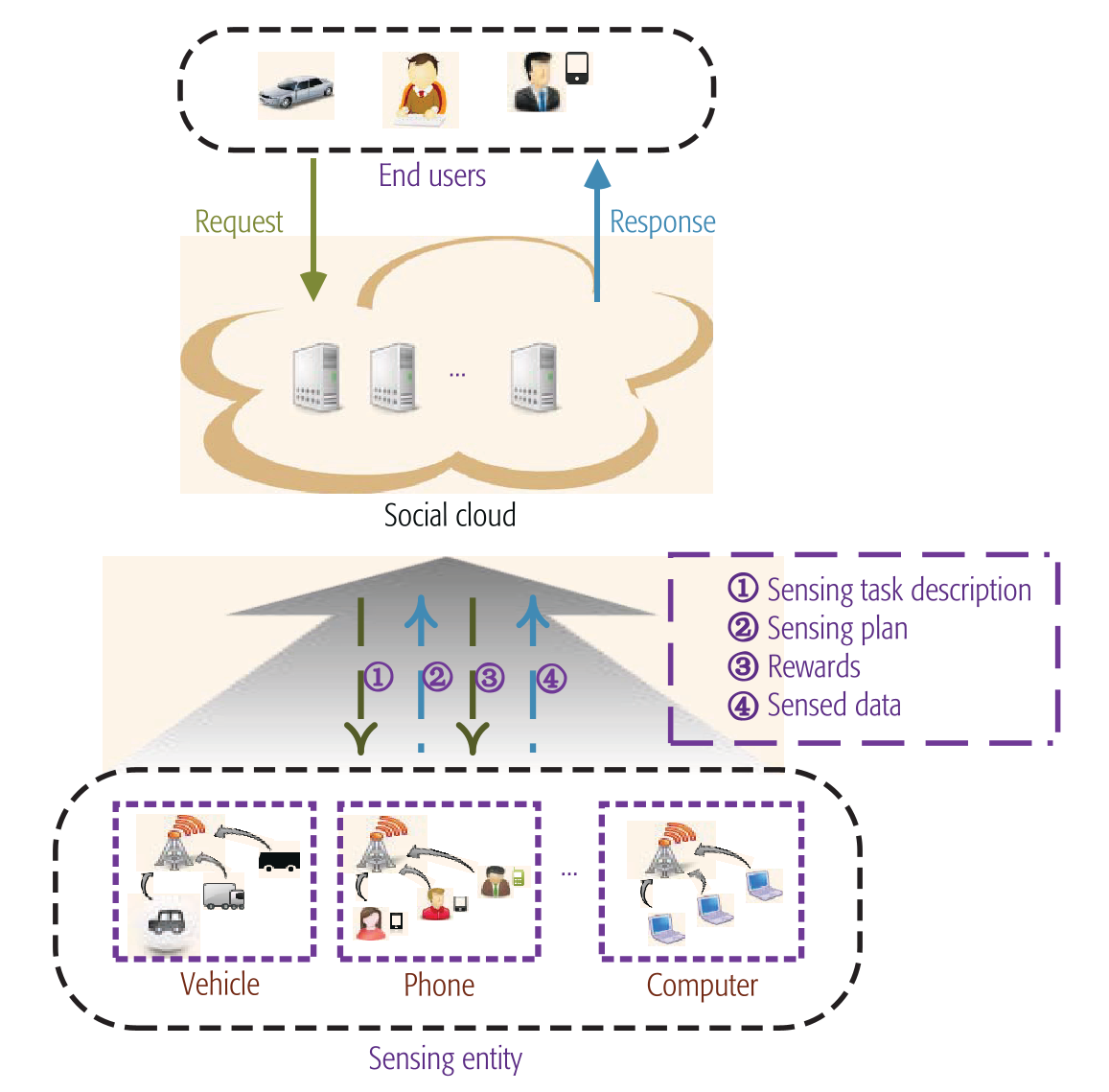 Figure 1: The overall architecture of the SIoT crowdsourcing model, bridging end users, social cloud, and sensing entities.
2. Reputation-Based Auction Mechanism
Winner selection isn't just about the lowest bid; it’s about Reputable Marginal Value.
- Reputation Computation (): A weighted combination of current performance and historical trustworthiness.
- Reputable Bid: Calculated as . A participant with a high bid but low reputation is penalized, making it harder for them to win tasks.
- Payment Determination: The system can operate in an aggressive mode, which targets malicious entities by pinning payments to their reputable contribution rather than their actual bid, effectively pricing out bad actors.
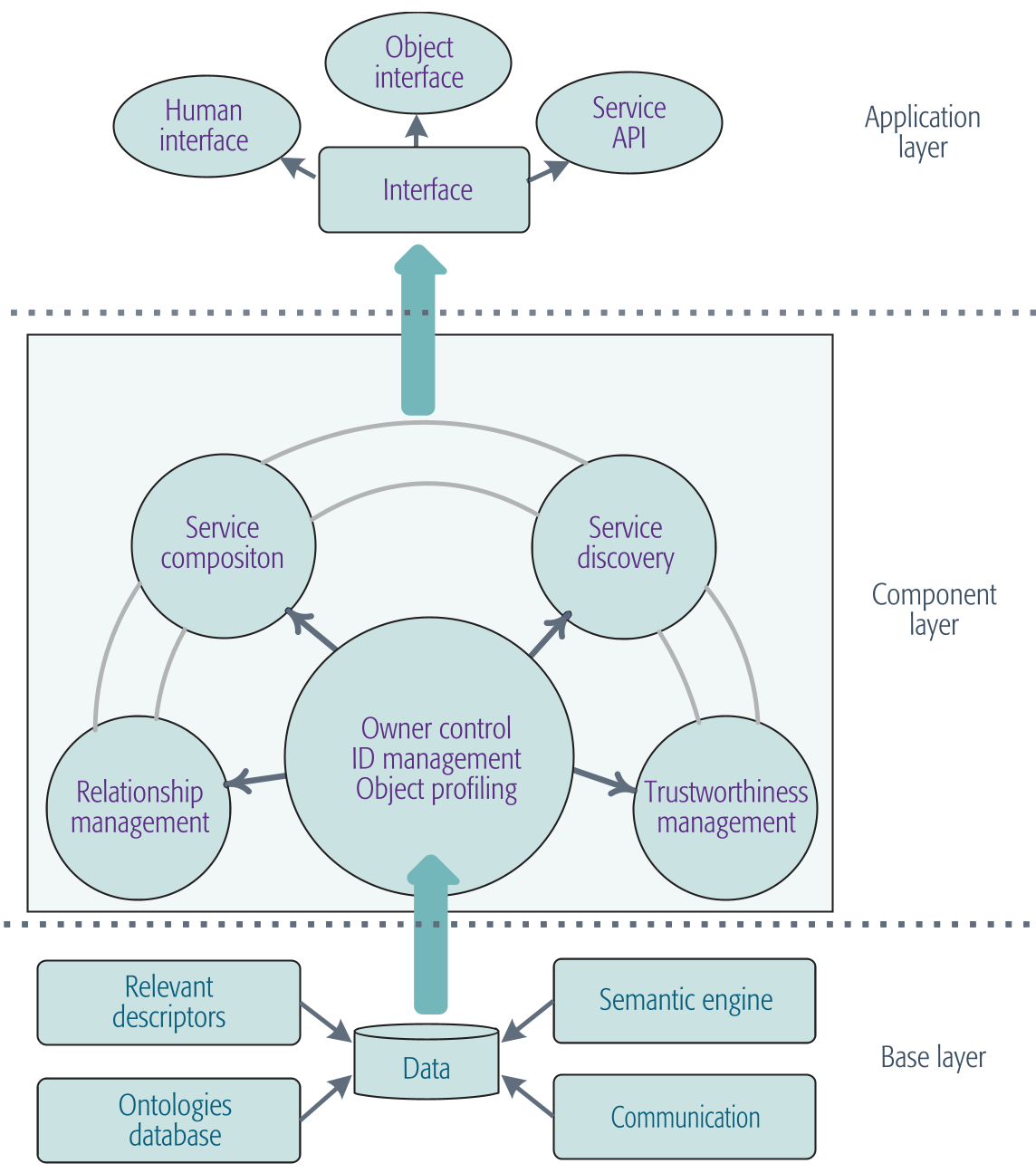 Figure 2: Workflow of identifying and selecting trustworthy participants.
Experimental Insights
The proposed model demonstrates that by integrating social link awareness, the delivery ratio of sensing data improves significantly compared to standard opportunistic networks. The reputation mechanism acts as a high-pass filter: honest but inexperienced participants are given a chance to improve, while consistently malicious nodes are evicted from the auction pool.
Critical Analysis & Conclusion
Takeaway
The genius of this work lies in treating IoT devices not just as hardware, but as social agents. By mathematicalizing "social pressure," the authors create a natural incentive for nodes to cooperate.
Limitations & Future Work
While the reputation model is robust, it assumes a semi-honest social cloud. If the cloud itself is compromised, the reputation scores could be manipulated. Future research should look into decentralized reputation management (perhaps via Blockchain) to remove the cloud as a single point of failure.
Conclusion
Trust is the "soft" infrastructure of the SIoT. This paper provides the "hard" algorithms needed to quantify that trust, ensuring that the next generation of mobile crowdsourcing is both efficient and resilient against the chaos of human and machine selfishness.