
TP-TA: Bridging the Gap Between Social Intuition and Trust Prediction Algorithms
TP-TA: a comparative analytical framework for trust prediction models in online social networks based on trust aspects
This paper introduces TP-TA, a comprehensive analytical framework for trust prediction in Online Social Networks (OSNs). It categorizes existing models into three conceptual aspects—Emotive, Cognitive, and Behavioral—and provides a qualitative comparative analysis based on criteria such as accuracy, coverage, and attack resistance.
TL;DR
Trust is the invisible engine of Online Social Networks (OSNs), yet modeling it remains a "Privacy Dilemma." This paper proposes TP-TA, an analytical framework that organizes trust prediction models into three pillars—Emotive, Cognitive, and Behavioral. By evaluating these through ten rigorous criteria, the authors provide a strategic roadmap for choosing the right algorithm for the right social context—be it LinkedIn, Twitter, or Facebook.
The "Multidimensional Dilemma" of Social Trust
In the digital wild west of OSNs, identifying "who to trust" is a survival skill. However, computer scientists have long struggled with trust because it isn't just a number; it is subjective, asymmetric, and context-specific.
Prior works often treated trust prediction as a pure data-mining problem. The authors of TP-TA argue that this "one-size-fits-all" approach fails because it ignores the why behind the trust. A model that works for a professional endorsement on LinkedIn might fail miserably when predicting a friendship on Facebook.
Methodology: The TP-TA Framework
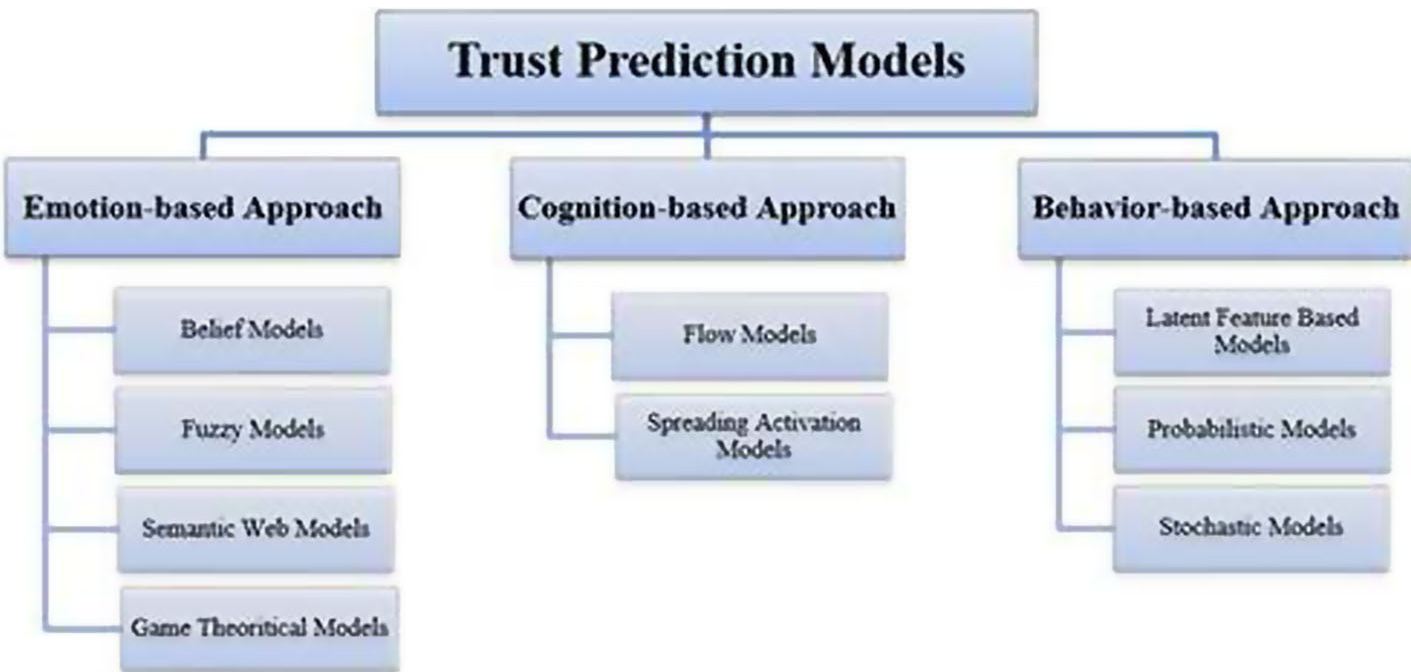
The core innovation lies in mapping technical architectures to social "Aspects":
- Emotive Aspect (The Trustor's Soul): Focuses on personal feelings and predispositions.
- Models: Belief Models (Subjective Logic), Fuzzy Models, Semantic Web, and Game Theory.
- Cognitive Aspect (The Trustee's Resume): Focuses on the reputation and characteristics of the person being trusted.
- Models: Flow Models (e.g., PageRank) and Spreading Activation (e.g., TidalTrust).
- Behavioral Aspect (The Interaction History): Focuses on the "tracks" left by past interactions.
- Models: Latent Feature models (Matrix Factorization), Probabilistic models, and Stochastic models (HMM).
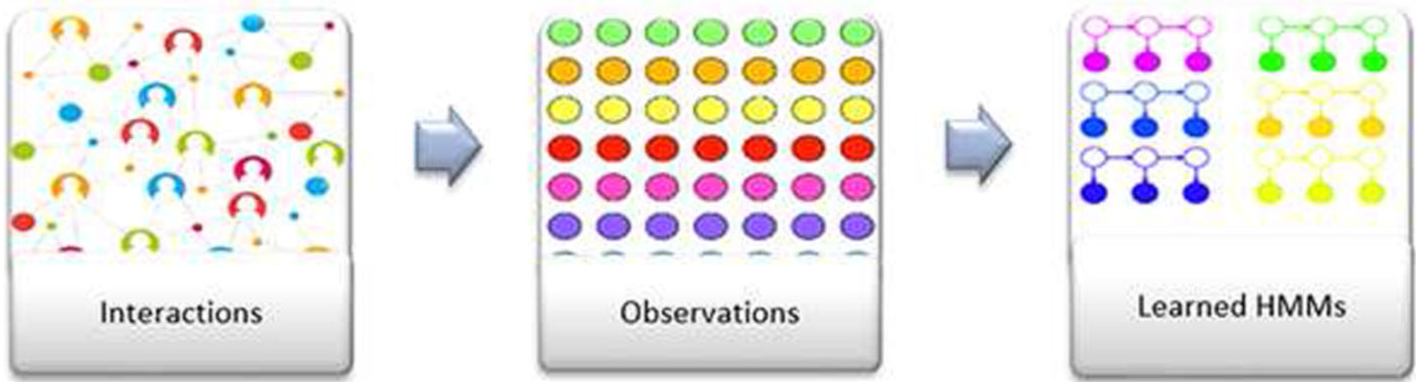
Deep Dive: Why Stochastic Models are Currently King
One of the paper's most salient insights is the superiority of Stochastic Models (HMMs) in dynamic environments. While Bayesian systems assume behavior is a fixed probability distribution, HMMs treat trust as an "underlying state" that can change suddenly—detecting what the authors call the "Playbook Attack" (where an attacker acts honestly to gain reputation, then suddenly strikes).
Key Competitive Analysis
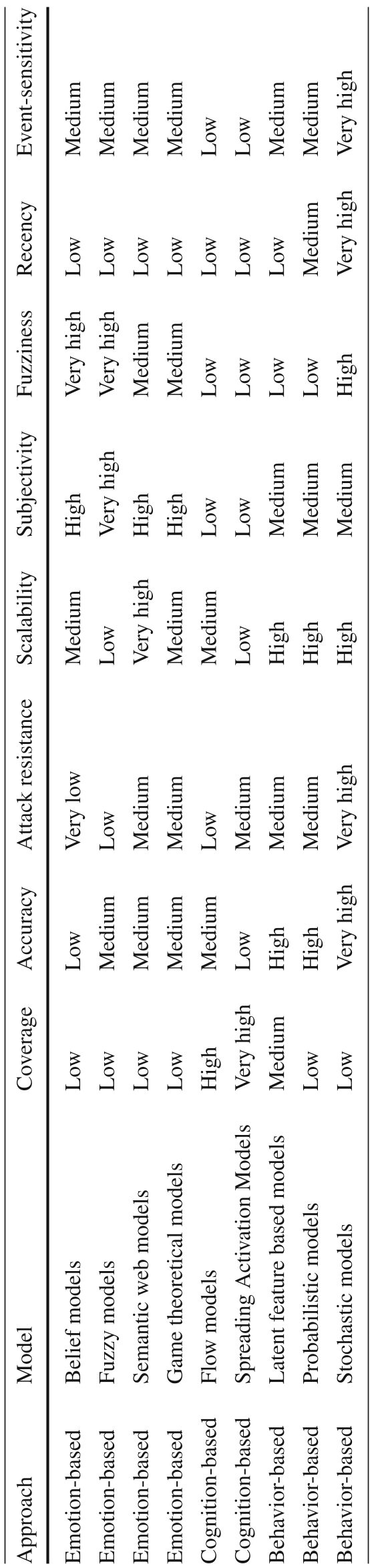
The authors provide a "Battle Card" comparing the three approaches across critical dimensions:
- Coverage: Spreading Activation wins. If there's a path, it will find a value.
- Accuracy: Stochastic models win. They specialize in individual high-fidelity relationship tracking.
- Subjectivity: Fuzzy and Belief models win by allowing users to express "degrees of doubt" rather than binary 0/1 ratings.
Critical Insights & Future Outlook
The TP-TA framework reveals a massive opportunity for Hybrid Models. For example, the paper suggests combining Fuzzy Logic (extreme subjectivity) with Flow Models (extreme coverage) to create a system that is both broad and personal.
The Future is Deep: The paper notes that current models still rely heavily on manual feature engineering. The next frontier in OSN trust is Deep Learning and unsupervised feature learning, where the model discovers latent trust signals that humans might not even perceive.
Conclusion
TP-TA isn't just a survey; it's a decision-support tool. For developers building the next generation of "Trust-Aware" recommenders, this paper provides the blueprint to ensure that the math finally matches the social reality.