
The Trace Quotient Problem: Why Local Optima Are Global Winners
A note on the trace quotient problem
The paper investigates the Trace Ratio Problem (TRP) in Linear Discriminant Analysis (LDA), proving that it lacks local non-global maximizers. The authors establish classical first and second-order Karush-Kuhn-Tucker (KKT) optimality conditions to provide a linear-algebra-based proof of this property, bypassing complex differential geometry.
TL;DR
Optimization problems often suffer from "local optima traps," but the Trace Ratio Problem (TRP)—a cornerstone of Linear Discriminant Analysis (LDA)—is a rare exception. This paper provides a simplified proof using standard linear algebra (KKT conditions) to show that any local maximizer of TRP is inherently a global one. It also introduces a practical strategy to "kick" iterative algorithms out of non-optimal critical points.
Executive Summary
In machine learning and computer vision, maximizing the separation between classes while minimizing variance within classes often boils down to the Trace Ratio Problem. Mathematically, we seek an orthogonal matrix that maximizes: While previous works proved the absence of local-only maximizers using the high-level language of Grassmann Manifolds, Zhang et al. bring the proof down to earth. By using basic KKT conditions, they not only confirm the math but provide a roadmap for better starting points in numerical solvers.
Problem & Motivation: The Algebra vs. Geometry Gap
The TRP is a generalization of the Rayleigh quotient. It is notoriously difficult because it lacks a closed-form solution. While iterative solvers (like those based on the Newton method) exist, their reliability hinges on one crucial fact: Does the landscape have "holes" (local traps)?
Prior proofs saying "No" were mathematically dense, involving "abstract quotient Riemannian manifolds." For engineers and applied mathematicians, this was a black box. The motivation here is to provide a transparent, algebraic proof that explains why the global structure is so well-behaved.
Methodology: The Power of KKT
The authors treat TRP as a standard equality-constrained maximization problem. By defining the Lagrangian:
1. First-Order Necessary Condition
They show that any critical point must satisfy: where . This means is essentially an eigenbasis of a matrix that depends on itself (a nonlinear eigenvalue problem).
2. The Breakthrough Insight
The core of the paper lies in Theorem 2.1. It states that is a global maximizer if and only if it corresponds to the largest eigenvalues of .
 Figure 1: The KKT condition (2.4) defining the search space for critical points.
Proving the Theorem
The proof by contradiction is elegant:
- Assume is a local maximizer but not global.
- Then, there must be an eigenvalue of better than what currently "captures."
- The authors construct a new matrix by swapping one of 's columns with this better eigenvector.
- Using the Second-Order Necessary Condition (Lemma 2.2), they show this swap must violate local maximality.
Experimental Insight: The Starting Point Strategy
The methodology leads to a "Starting Point Strategy." If an algorithm converges to a KKT point that isn't global, you can:
- Compute the eigen-decomposition of .
- Identify the missing "top" eigenvalues.
- Construct a new starting point that is guaranteed to have a higher objective value: .
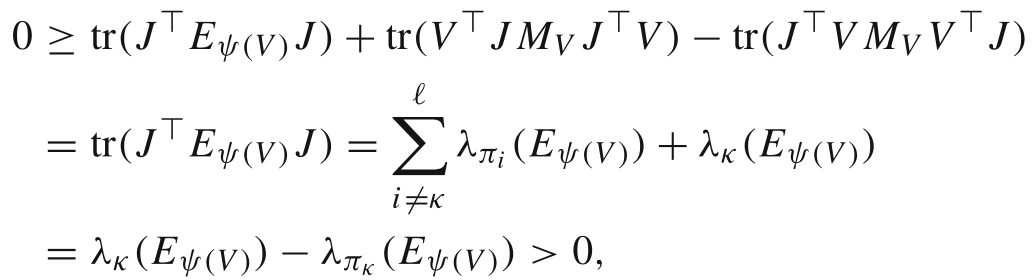 Figure 2: The contradiction (3.3) that completes the proof.
Critical Analysis & Conclusion
Takeaway
This work bridges the gap between theoretical differential geometry and practical numerical linear algebra. By proving that the TRP landscape is "friendly," it justifies the use of simple, monotonically convergent iterations in critical LDA applications like face recognition and dimensionality reduction.
Limitations
While the paper proves the existence of the global maximizer and its reachability, it doesn't solve the "Newton-like" speed issues for extremely large-scale matrices (where is in the millions), where even basic eigen-decompositions become expensive.
Future Outlook
The "starting point strategy" is highly transferable. For researchers working on other matrix manifold problems, the approach of using KKT second-order conditions to "jump" between critical points is a powerful tool for ensuring global convergence.