
Trace-SRL: Decoding the Temporal DNA of Student Success
Trace-SRL: A Framework for Analysis of Microlevel Processes of Self-Regulated Learning From Trace Data
The paper introduces "Trace-SRL," a methodological framework that transforms raw Learning Management System (LMS) trace data into Self-Regulated Learning (SRL) microprocesses using REGEX parsing and analyzes them via First-Order Markov Models (FOMMs). Applied to 300 engineering students, it successfully identifies distinct behavioral patterns between high and low performers, characterizing SOTA temporal dynamics in educational data mining.
TL;DR
Researchers have moved beyond "counting clicks" to map the actual rhythm of learning. By introducing the Trace-SRL framework, this study uses stochastic process mining to prove that high-performing students don't just study more—they follow a specific "logical flow" (e.g., Evaluation → Knowledge Building), while struggling students often fall into "Summative Gambling" traps.
Background: Beyond the "Flat" View of Analytics
In the world of Learning Analytics (LA), we have long dealt with ontological flatness. We knew what students clicked, but we didn't know why or in what order. Traditional methods treated Self-Regulated Learning (SRL) as a static trait measured by questionnaires. But SRL is a dance—a cyclical process of goal setting, engagement, and reflection. The Trace-SRL framework bridges the gap between raw digital traces and cognitive theory.
Methodology: The "Eventization" of Human Behavior
The core innovation lies in the three-step methodology that transforms chaotic log files into a structured narrative:
- Microlevel Mapping: Using REGEX, raw events like
VIDEO_PLAYare grouped into microprocesses likeWork_on_Task.Knowledge_build. - Conflict Resolution: Prioritization rules ensure that each moment in time is mapped to a single, exclusive SRL state.
- Stochastic Modeling: Using First-Order Markov Models (FOMMs), the authors generate probability transition matrices. This answers the critical question: "If a student just checked their grades, what are they 80% likely to do next?"
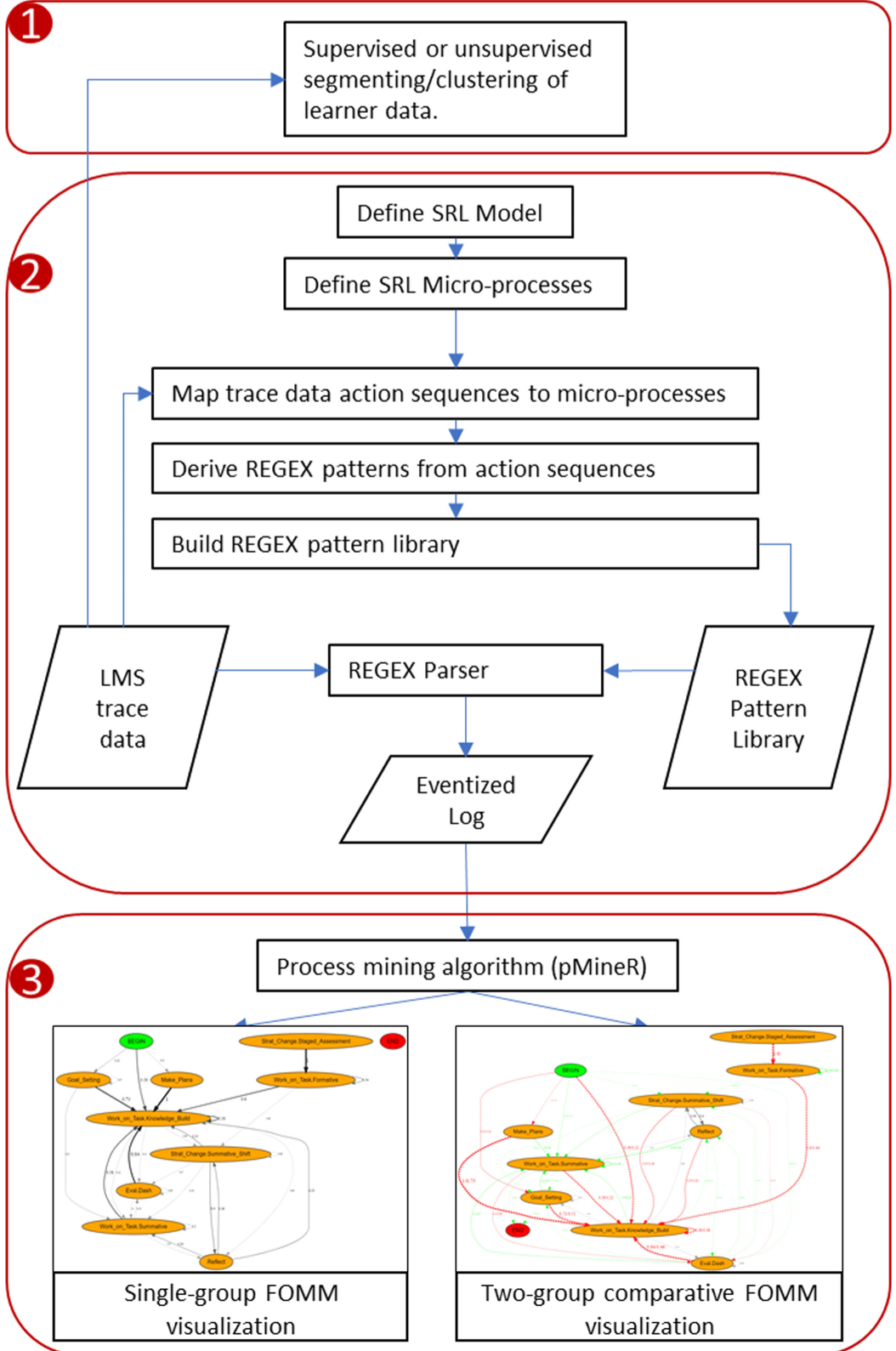 Figure 1: The Trace-SRL Framework stages from raw data to process mining.
Key Insights: The Anatomy of a High Performer
The study compared four distinct student "strategy groups." The differences were stark:
- The "Active Agile" (Successful): These students treat the dashboard as a metacognitive trigger. After checking their performance, they have a 0.84 probability of returning to course content to fill gaps. They are "Strategic Learners."
- The "Summative Gamblers" (At-Risk): These students start sessions by jumping straight into assessments (18% vs. 5% for high performers). They attempt to "fast-track" learning, skipping the necessary knowledge-building phase.
Theoretical Alignment
The data confirms Winne and Hadwin’s SRL model. Successful students exhibit tight loops between self-evaluation and task engagement. Conversely, lower performers show "speculative" behavior—a symptom of poor metacognitive judgment where they overestimate their mastery.
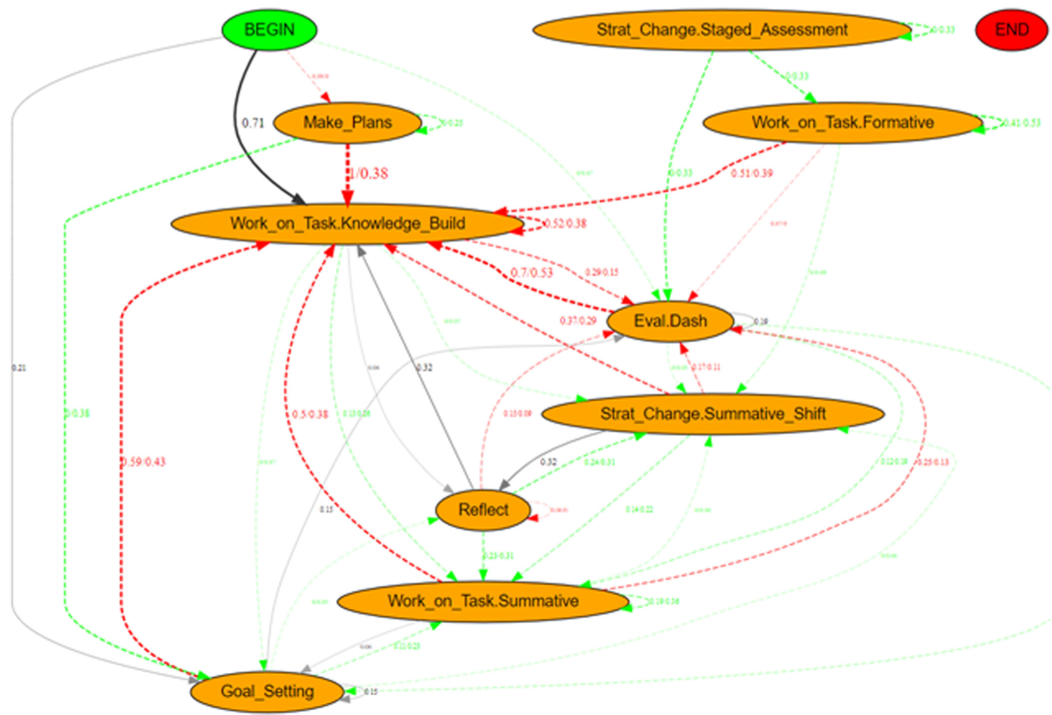 Figure 2: FOMM comparison highlighting the "Knowledge Building" self-loops of high performers in green.
Implications for Education Technology
The results suggest that Dashboards are a double-edged sword. While they help "Active" students calibrate their efforts, they can encourage "Semi-engaged" students to focus on performance metrics rather than mastery—a phenomenon known as Surface Learning.
Future Outlook: The next generation of Educational AI shouldn't just show grades. It should provide "in-situ" scaffolding. Imagine a system that detects a student jumping to a summative test without enough "Knowledge Build" time and intervenes: "You haven't reviewed the prerequisite video yet; would you like to do that first?"
Conclusion
Trace-SRL proves that the "Temporal DNA" of learning is discoverable. By shifting from frequency counts to transition probabilities, we can finally see the invisible scaffolding of self-regulation. The framework offers a scalable, non-invasive way to identify struggling students before they fail, purely through the rhythm of their digital interactions.