
TRACER: Decoupling Time-Invariant and Time-Variant Importance for High-Stakes Analytics
TRACER: A Framework for Facilitating Accurate and Interpretable Analytics for High Stakes Applications
TRACER is a framework for high-stakes time-series analytics (e.g., healthcare and finance) that introduces the TITV (Time-Invariant Time-Variant) model. It achieves state-of-the-art performance in tasks like AKI prediction and mortality risk while providing feature-level interpretability.
TL;DR
In high-stakes domains like healthcare and finance, a model's "Why" is as critical as its "What." TRACER introduces a novel framework called TITV (Time-Invariant Time-Variant) that bridges the gap between the high performance of deep learning and the transparency required by clinicians. By separating features that are always important from those that shift in priority over time, TRACER achieves SOTA accuracy while providing "physician-approved" explanations.
The Interpretability Paradox in High-Stakes AI
When a doctor is told a patient has a 26% mortality risk, the immediate question is: Which indicator triggered this?
Current solutions face a trade-off:
- Linear Models (LR): Highly interpretable but "blind" to temporal variations.
- Deep RNNs/LSTMs: Excellent at capturing trends but notoriously opaque.
- Existing Attention (RETAIN/Dipole): Often focus only on visit importance or conflate persistent risks with temporary spikes.
The authors of TRACER argue that medical features have dual natures. For example, Urea is a persistent indicator of kidney health (Time-Invariant), but its importance spikes specifically as an Acute Kidney Injury (AKI) event approaches (Time-Variant).
Methodology: The TITV Architecture
The core innovation lies in the TITV model, which processes data through two specialized modules.
1. The Time-Invariant Module (The Global Lens)
Using a FiLM (Feature-wise Linear Modulation) mechanism, this module generates scaling () and shifting () parameters. This acts as a global "filter" that identifies which features are fundamentally important across the entire duration of the data.
2. The Time-Variant Module (The Local Lens)
This module uses a Self-Attention mechanism guided by the global parameters from the first module. It pinpoints specific time windows where a feature becomes critical, capturing the "volatility" of clinical indicators.
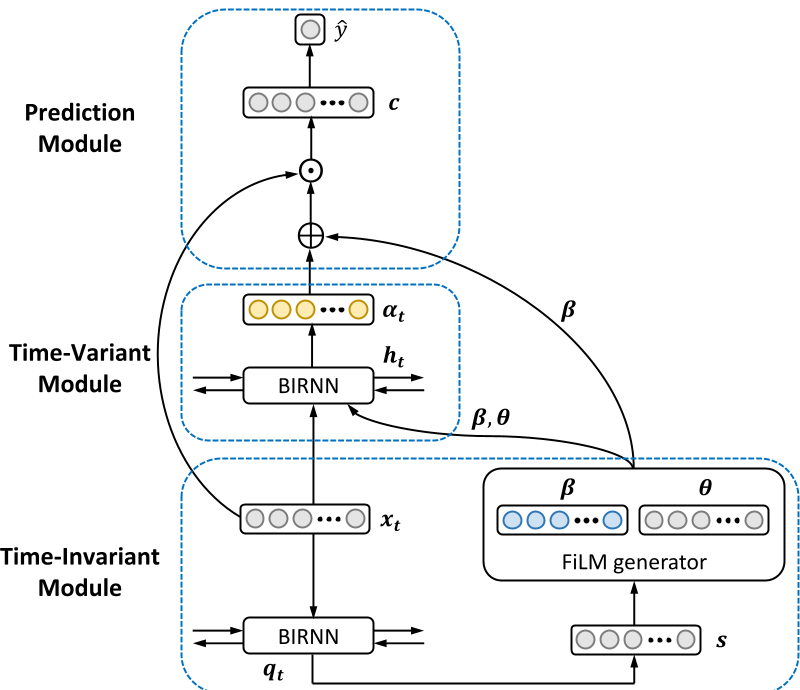
Figure: The TRACER framework workflow, showing the interaction between invariant and variant modules to generate a final prediction and feature importance score.
Experimental Results: Precision Meets Trust
The framework was tested on two massive datasets: NUH-AKI (National University Hospital, Singapore) and MIMIC-III (ICU data).
Performance Edge
TRACER consistently outperformed established baselines like RETAIN and Dipole in both AUC (Area Under Curve) and CEL (Cross-Entropy Loss). The ablation studies confirmed that removing either the Invariant or Variant module leads to a significant performance drop, proving the necessity of the dual-path approach.
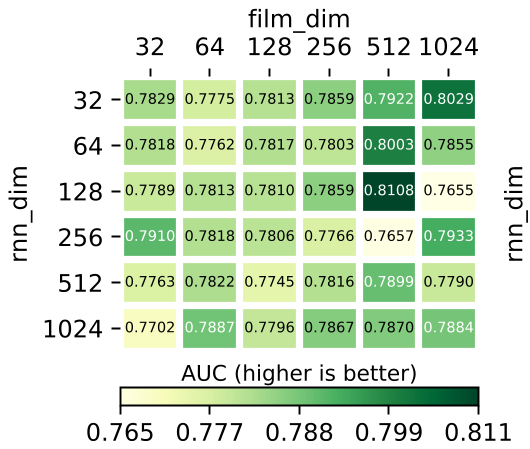
Table: Quantitative comparison shows TRACER achieving the lowest error rates (CEL) and highest AUC across datasets.
Clinical Validation: The "Acid Test"
The most impressive part of the work is the qualitative validation. In mortality prediction, TRACER identified Temperature and pH as high-importance features. Clinicians confirmed that as a patient's condition deteriorates, the "Base Excess" and "Oxygen" levels show specific Importance-Time patterns that align perfectly with respiratory failure or circulatory shock.
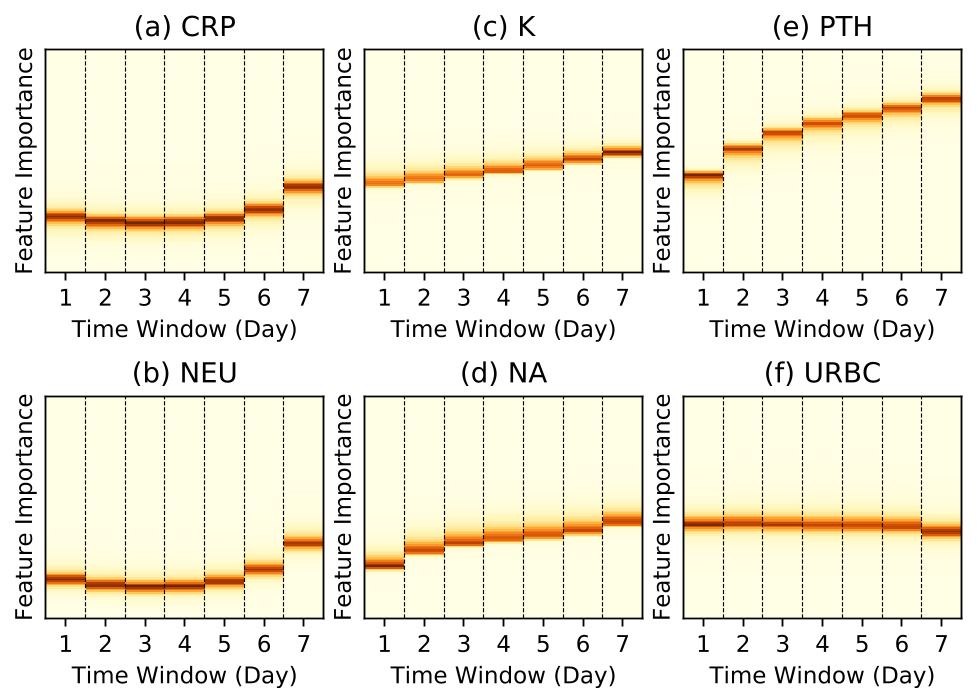
Figure: Feature-level interpretation for AKI prediction. Note how features like C-Reactive Protein (CRP) show a sharp spike in importance as the risk event nears.
Beyond Health: Financial Analytics
The paper extends TRACER to the NASDAQ-100 Index prediction. It successfully identified that top-tier stocks like Amazon (AMZN) have high, fluctuating importance (significant indicators), while bottom-tier stocks have consistently low importance—even correctly reflecting stocks that were later removed from the index.
Critical Insight & Conclusion
TRACER’s strength isn’t just in its accuracy, but in its inductive bias. By forcing the model to separate "stationary" importance from "dynamic" importance, the authors have created a latent space that mirrors how human experts think.
Takeaway: If you are building AI for environments where a mistake costs a life or a fortune, generic Attention is not enough. You must model the temporal persistence of your features.
Limitations: While powerful, the model’s complexity makes it slightly more computationally expensive to train than simple RNNs, though it shows sub-linear scalability with additional GPUs.