
From Disruption to Convergence: Tracking the Interplay of Crowdfunding, Blockchain, and ICOs
Tracking the Digital Evolution of Entrepreneurial Finance: The Interplay Between Crowdfunding, Blockchain Technologies, Cryptocurrencies, and Initial Coin Offerings
This study presents a longitudinal Social Media Analytics (SMA) investigation into the digital evolution of entrepreneurial finance. By analyzing nearly 200,000 social media posts, it tracks the shifting interplay between established crowdfunding and the emerging trio of blockchain, cryptocurrencies, and Initial Coin Offerings (ICOs), identifying a transition from technology-focused speculation to high-integrated convergence.
TL;DR
The landscape of entrepreneurial finance is undergoing a rapid digital metamorphosis. This paper analyzes three critical years of social media discourse to show how Blockchain, Cryptocurrencies, and ICOs moved from being perceived as "crowdfunding killers" to becoming integrated sub-components of a broader, more sophisticated digital financing ecosystem.
Background: The Democratization Problem
Crowdfunding was the "original" digital disruptor of finance, promising to connect entrepreneurs directly with the crowd. However, the reality fell short: it remained tethered to local regulations and geographic biases. The arrival of Blockchain offered a decentralized, borderless promise, but it raised a vital question: Will new decentralized tools replace the traditional crowdfunding platform, or will they simply upgrade it?
Methodology: Listening to the Global Lab
The researchers treated social media as a "living lab," capturing 197,770 posts across Twitter, Facebook, and Instagram during three distinct eras:
- ICO Emergence (May 2017)
- ICO Heyday (Oct 2017)
- Post-Deflation (Oct 2018)
They utilized Social Media Analytics (SMA) to filter "noise" and focus on thematic shifts using an area-proportional Euler diagram to visualize the overlapping interests of the community.
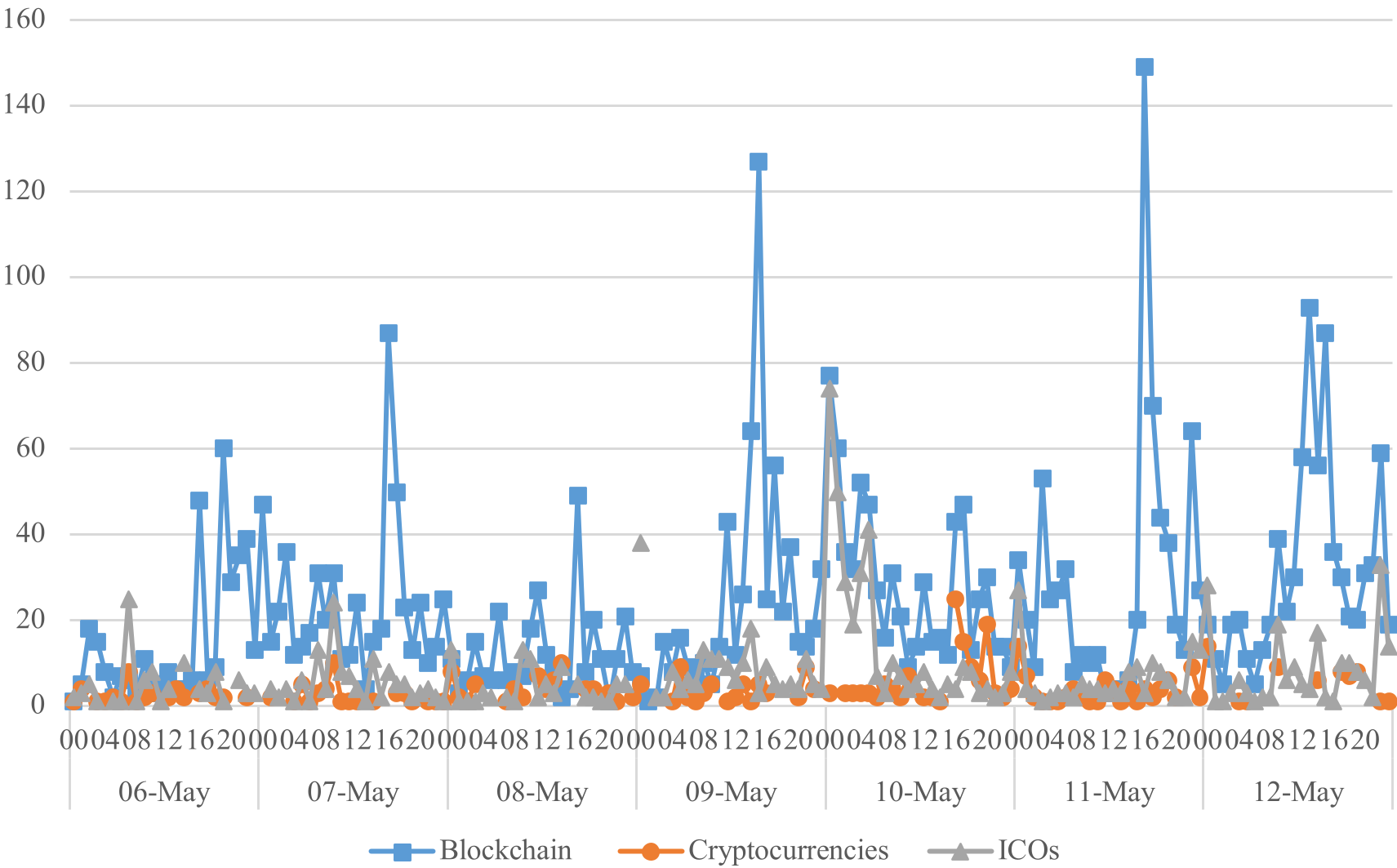
Methodology Detail: The Thematic Framework
The core of the analysis rests on eight thematic categories. In the early stages (Period 1), the focus was on System Integration (e.g., Microsoft Azure's integration of Waves). By Period 2, the conversation shifted toward Education and ICO Advertisements as the bubble peaked.

Experiments & Results: The Convergence Shift
The findings paint a picture of technology maturation:
- The Substitution Phase (Period 1-2): "Will ICOs crowd out crowdfunding?" Early adopters viewed blockchain as a replacement for the "middleman" platforms (Kickstarter, Indiegogo).
- The Realization Phase (Period 2): Social media users began pushing back, noting that "adding 'blockchain' to a lame campaign doesn't make it a cool ICO."
- The Convergence Phase (Period 3): After the bubble burst, the discourse shifted significantly. Instead of seeing them as separate entities, the market began viewing ICOs as "Crowdfunding on the Blockchain."
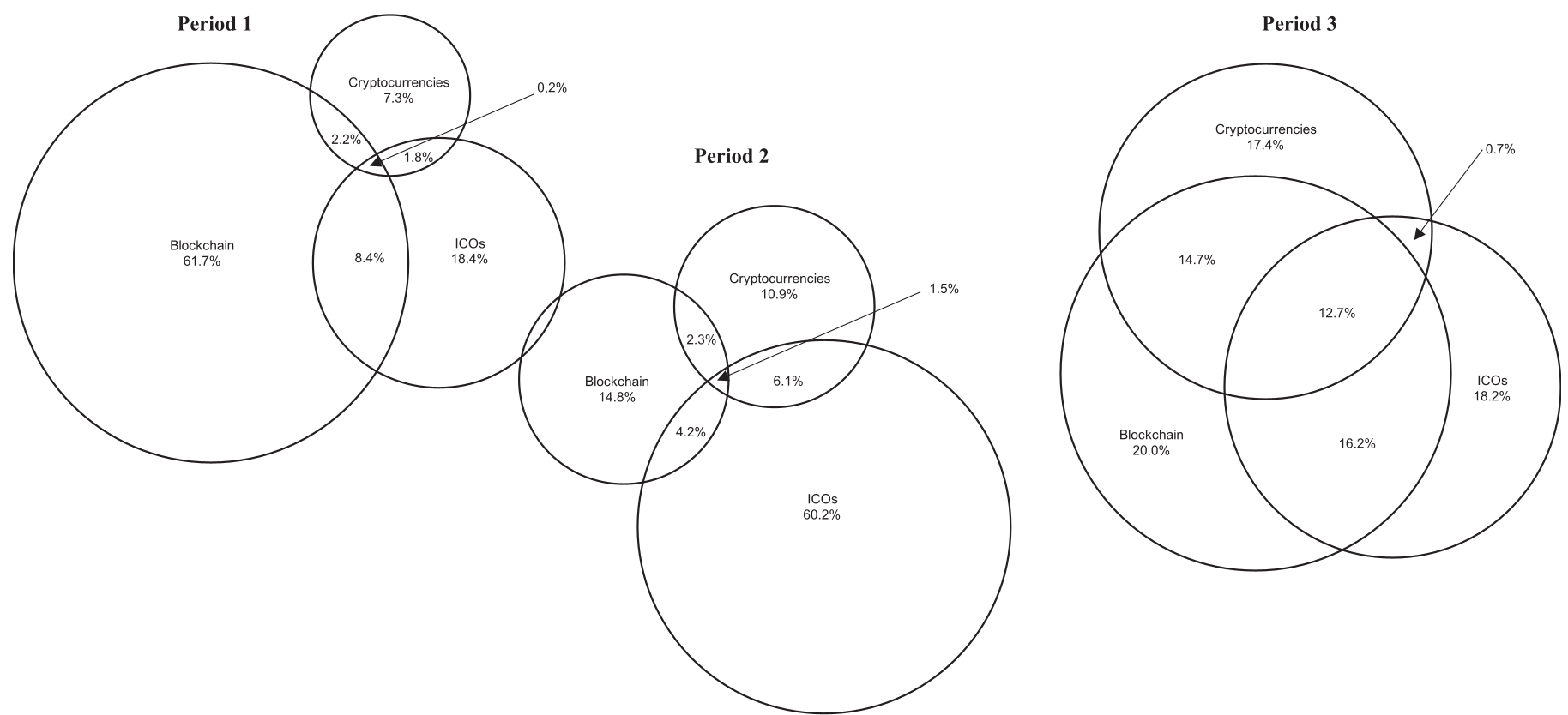
As shown in the figure above, the overlaps between Blockchain, Cryptocurrencies, and ICOs became increasingly inseparable over time, especially in the context of crowdfunding.
Critical Insights: Why It Matters
The most profound takeaway is that Blockchain did not kill the platform; it evolved it.
Early fears of total disintermediation (removing all middlemen) were tempered by the reality that platforms still provide essential services: trust, curation, and social capital. However, the integration of blockchain helped solve the "geography problem," allowing for a more global flow of assets.
Limitations
- Language Bias: The study only analyzed English-speaking social media, potentially missing distinct regulatory or cultural shifts in Asian or European non-English markets.
- Platform Dominance: 90%+ of the data came from Twitter, which may lean more toward "tech-hype" compared to professional finance forums.
Conclusion
This study serves as a historical record of a "technology trajectory." It moves past the hype cycles of 2017 to show that the digital evolution of finance isn't about one technology winning—it's about the convergence of decentralized technology with the social structures of the crowd. For practitioners, the message is clear: the future of finance is borderless, but it still requires the social trust mechanisms that platforms provide.