AIM: Bridging Traditional and Viral Marketing with Low-Rank Optimization
Combining Traditional Marketing and Viral Marketing with Amphibious Influence Maximization
This paper introduces Amphibious Influence Maximization (AIM), a novel framework that integrates traditional marketing (via content providers) and viral marketing (via social networks). The authors propose the Sampled Double Greedy (SDG) algorithm, which achieves a approximation ratio when the provider-consumer influence matrix is of constant rank.
TL;DR
The paper "Combining Traditional Marketing and Viral Marketing with Amphibious Influence Maximization" tackles a practical yet complex scenario: How do you split a marketing budget between content providers (like influencers) and target consumers to maximize a social media cascade? The authors prove this problem is fundamentally harder than standard influence maximization but provide a breakthrough algorithm for cases where influence patterns follow a "low-rank" structure.
The Motivation: Why "Amphibious"?
In the traditional view, an advertiser picks a set of people in a social network (seeds) and hopes for the best. In reality, marketing is "amphibious"—it lives in two worlds:
- The Bipartite World: Advertisers pay content providers (bloggers, news sites) to reach consumers.
- The Social World: Those consumers then talk to their friends, triggering a viral cascade.
The AIM problem asks us to select a subset of providers () and a subset of consumers () simultaneously. This coordination is the "killer" difficulty: if you pick great providers but the consumers you target aren't looking at them, the campaign fails.
The Complexity Wall
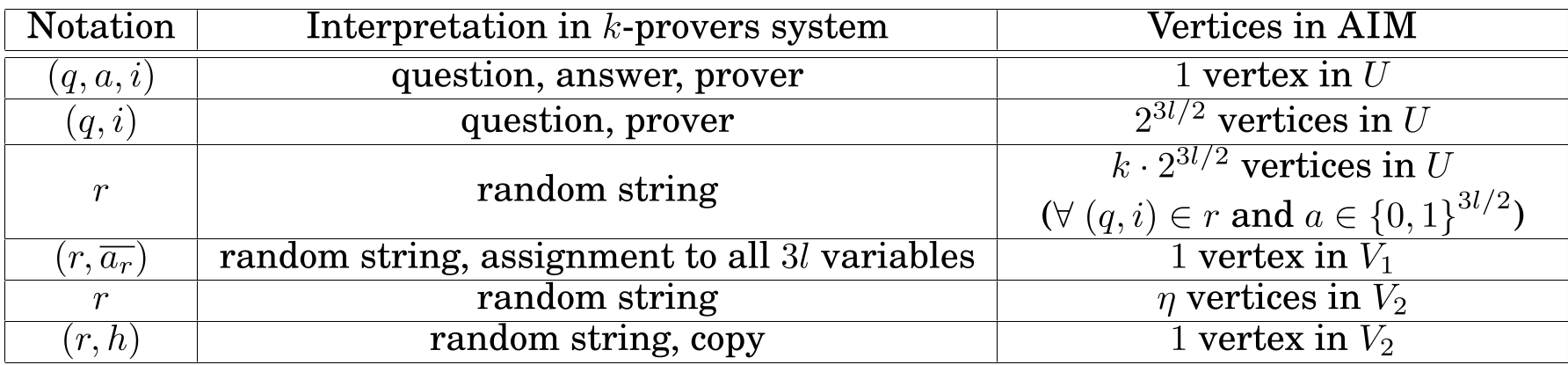
The authors provide a sobering theoretical analysis. Using a reduction from Feige’s k-prover proof system, they prove that AIM is NP-hard to approximate within any constant factor. Even if the social network has zero edges (no viral spread), finding the best set is as hard as the Densest-k-Subgraph problem.
 Figure 1: The dual-layer structure representing Providers (U) and Consumers (V).
The Insight: Low-Rank to the Rescue
How do we solve an impossible problem? We look at how data behaves in the real world. In recommender systems (like the Netflix Prize), we assume the relationship between content and users is low-rank—meaning people's preferences are driven by just a few hidden factors (e.g., genre, age, location).
By assuming the bi-adjacency matrix (probabilities from providers to consumers) has a constant rank , the authors shrink the "search space" of influence.
Methodology: The (1+ε)-Net & SDG Algorithm
The core of the solution is a three-step process:
- Grid Construction: Since the rank is small, the authors build a "(1+ε)-net"—a sparse grid of potential influence levels that covers all possible outcomes.
- Concave Relaxation: They replace the discrete activation probability with a smooth version: . This makes the math tractable.
- Sampled Double Greedy (SDG): For every point in their grid, they run a greedy search for consumers (), then a greedy search for providers ().
 Figure 2: The mathematical definition of the hyper-rectangles used to discretize the low-rank subspace.
Experimental Performance & Guarantees
The SDG algorithm achieves an approximation ratio of . While a "cubed" error might look large, in the world of combinatorial optimization, achieving a constant-factor guarantee on a problem that is otherwise inapproximable is a massive theoretical victory.
The running time is polynomial in the number of nodes (), though exponential in the rank (). In practice, is often very small (e.g., or ), making this highly efficient.
Critical Analysis
The Takeaway: This paper is a masterclass in "Assumed Structure" research. By identifying that the interaction between layers is the bottleneck, and that this interaction is often low-rank in marketing data, the authors turned a theoretical dead-end into a solvable framework.
Limitations:
- Non-Adaptivity: The model assumes you pick all seeds at once. In modern digital ads, one might prefer an adaptive model where you pick consumers after seeing which blog posts go viral.
- Rank Sensitivity: If the influence matrix is high-rank (highly idiosyncratic), the algorithm's performance degrades.
Future Outlook
As marketing becomes increasingly algorithmic, models like AIM that bridge the gap between "Top-down" (advertising) and "Bottom-up" (viral) are essential. Future work could look into Multi-Modal AIM, where different types of content (video vs. text) have different ranks and influence weights.
Main Results Summary Table: