
Inside the Wire: Traffic Analysis and Hidden Flaws of Social Mobile Games
Traffic analysis of a social mobile game
This paper presents a measurement-based traffic analysis of "Anipang," a representative social mobile game on the KakaoTalk platform. By employing packet-level inspection via Wireshark, the study maps the complex multi-server architecture involved in casual social gaming and identifies critical security and performance anomalies.
TL;DR
In the rapidly expanding world of mobile gaming, the "Social" element is no longer just a feature—it's the backbone. This study takes a scalpel to Anipang, a pioneer in the Korean social game market, revealing a surprisingly complex web of server dependencies. While the game's data footprint is small, the researchers discovered significant privacy leaks in friend list transfers and massive TCP inefficiencies that could strain server infrastructure.
The Motivation: Why Casual Games are Network Nightmares
While hardcore MMORPGs like World of Warcraft have been studied extensively, casual "Social Mobile Games" are often overlooked. Unlike standalone apps, these games are "Platform-Resident"—meaning they rely on third-party ecosystems like KakaoTalk or Facebook.
The authors argue that when performance drops, it is nearly impossible for administrators to pinpoint the cause because the traffic is a "spaghetti" of:
- Authentication & Distribution: App stores and update servers.
- Social Graphs: Real-time friend lists and "Heart" invitation systems.
- In-App Economy: Payment and accounting gateways.
- Gameplay Core: The actual game logic and event servers.
Methodology: Peering into the Packet Stream
The research team established a controlled Wi-Fi environment to monitor a Galaxy Nexus running Anipang (v1.4.39). By using Wireshark, they captured the transition from the "Loading Phase" to the "Gaming Phase," mapping every DNS lookup and handshake.
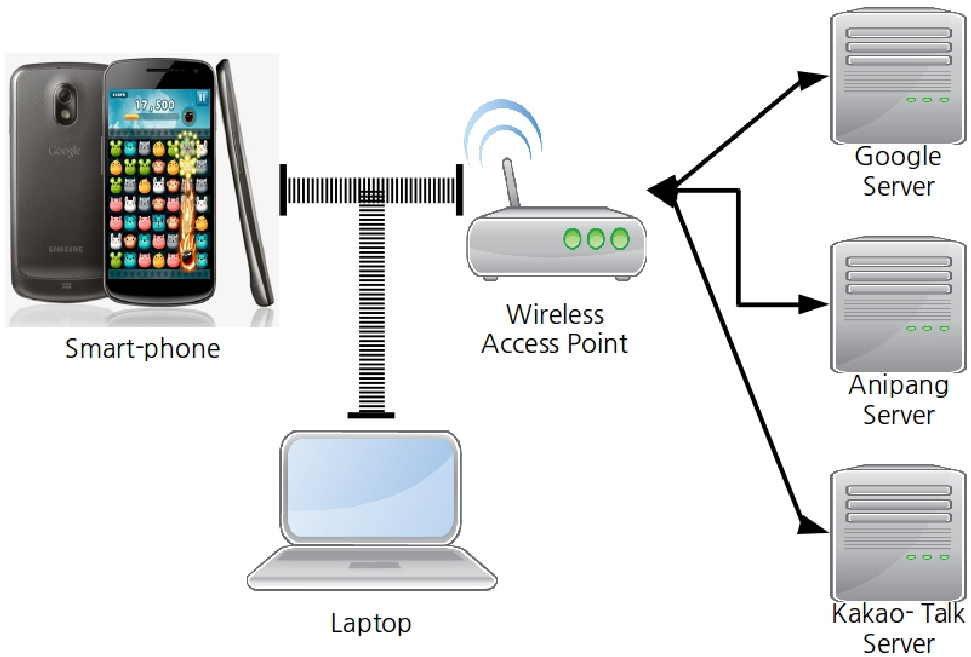 Fig 1. The measurement setup used to capture granular packet traces.
The Multi-Server Dance
A key takeaway is the sheer number of stakeholders involved in a single casual session. During the loading phase alone, the client negotiates with:
- Version Checkers (Anti-fragmentation)
- Anti-Cheat Servers (Verification)
- Social API (KakaoTalk) (Identity)
- Google APIs (Platform services)
- CDNs (Static assets like game images)
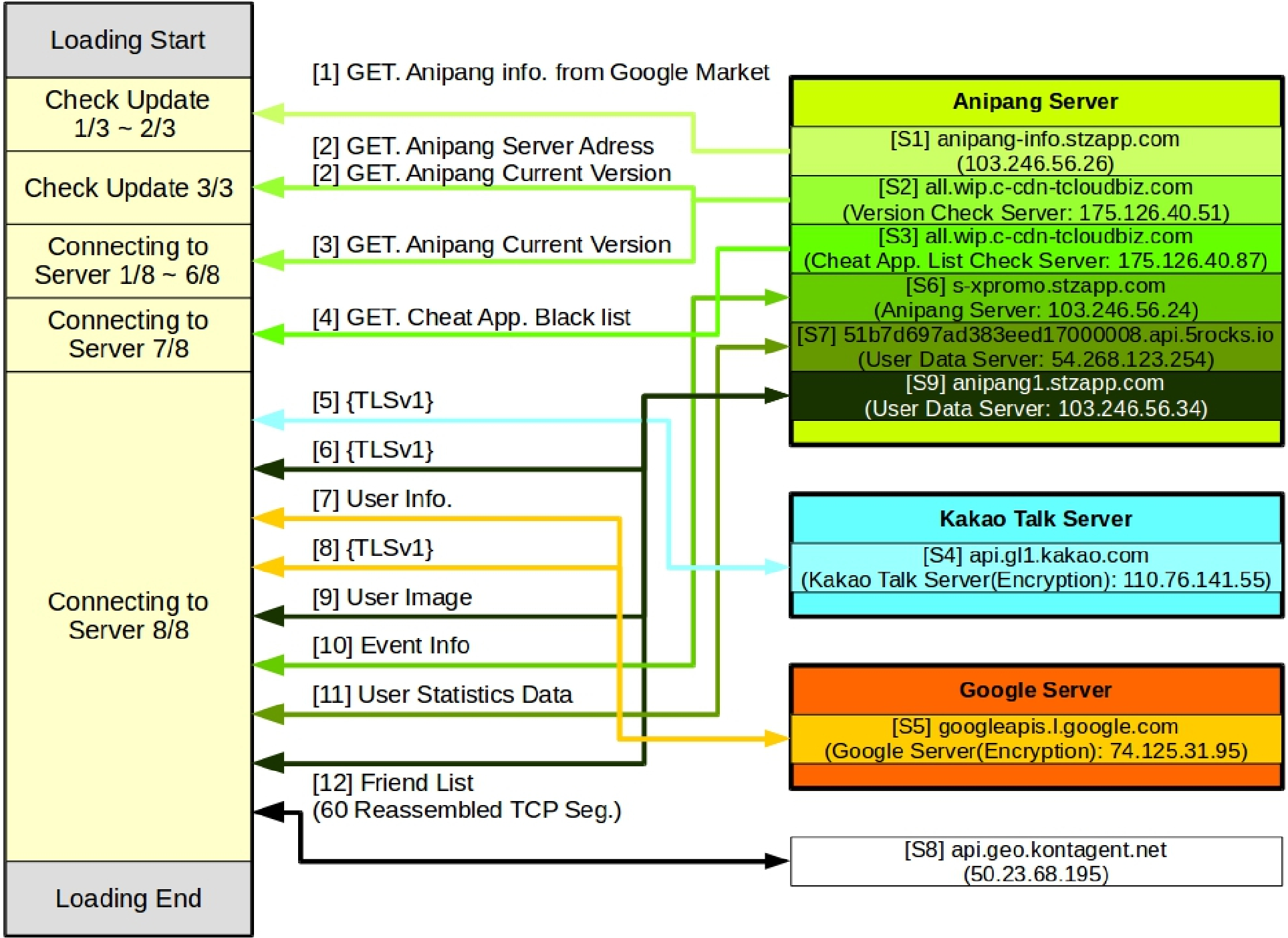 Fig 2. The 9-step server handshake required just to reach the main menu.
The Vulnerabilities: Privacy and Performance
1. The Security Paradox
While the game utilizes TLSv1 for initial logins, the authors found a glaring inconsistency regarding Social Privacy. While game subscription is encrypted, the transfer of friend lists, status messages, and profile pictures defaults to plaintext.
This means anyone on the same Wi-Fi network could sniff the user's social circle and personal status—a major oversight in a genre defined by social connection.
2. The "33-FIN" Problem: TCP Anomalies
The most technical discovery involves the TCP stack's behavior. The researchers observed:
- Ghost Connections: Multiple TCP handshakes that open and close immediately without carrying any data.
- Termination Storms: Upon finishing a game, the client was observed sending the FIN/ACK segment up to 33 times.
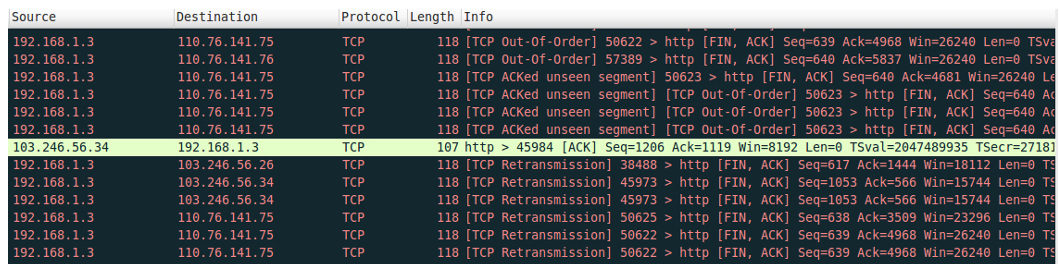 Fig 3. Visualization of duplicate FIN segments causing protocol overhead.
These duplicate segments are indicative of a poorly optimized network stack or a failure in the application-to-socket signaling, leading to unnecessary CPU and bandwidth overhead on the server side.
Critical Analysis & Takeaways
This paper serves as a wake-up call for mobile game developers.
- Takeaway 1: Encryption is not "All or Nothing." Securing the login but leaving the social graph exposed is a dangerous halfway house that violates user trust.
- Takeaway 2: Protocol Hygiene matters. Redundant TCP signaling might not affect a single user much (given the 402KB total traffic), but at the scale of millions of concurrent "Anipang" players, it creates a massive, avoidable "noisy neighbor" effect on server infrastructure.
Limitations: The study is platform-specific (Android/KakaoTalk) and focuses on a single game title. However, the identified patterns of multi-server dependency are likely systemic across the entire social mobile gaming industry.
Future Outlook
As games move toward even more integrated ecosystems (Metaverse-style interactions), the "Measurement-based view" proposed here must become automated. Developers need CI/CD pipelines that audit not just code, but the network signatures of their apps to ensure privacy and protocol efficiency.