
Leveraging Social Sensors: A Hybrid Model for Real-Time Traffic Event Detection
Traffic Event Detection Using Online Social Networks
2017-06-01
Summary
Problem
Method
Results
Takeaways
Abstract
This paper introduces a hybrid and generic framework for detecting urban traffic events (accidents, roadworks, jams) by mining Online Social Networks (OSNs), specifically Twitter. Leveraging a combination of NLP, machine learning classifiers like MLP and SVM, and Named Entity Recognition (NER), the system achieves up to 94.2% accuracy in event categorization.
## TL;DR
Modern cities are plagued by traffic congestion, yet physical infrastructure often fails to report incidents in real-time. This paper presents a generic framework that transforms **Online Social Networks (OSNs)** into a distributed sensor network. By combining NLP preprocessing with advanced machine learning, the researchers achieved over **94% accuracy** in identifying traffic incidents and significantly improved the precision of location extraction from informal tweets.
## The Problem: Data Rich, Information Poor
While millions of citizens tweet about accidents and road closures, this data is notoriously "noisy." Unlike sensor logs, tweets lack fixed formats, contain slang, and often omit explicit coordinates. Prior works in event detection often suffered from a trade-off: they could either identify *that* something happened (high recall) or *what* happened (high precision), but rarely both accurately. The challenge lies in turning a chaotic stream of "The 101 is blocked!" into structured, actionable data for emergency services.
## Methodology: The Four-Step Hybrid Framework
The authors propose a systematic pipeline designed to be "source-agnostic," meaning it can ingest data from Twitter, Waze, or RSS feeds.
### 1. Data Acquisition & Preprocessing
To handle the entropy of social media, the system employs a rigorous cleaning phase using **Regular Expressions**, **Stemming**, and **Stop-word removal**. They use **TF-IDF (Term Frequency-Inverse Document Frequency)** to weight the importance of specific terms, ensuring that rare but critical words like "collision" are prioritized over common words like "the."
### 2. Event Identification (Clustering & Classification)
The model uses a dual approach. First, it employs clustering (K-Means, EM, Spectral Clustering) to find naturally occurring groups of reports. Second, it utilizes supervised learning—specifically **Multilayer Perceptron (MLP)** and **Support Vector Machines (SVM)**—to categorize tweets into "Usual," "Accident," or "Roadworks."
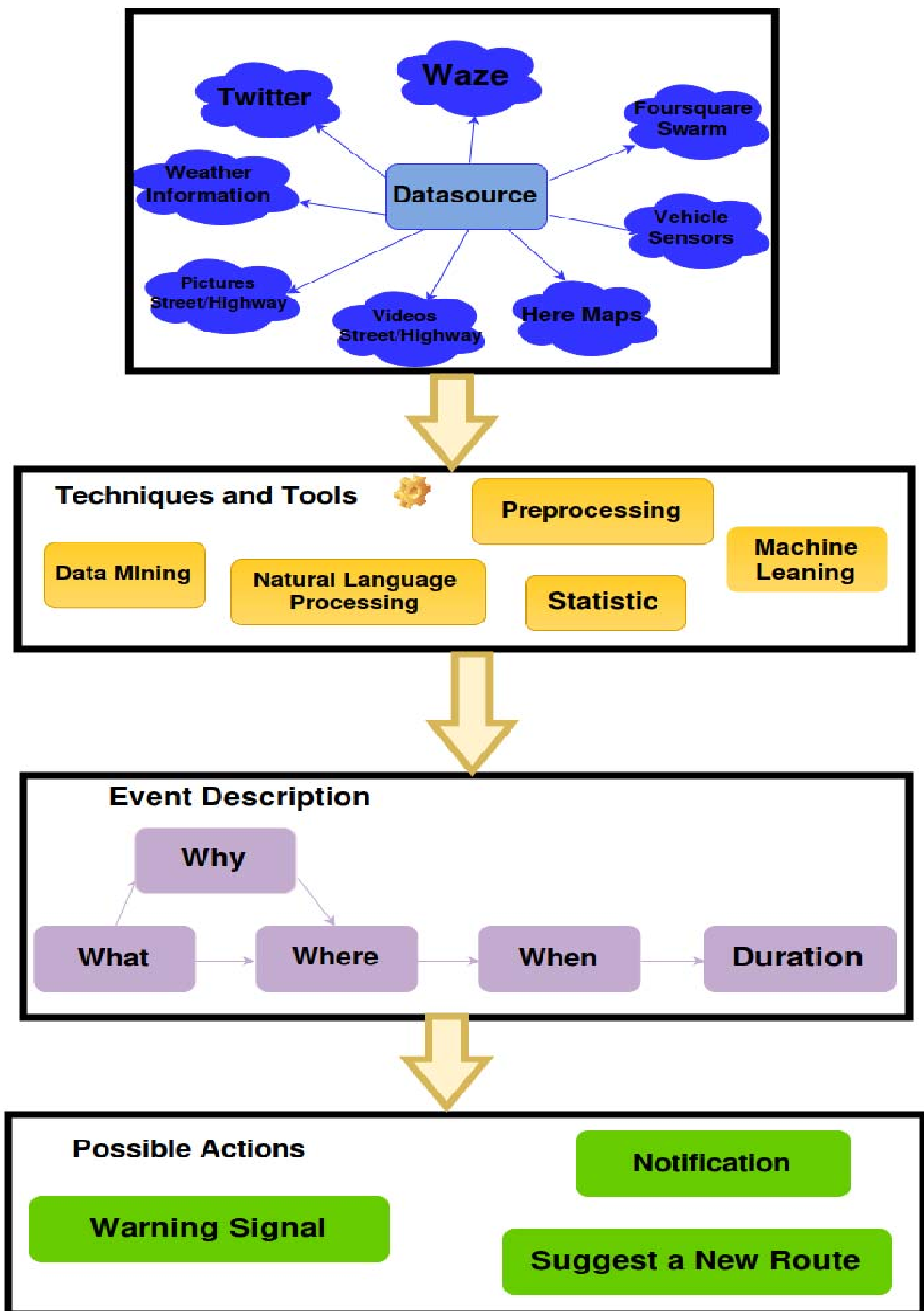
*Figure 1: The proposed hybrid model for mapping social data to traffic events.*
### 3. Location Extraction
One of the most difficult tasks is "Geocoding" a text report. The authors utilized **Stanford NER (Named Entity Recognition)**. They tested different classifier configurations (3, 4, and 7 classes) to see which performed best on the messy syntax of Twitter.
## Experimental Results: Setting a New Baseline
Using a dataset of 3,000 tweets from the San Francisco Bay Area, the results proved that neural networks significantly outshine traditional statistical methods for this task.
* **Classification Power**: The MLP model reached **94.2% precision**, outperforming previous benchmarks (85%) by a wide margin.
* **Locational Accuracy**: While NER is traditionally built for formal English, the 3-class Stanford model managed a **58.19% recall**, effectively identifying street names and landmarks that previous regular-expression models missed.
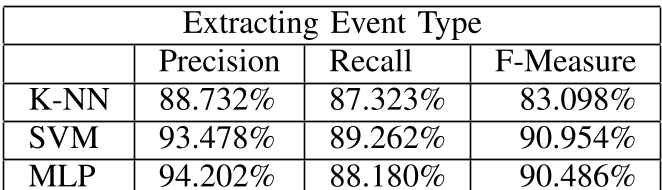
*Table 1: Comparison of MLP, SVM, and K-NN in categorizing traffic incidents.*
## Critical Analysis & Future Directions
The core strength of this work is its **generality**. By creating a framework that doesn't rely on a single algorithm, the authors allow for various "plug-and-play" modules (e.g., swapping MLP for a Transformer-based model like BERT in the future).
**Limitations**: The location extraction, while improved, still sits at around 51-54% F-measure. This indicates that "informal location" (e.g., "near the big mall") remains a massive hurdle for standard NER tools.
**The Takeaway**: This research moves us closer to **Smart City 2.0**, where the city doesn't just listen to sensors in the pavement, but to the collective voice of its citizens to resolve traffic crises in minutes rather than hours.
## Conclusion
By integrating machine learning with natural language processing, Pereira et al. have demonstrated that OSNs are not just for social interaction—they are vital, real-time diagnostic tools for urban infrastructure. Future iterations involving multi-modal data (photos of accidents) could push these accuracy figures even higher.