
Training the Crowd: Turning Microtasks into Microlearning Opportunities
Training Workers for Improving Performance in Crowdsourcing Microtasks
This paper introduces a "workers as learners" framework for crowdsourcing, proposing Implicit and Explicit training strategies to optimize microtask performance. By evaluating 1,200 workers across four distinct task types (Information Finding, Verification, Sentiment Analysis, and Content Creation), the authors demonstrate that structured training significantly enhances result quality and worker efficiency.
TL;DR
Is it possible to increase the quality of crowdsourced data while decreasing the time workers spend on it? This paper argues "yes" by treating crowd workers as students in an atypical learning environment. By implementing Implicit and Explicit training phases, the researchers achieved up to a 41% reduction in completion time and a 15% gain in cost-effectiveness, effectively filtering out malicious spammers in the process.
Background: The Productivity Gap in the Crowd
Most crowdsourcing platforms (like Amazon Mechanical Turk or CrowdFlower) treat workers as "black boxes" of labor. Requesters provide static instructions and hope for the best. When quality is low, we usually blame the workers’ lack of skill or interest.
However, the authors of this paper identify a different problem: The Learning Context. Crowd workers are "experiential learners" who must grasp task logic "on-the-fly." Without a structured feedback loop, honest workers remain inefficient, and malicious workers find it easy to "game" the system.
Methodology: Implicit vs. Explicit Training
The researchers tested three configurations across 12 tasks involving 1,200 workers:
- Implicit Training (IT): Learning by failing. Workers are only corrected when they provide a wrong answer to a "control" question.
- Explicit Training (ET): A proactive "bootcamp." Workers must pass a training session with specific tips and samples before they are allowed to earn money on the main task.
- No Training (NT): The baseline, representing the current standard in the industry.
Task Domain Coverage
The study spanned four diverse microtask types:
- Information Finding (IF): Locating middle names of celebrities.
- Verification (VV): SMS spam detection.
- Interpretation (IA): Sentiment analysis of tweets.
- Content Creation (CC): CAPTCHA transcription.
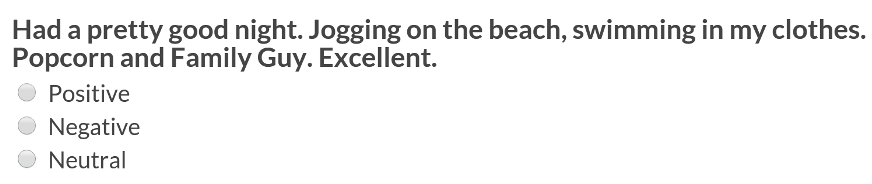 Figure 1: An example of an Interpretation and Analysis (IA) task unit.
Key Insights: Why Training Works
The results revealed a fascinating trend across almost all task types (with the minor exception of the very simple "Spam Detection" task).
1. Speed and Accuracy are NOT a Trade-off
Counter-intuitively, adding a training phase made workers faster. In Information Finding tasks, average completion time dropped by 41%. Once workers "learned" the optimal search strategies during training, they stopped fumbling with inefficient methods.
2. Deterrence of Malicious Workers
Spammers look for paths of least resistance. The study found that Explicit Training significantly reduced the fraction of malicious workers (e.g., from 10% down to 1.5% in IF tasks). Malicious actors are unwilling to invest the intellectual effort required to pass a training phase, effectively self-selecting out of the task.
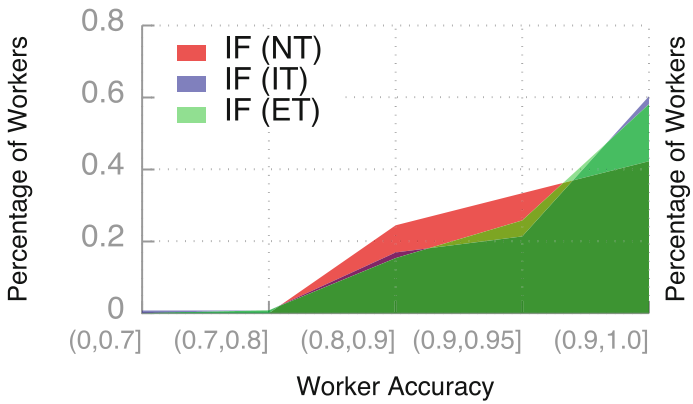 Figure 2: Impact of training on worker accuracy across different task types.
| Metric | No Training | Explicit Training | Gain |
|---|---|---|---|
| Accuracy (CC) | ~88% | ~93% | +5% |
| Time (IF) | Base | -41% | Massive Efficiency |
| Cost-Benefit | Base | +14.6% (IA) | Better UI/UX ROI |
Critical Analysis & Takeaways
The core contribution of this work is the shift from post-processing (filtering bad data after it’s created) to pre-processing (building better workers).
- Why it works: It targets the worker’s reputation motivation. Most workers want to succeed to maintain high trust scores; training gives them the tools to do so.
- Limitations: The "Spam Detection" (VV) task actually saw a slight decrease in performance with training. This suggests that for excessively simple tasks, training might introduce unnecessary cognitive load or "overthinking."
- Future Outlook: For modern AI requirements—especially during RLHF (Reinforcement Learning from Human Feedback)—training is no longer optional. This paper provides the empirical foundation for designing "qualifying rounds" that balance worker education with researcher budget.
Final Conclusion
Training isn't just an "extra cost"—it is a filter for quality and a catalyst for speed. As crowdsourcing tasks become more complex (e.g., training LLMs), move beyond instructions: Treat your crowd as learners.