
Optimized Postmen: Solving the Connectivity Gap in Sparse Mobile Social Networks
Trajectory Optimization of Packet Ferries in Sparse Mobile Social Networks
This paper proposes a trajectory optimization method for "packet ferries" (postmen) in sparse mobile social networks, utilizing a semi-Markov Decision Process (SMDP) to manage inter-community data transfer. The approach dynamically optimizes both packet selection and delivery sequences, significantly improving delivery ratios in delay-tolerant environments.
TL;DR
In sparse mobile social networks, data often gets "trapped" within isolated communities. This paper introduces an intelligent "Postman" (packet ferry) that doesn't just follow a fixed loop; it uses a semi-Markov Decision Process (SMDP) to decide which packets to pick up and in what order to deliver them to maximize its "reward"—effectively minimizing delivery delay and boosting the success rate.
The "Island" Problem in Mobile Networks
In environments like a university campus, people (and their devices) tend to cluster in specific areas—libraries, dorms, or cafeterias. In networking terms, these are isolated communities.
- The Conflict: While local communication within a community is easy, sending a packet from the Library to the Dorm is nearly impossible if no one is walking between them.
- The Limitation of Prior Work: Older solutions used "Super-nodes" that moved like a bus on a fixed route. However, fixed routes are inefficient when some packets are about to expire (TTL) and others are located in far-off communities.
The Core Insight: Postmen as Rational Agents
The authors reframe the packet ferry not as a passive vehicle, but as a rational agent seeking to maximize a reward.
- Reward = Timeliness: Delivering a packet early yields a high reward; delivering it after its TTL yields zero.
- SMDP Framework: Because decisions only depend on the current state (postman's location, current buffer, and packet deadlines), the problem is modeled as an SMDP to handle the continuous-time nature of movement.
Methodology: The Two-Step Decision
The optimization happens in two distinct phases whenever a postman reaches a community gateway:
1. Packet-Choosing Strategy
If the postman has limited buffer space but the gateway has many pending packets, the postman calculates which combination of new and existing packets will result in the highest potential reward.
2. Trajectory-Determination
Once the packets are on board, the postman must decide the sequence of destinations. Should it visit Community A first because the packets there are nearly expired, or Community B because it is closer? The SMDP calculates the Optimal Moving Trajectory by ergodically testing delivery sequences to find the one that maximizes the expected discounted total reward.
 The expected discount total reward serves as the mathematical foundation for trajectory selection.
Experimental Validation
Using real-world mobility traces from the Infocom 06 conference, the researchers compared their SMDP approach against two established baselines: MFRD (Message Ferrying Route Design) and MFDD (Message Ferrying Data Delivery).
Key Findings:
- The TTL Threshold: When the TTL is very short (e.g., 60 mins), the performance is lower because the postman "rationally" rejects packets it knows it can't deliver in time.
- Scaling with Speed: As the postman’s velocity increases from 60m/min to 120m/min, the delivery ratio climbs sharply across all methods, but the SMDP-based approach maintains a higher ceiling.
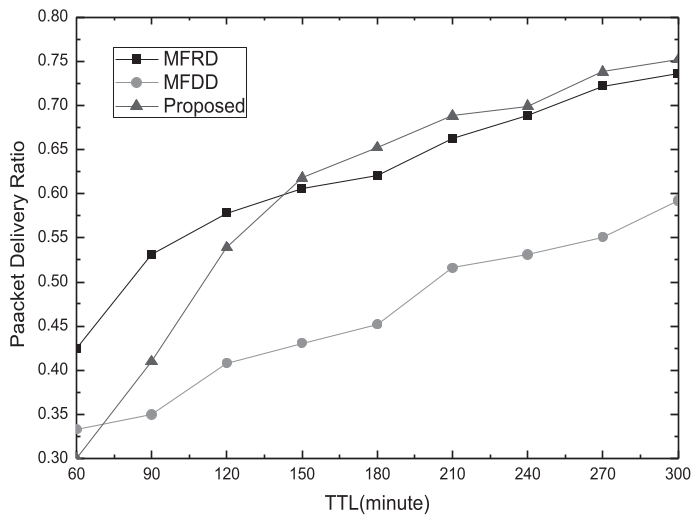 Fig 1: Under slower speeds, the optimization ensures that the most "deliverable" packets are prioritized.
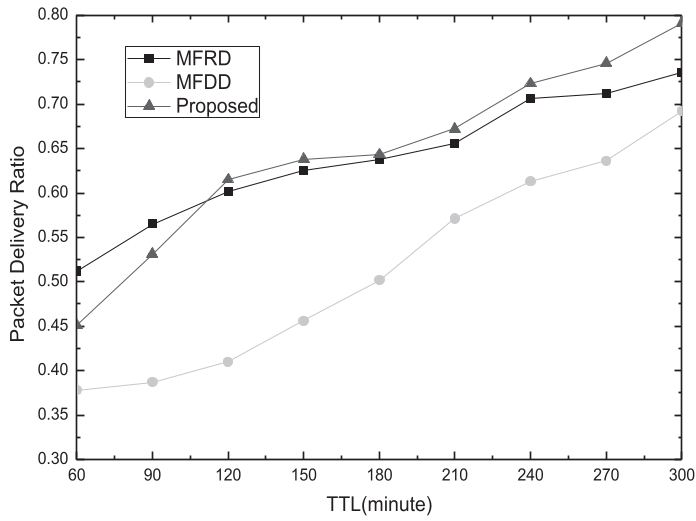 Fig 2: At higher speeds, the SMDP approach consistently outperforms MFRD and MFDD by adapting the route to the specific demands of the buffered packets.
Critical Insight & Conclusion
The true value of this paper lies in its Inductive Bias: it assumes that the network state is sparse enough that a single ferry can make a massive difference if it behaves intelligently.
Takeaways:
- Dynamic vs. Static: Static ferry routes are a bottleneck. Dynamic, reward-based trajectories significantly improve delivery ratios in Social DTNs.
- Limitations: The model currently assumes a single ferry and fixed gateways. Future iterations would benefit from Multi-Agent Reinforcement Learning (MARL) to coordinate multiple "postmen" and dynamic community detection for more fluid environments.
For architects of sparse networks—be it in rural connectivity or disaster recovery—this SMDP approach provides a robust blueprint for moving data where it needs to go, just in time.