
Crossing the Language Barrier: Effective Transfer Learning for Global Election Monitoring
16298_Transfer Learning for Multi-language Twitter Election Classification.
This paper presents a transfer learning framework for multi-language Twitter election classification, utilizing a linear translation matrix to bridge word embedding spaces across languages. The authors demonstrate that by mapping embeddings from a source language (e.g., Spanish) to a target language (e.g., English), they achieve SOTA cross-lingual performance without any target-domain training data, significantly outperforming traditional Transfer Component Analysis (TCA).
TL;DR
Researchers from the University of Glasgow have developed a method to reuse election classifiers across different languages without needing new training data. By using linear translation matrices to align word embeddings and generalizing Twitter-specific syntax, they achieved a massive 80% improvement in recall over traditional transfer learning baselines.
The Challenge: The Data Silo of Language
In the world of social science and political monitoring, Twitter is a goldmine. However, a model trained to detect election violence in a Spanish-speaking region (like Venezuela) is traditionally useless for an English-speaking one (like the Philippines).
The standard solution—labeling thousands of new tweets for every country—is too slow and expensive. While "Transfer Learning" aims to solve this, most methods struggle with the noisy, idiosyncratic language of social media.
The Insight: Geometric Symmetry in Language
The authors leveraged a fascinating property of word embeddings: similar concepts in different languages often share similar geometric arrangements in vector space. If you know where "election" sits relative to "vote" in English, the Spanish equivalents ("elección" and "votar") likely have a similar spatial relationship.
1. Linear Translation Matrix
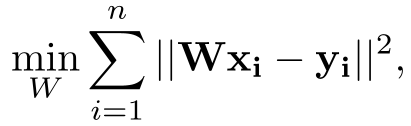
Instead of retraining models, the team learned a simple translation matrix to map vectors from the target language embedding space into the source language space.
2. Generalization through Preprocessing (The "Repl" Strategy)
Twitter handles and hashtags are often too specific (e.g., #6Dic or #PHVote). By replacing these with generic tokens like mention and hashtag, the model learns the context of political discourse rather than memorizing specific event tags.
Methodology: The Architecture
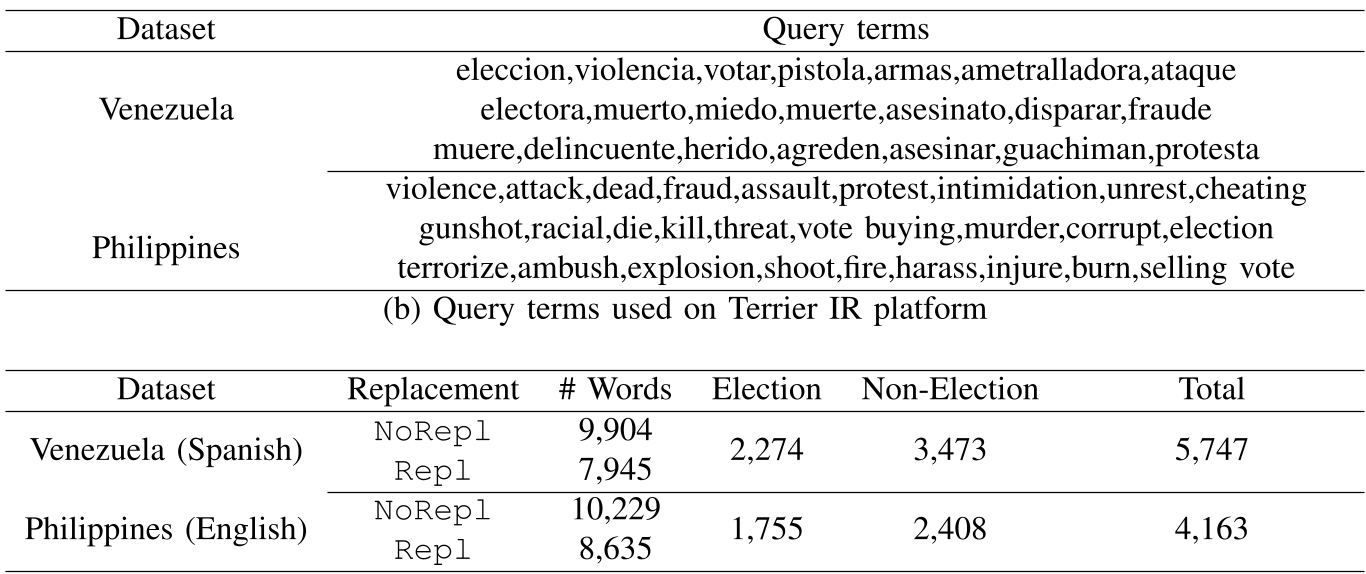
The researchers compared Support Vector Machines (SVM) and Convolutional Neural Networks (CNN). The CNNs proved superior at capturing significant features from the mapped word vectors.
Performance: Decisive Results
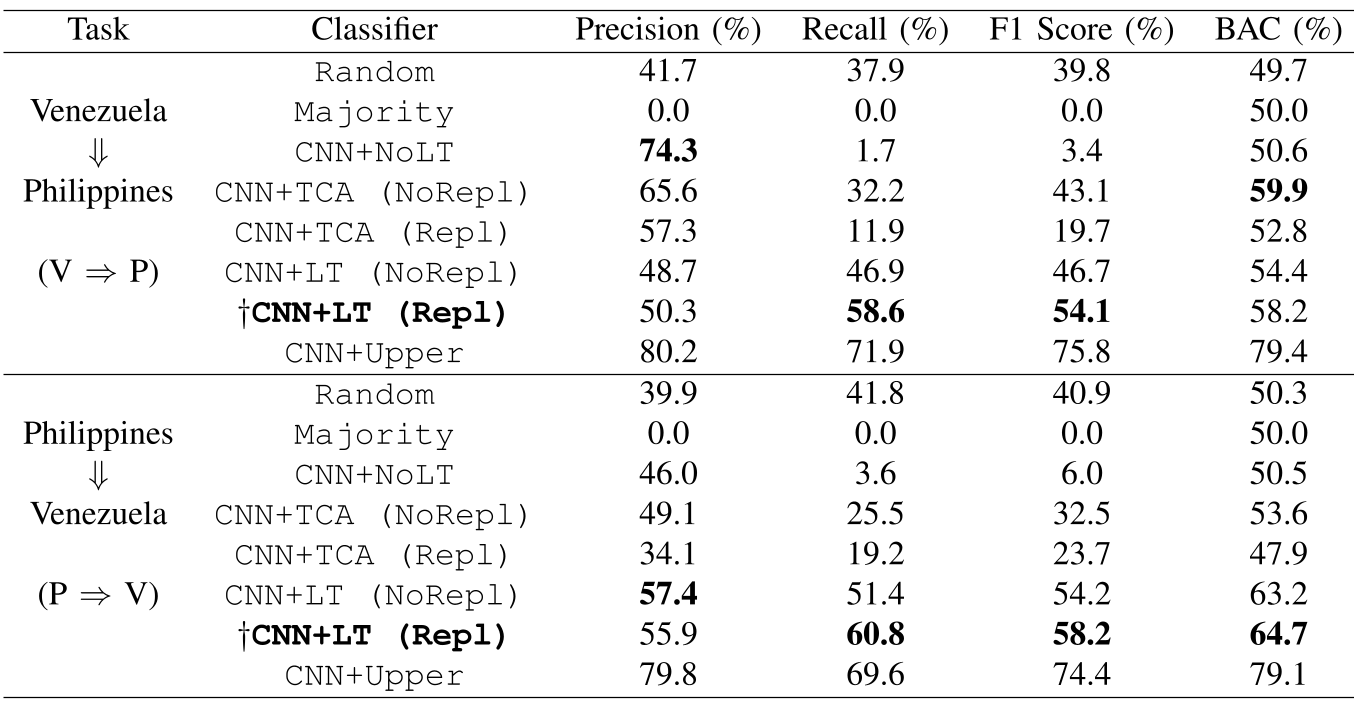
The study compared their Linear Translation (LT) approach against Transfer Component Analysis (TCA). The results were stark:
- Recall Boost: LT improved recall by 80%.
- F1 Measure: A 25% relative increase over TCA.
- Data Efficiency: Using a small, election-specific translation corpus (ELECT) was just as effective as using a massive Wikipedia-based one, proving that "more data" isn't always better than "relevant data."
Critical Insight & Future Directions
The paper highlights a remaining "Precision vs. Recall" trade-off. While the model is excellent at finding relevant tweets (high recall), it still struggles with false positives where non-election violence is mentioned (e.g., military conflicts).
Takeaway for Engineers: When building global monitoring tools, don't just translate text. Map the latent spaces of your embeddings and normalize your entity tags. This paper proves that a simple linear transformation can be more powerful than complex kernel-based adaptation methods.
Conclusion
This work marks the first successful application of linear embedding translation for cross-lingual social media classification. It provides a blueprint for rapid-response tools that can be deployed for international events the moment they start, regardless of the local language.