
Triadic Closure Breakdown: Predicting the Evolution of Social Groups in Microblogging
Triadic Closure Pattern Analysis and Prediction in Social Networks
2015-07-08
Summary
Problem
Method
Results
Takeaways
Abstract
This paper investigates the triadic closure process in the Weibo microblogging network, proposing a probabilistic Triad Factor-Graph (TriadFG) model to predict the formation of closed triads. By incorporating kernel functions to quantify triad similarity, the method achieves a significant performance boost, outperforming traditional baselines like SVM by over 10% in F1-score.
## TL;DR
Why do three individuals eventually become a "closed" triangle of friends? This paper dives deep into the **Triadic Closure** process—the fundamental mechanism where "friends of friends become friends." Using a massive Weibo dataset, the researchers propose a **Triad Factor-Graph (TriadFG)** model. By leveraging sophisticated **Kernel Functions** to quantify the similarity between different network motifs, they improved prediction accuracy (F1-score) by over 16% compared to traditional machine learning baselines.
## The Research Intuition: Beyond Simple Link Prediction
In the world of Online Social Networks (OSNs), most recommendation engines ask: "Will A follow B?" This paper argues we should be asking: "Will A, B, and C form a closed loop?"
The triad is the simplest atom of a social group. While sociologists like Granovetter and Burt have long theorized about these structures, predicting their formation in a dynamic, directed environment like Weibo or Twitter is notoriously difficult. The authors noted that prior work either focused on theoretical generative models or ignored the rich interplay between **user demographics** and **dynamic interactions** (like retweets).
## Methodology: The Power of the Triad Factor-Graph
The researchers developed the **TriadFG** model, a probabilistic framework designed to handle the high dimensionality of social data.
### 1. Structural Nuance via Kernel Functions
Instead of treating all "open triads" (where A knows B and B knows C, but A doesn't know C) the same, the authors used **Kernel Density Estimation (KDE)**. This allowed the model to calculate a "distance" or similarity between different triad configurations (there are 13 possible 3-node subgraphs in a directed network).
### 2. Feature Integration
The model integrates four distinct layers of data:
- **User Demographics**: Location and gender (men were found to be 6x more likely to form closed triads).
- **Network Characteristics**: The specific "shape" of the open triad.
- **Social Properties**: Popularity (Pagerank) and "Structural Hole" status.
- **Social Interactions**: Explicit actions like retweeting (the strongest predictor of closure).
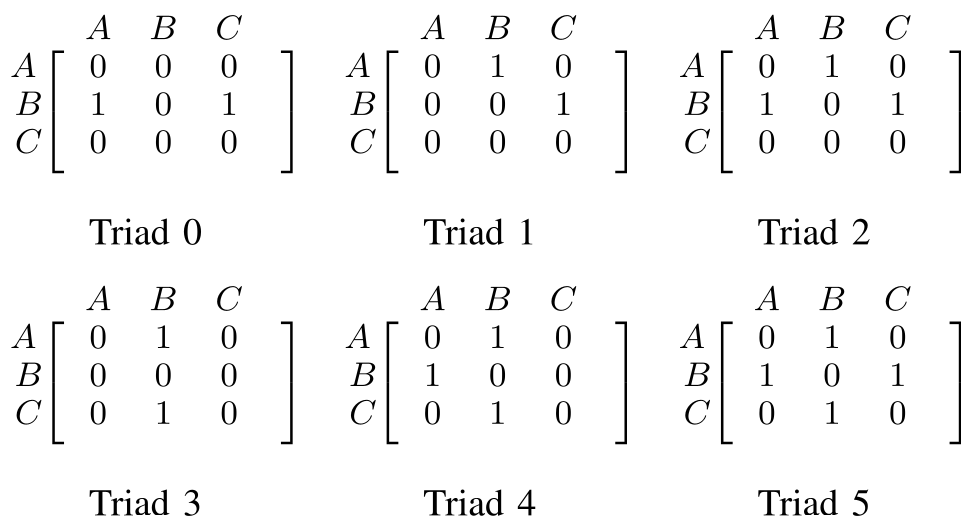
*Fig 1: Example of the Triad Factor Graph (TriadFG) showing candidates and social correlations.*
## Key Insights and Experimental Results
The team tested their model against SVM and Logistic Regression. Their most advanced variation, **TriadFG-EKF** (using Exponential Kernel Functions), showed a massive performance jump.
| Algorithm | Accuracy | Precision | Recall | F1-score |
| :--- | :--- | :--- | :--- | :--- |
| SVM | 0.7422 | 0.7683 | 0.7420 | 0.7344 |
| **TriadFG-EKF** | **0.8444** | **0.8360** | **0.9084** | **0.8564** |
### Critical Findings:
- **The Rich Get Richer**: "Celebrity" users (high Pagerank) are 421 times more likely to form closed triads than ordinary users.
- **Gender Matters**: Triads consisting of three men are significantly more likely to close than all-female triads.
- **The Power of Retweets**: When user A posts a tweet and both B and C retweet it, the probability of A and C forming a direct link triples.
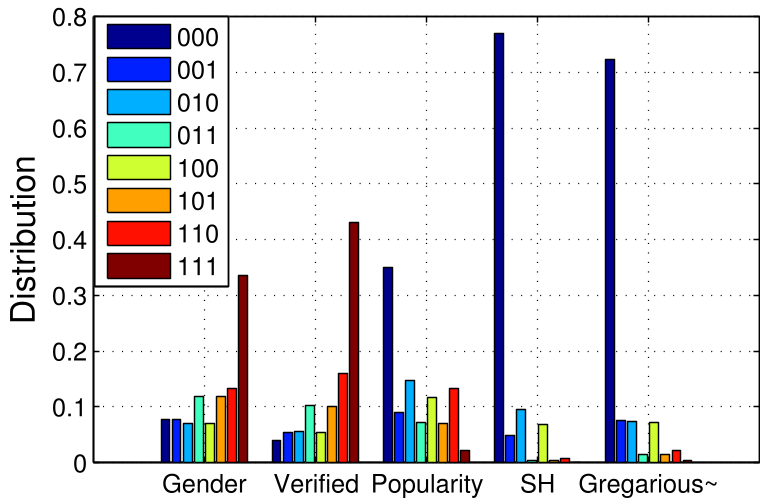
*Fig 2: Distribution of observations showing how demographic and social factors influence closure probability.*
## Comparison: Weibo vs. Twitter
Interestingly, the study compared these Chinese Weibo results with earlier Twitter data. While both networks follow the "preferential attachment" rule (popular users get more followers), Weibo users showed a higher tendency for "closeness" connections among popular accounts, suggesting a cultural difference in social networking behavior.
## Conclusion & Future Outlook
This work proves that predicting social evolution requires looking at **groups**, not just individuals. The TriadFG model's success in A/B testing (+10% in friend recommendation accuracy) shows immediate industrial value.
**Limitations**: The model currently uses a 4-day time window for dynamics. Moving toward continuous-time prediction or integrating deep graph embeddings (like GraphSAGE) could be the next frontier for this research.
**Takeaway**: If you want to understand where a network is going, watch the triangles.