
Beyond the Graph: Decoding the Hidden Social Forces of Facebook Interactions
Triads, transitivity, and social effects in user interactions on Facebook
This paper explores the underlying sociological motives of Facebook user interactions using triadic analysis. By applying a triad census algorithm to a large-scale Facebook dataset, the authors categorize interactions into 16 triad types to evaluate the prevalence of social effects such as stature, relationship strength, and egocentricity.
TL;DR
Why do we post on some people's walls but only "like" others? This paper moves beyond mere graph theory to uncover the motives behind Facebook interactions. By analyzing triads (groups of three users), the researchers found that social stature and strong mutual bonds—rather than raw popularity—dictate how we talk to each other online.
The "Why" Behind the "What": Moving from Symptoms to Causes
Most social network analysis tells us what the network looks like (e.g., degree distribution, clustering coefficients). However, the authors argue that these are just "symptoms." To understand the "causes," we must look at triads.
A triad is the smallest unit where complex social dynamics—like mediation, conspiracy, or exclusion—occur. The researchers focus on three specific social effects:
- Social Stature: Do intermediaries control the flow of information?
- Relationship Strength: Are the connections driven by deep, perhaps offline, friendships?
- Egocentricity: are interactions dominated by "attention seekers" or "bots"?
The Methodology: Triadic Census at Scale
The challenge with triads is mathematical: in a network with users, there are possible triads. For a network like the New Orleans Facebook dataset (47,000 users), a brute-force approach is impossible.
The authors implemented an efficient neighborhood-based algorithm. By focusing on the first-degree neighborhood of each user and ignoring "vacuously transitive" triads (those with too many null connections), they reduced the computation time to a mere 4 minutes.
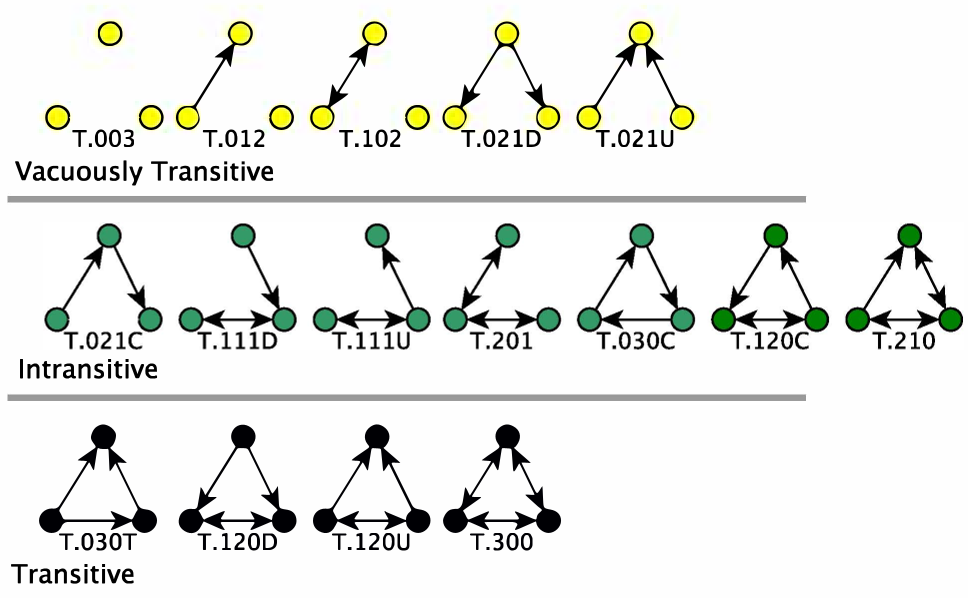 Figure 1: The 16 triad types classified by transitivity.
Key Insights: Stature vs. Popularity
The results of the Facebook "Wall Post" census were surprising when compared to random Bernoulli graphs:
1. The Rise of the Intermediary (Stature)
In offline worlds, "middle-man" structures (intransitive triads) are often stressful and unstable. On Facebook, however, they are over-represented. Why? Because digital intermediaries don't feel the same social pressure as they do in person, and users actively seek them out to increase the visibility of their posts.
2. The Exclusivity of Strength
The study found that mutual, solidary relationships are rarely "penetrated" by outsiders. Facebook wall interactions tend to be exclusive rather than inclusive. If you see two people talking, you are statistically unlikely to join in unless you have a strong bond with both.
3. The Myth of the Influencer (Egocentricity)
Interestingly, egocentric triads (where one person sends many posts but receives none, or vice versa) were under-represented. This means that "over-active" spammers or "super-popular" celebrities do not actually define the core interaction fabric of Facebook.
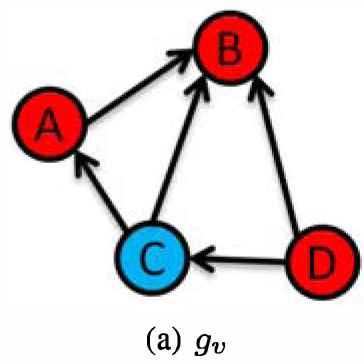 Figure 2: The triad census reveals which social structures are dominant (Over-represented) on Facebook.
Deep Dive: What Does This Mean for the Future?
This paper provides a crucial takeaway for anyone building social algorithms: Connectivity Interaction.
- For Marketers: Targeting the "popular" user with the most followers might be less effective than targeting the "high stature" intermediary who bridges different social groups.
- For Researchers: The "small-world" properties we see in friendship networks don't necessarily carry over to interaction networks.
Limitations and Outlook
While the study is robust, it relies on "Wall Posts," a feature that has significantly evolved since the data was collected. Future research should apply these triadic lenses to private messaging, "Stories," and algorithmic feeds to see if the social effects of stature and exclusivity still hold in the era of AI-driven content.
Conclusion: Facebook isn't just a platform of "friends"; it's a complex hierarchy of stature and exclusive bonds where the intermediary is king.