
TripFromTV+: Bridging the Couch and the Continent via Semantic Reasoning
TripFromTV+: targeting personalized tourism to interactive digital TV viewers by social networking and semantic reasoning
TripFromTV+ is an Interactive Digital TV (IDTV) application that provides personalized tourism recommendations by integrating Semantic Web reasoning and Web 2.0 social networking features. It achieves a state-of-the-art personalization experience by automatically inferring user preferences from TV viewing histories and social media profiles, delivering tailored, discounted travel packages.
TL;DR
TripFromTV+ is a pioneering IDTV application that turns your television into a personalized travel agent. By analyzing your viewing history (the documentaries you watch) and your social media activity (the groups you join), the system uses semantic reasoning to suggest tailor-made, discounted vacation packages. It successfully bridges the gap between passive TV watching and active social commerce.
The Problem: The "Input Fatigue" of Personalization
Most travel recommendation systems today suffer from a fundamental paradox: to give you great advice, they need to know everything about you, but users hate filling out long, tedious forms. In the world of Interactive Digital TV (IDTV), this problem is amplified by the limited interface of a remote control. Previous works have struggled to make personalization "invisible" and truly automated.
Methodology: From "Cooking Shows" to "Japanese Cuisine"
The core innovation of TripFromTV+ lies in its Semantic Reasoning Layer. Instead of simple keyword matching, it uses a sophisticated ontology-driven approach:
- Automated Inference: The system "spies" (with consent) on your viewing habits. If you watch a show about "Aikido," the system doesn't just look for "Aikido" trips; it understands through its ontology that Aikido is a "Martial Art" and a "Japanese Culture" element.
- Social Fusion: By pulling data from social networks, the system identifies that your friends are interested in similar "Water Sports."
- Cross-Filtering: It combines Content-Based Filtering (matching TV genres to tourist activities) and Collaborative Filtering (finding "neighbors" with similar tastes) to generate a unique travel plan.
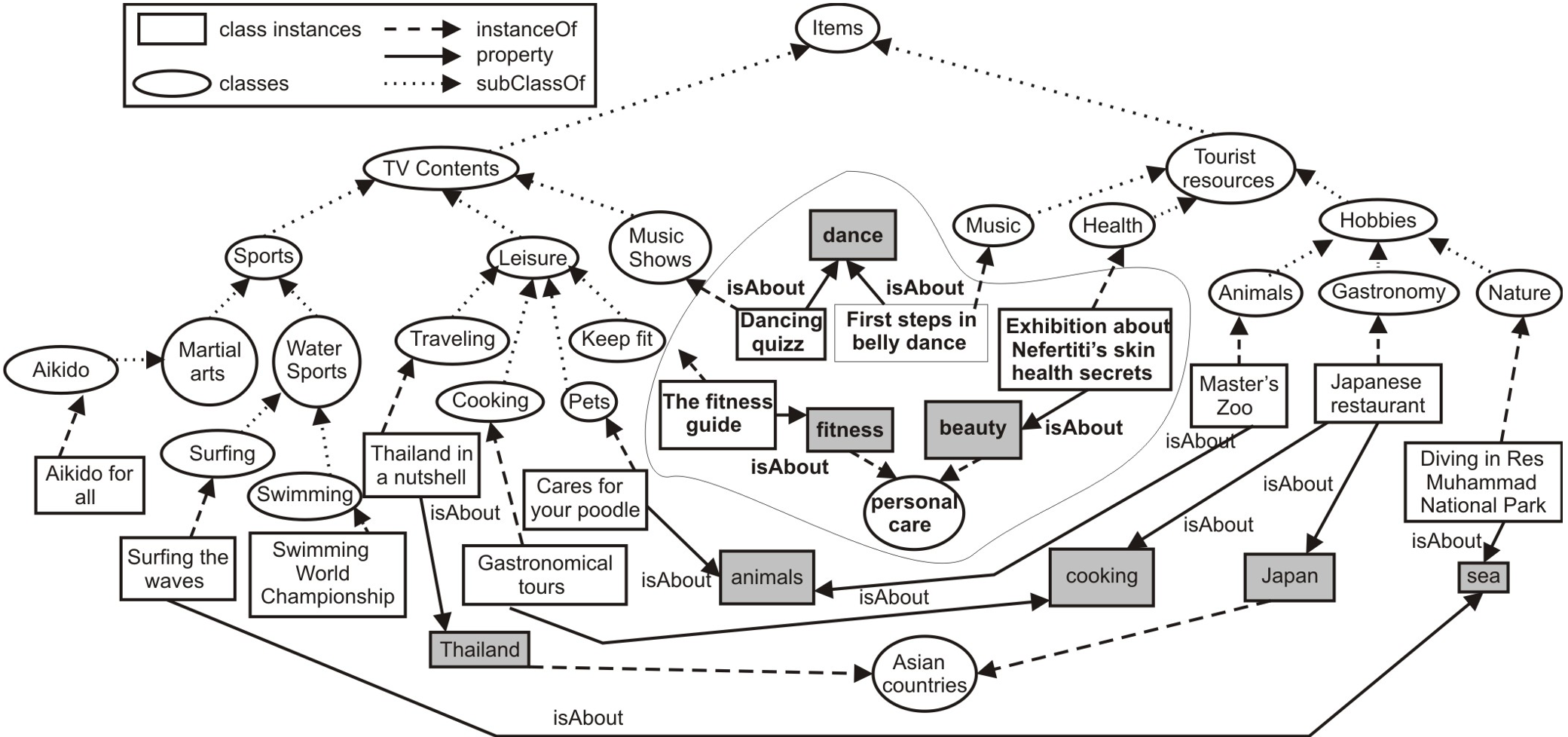 Figure 1: The system maps TV content (like dog care) to tourist attractions (like a zoo) via shared semantic attributes in the ontology.
Experiments: Validating the "Aha!" Moment
The researchers tested the system with 95 users and found a staggering level of engagement. Because the recommendations were based on actual behavior (what they watched) rather than what they said they liked, users described the results as "ingenious" and "intelligent."
One of the key social features was the "Group Discount" mechanism. Since many travel offers require a minimum number of participants, TripFromTV+ integrated an RSS-based social tracker. Viewers could share an offer to their social media directly from their TV, turning their social circle into a "buying group" to unlock lower prices.
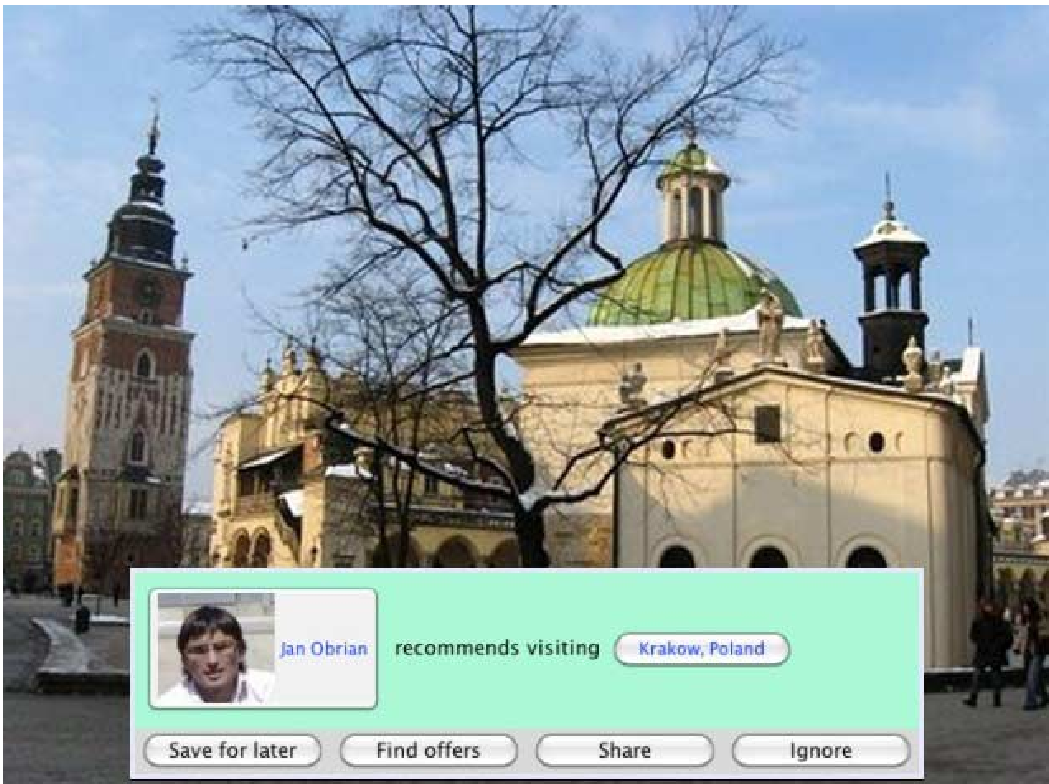 Figure 2: A sample of a context-aware recommendation displayed on a handheld device, showing distance, price, and relevance.
Critical Insight & Future Outlook
While the paper focuses on MHP (Multimedia Home Platform) standards, which are older, the semantic logic is more relevant than ever in the age of Netflix and TikTok. The real value here is the cross-domain intelligence: the idea that our entertainment data is the best predictor of our consumption desires.
However, the system faces modern challenges regarding privacy (GDPR) and the "filter bubble" effect, where semantic reasoning might keep recommending the same types of trips, limiting serendipity. Future work in this area will likely involve more privacy-preserving federated learning and a greater focus on diverse, "out-of-the-box" suggestions.
Conclusion
TripFromTV+ proves that the TV doesn't have to be a "dumb" screen. By weaving together the Semantic Web, social networks, and viewing data, the authors have created a blueprint for a seamless, cross-platform consumer electronics ecosystem that actually understands its user.