
3VSL: Redefining Trust Assessment in Complex Social Architectures
Trust Assessment in Online Social Networks
This paper introduces the Three-Valued Subjective Logic (3VSL) model and the AssessTrust (AT) algorithm to evaluate trust in Online Social Networks (OSNs). By modeling trust via the Dirichlet-Categorical (DC) distribution, the approach accounts for increasing uncertainty during trust propagation, enabling accurate trust inference in arbitrary graph topologies beyond simple series-parallel structures.
TL;DR
Trust is the "hidden currency" of online social networks (OSNs), yet calculating it between strangers in complex web-like structures is notoriously difficult. This paper introduces Three-Valued Subjective Logic (3VSL) and the AssessTrust (AT) algorithm. By treating uncertainty not as a constant, but as a growing factor that absorbs "distorted" evidence during propagation, 3VSL achieves a breakthrough in trust inference accuracy (F1-score ~0.75) across arbitrary, real-world network topologies.
Problem & Motivation: The Uncertainty Paradox
In a social network, if Alice trusts Bob, and Bob trusts Charlie, Alice can infer a level of trust in Charlie. Traditional models often treat this as a simple probability multiplication or a static logic. However, the authors identify a critical flaw in existing Subjective Logic (SL): it assumes uncertainty is a fixed value.
In reality, trust "decays" or becomes fuzzier the further it travels. Previous works struggled with:
- Topology Constraints: Most logic-based models only work on "series-parallel" graphs, failing in the face of the "spaghetti" connections of real social networks.
- Evidence Distortion: When trust is passed along a chain, some of the original "certainty" is lost. Failing to account for this leads to overconfident (and incorrect) trust scores.
Methodology: The Core of 3VSL
The researchers' primary insight is the use of the Dirichlet-Categorical (DC) distribution to represent an "Opinion." Unlike binary models (Trust/Distrust), 3VSL introduces a third state: Uncertainty.
1. The Uncertainty State
In 3VSL, an opinion is a triplet , representing positive, negative, and uncertain evidence.
- Trust Propagation (Discounting): As trust moves from A to B to C, 3VSL's discounting operator "converts" certain evidence () from B's opinion into uncertain evidence () for A.
- Trust Fusion (Combining): When A receives recommendations about C from multiple sources, the combining operator aggregates these opinions into a single consensus.
2. AssessTrust (AT) Algorithm: Taming Arbitrary Graphs
To handle real-world networks with cycles and non-standard structures, the authors developed the AssessTrust algorithm. It recursively decomposes the network starting from the trustee back to the trustor.
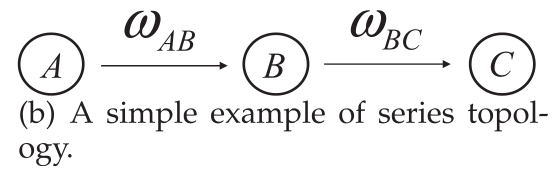 Fig 1: Examples of series and parallel topologies that form the building blocks of the 3VSL operations.
A crucial theoretical discovery here is the distinction between Distorting Opinions and Original Opinions. The authors proved that while original evidence can only be fused once to avoid "double counting," distorting opinions (which merely modulate the flow) can be reused, allowing the algorithm to navigate complex bridge topologies.
Experiments & Results: SOTA Performance
The authors validated their model against two massive real-world datasets: Advogato (developer community) and PGP (key certification).
Quantitative Edge
- Accuracy: 3VSL achieved significantly higher F1-scores compared to SL, particularly as the network depth increased.
- Ranking Precision: Using Kendall’s tau correlation, the AT algorithm provided ranking results that were much closer to the ground truth than industry standards like EigenTrust or TrustRank.
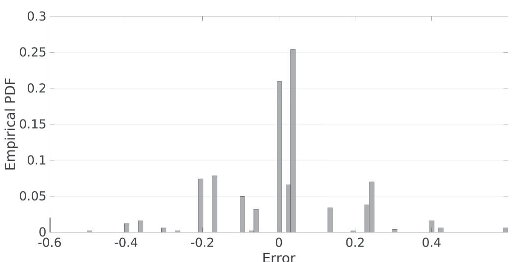 Fig 2: Error distributions showing AT (AssessTrust) maintaining a much tighter variance around zero error compared to TidalTrust (TT) and SL*.
Critical Analysis & Conclusion
3VSL's success stems from its physical intuition: information loss is inevitable in social propagation. By mathematically formalizing this loss as a transition into an uncertainty state, the model prevents the "drift" that plagues other probabilistic systems.
Takeaway: This work shifts the focus from "Is this person trustworthy?" to "How much do we actually know about this person's reliability?"
Limitations: The recursive nature of the AT algorithm has a time complexity of . While effective for local trust search (small ), it suggests that for global-scale ranking on billions of nodes, further optimization or heuristic pruning might be required to maintain real-time performance.
Future Outlook: The 3VSL framework is ripe for application in Decentralized Finance (DeFi) and Autonomous Vehicle Networks, where uncertain evidence is common and the cost of misplaced trust is high.