
Trust-Aware Group Recommendation: Bridging Social Dynamics and Attention
Trust-Aware Group Recommendation with Attention Mechanism in Social Network
This paper introduces the Attention-Trust model, a group recommendation framework that combines an attention mechanism with social trust relationships. By leveraging Neural Collaborative Filtering (NCF), the system dynamically aggregates individual member preferences to provide more accurate recommendations for groups.
TL;DR
Recommending a movie for a single user is a solved problem, but recommending one for a family or a group of friends involves a complex negotiation of preferences. This paper proposes a Trust-Aware Group Recommendation model that uses Attention Mechanisms to dynamically weight member influence and integrates Social Trust to capture how we are influenced by people we respect.
The "Group-Decision" Bottleneck
In traditional recommendation systems, the transition from individual to group is often handled by simple heuristics:
- Average Strategy: Everyone gets an equal vote.
- Least Misery: Focus on making sure no one hates the choice.
The problem? These strategies are static. In reality, a "film buff" in a group should have more influence over movie night, while a "foodie" should lead the restaurant choice. Moreover, we naturally lean towards the suggestions of those we trust. Prior work has largely ignored this social fabric within the group entity.
Methodology: Attention Meets Social Trust
The authors break the problem into two distinct phases: Aggregation and Interaction.
1. Social-Trust Aggregation Strategy
Instead of a fixed weight, the model uses an attention mechanism to look at the target item and determine who should be "listened to" most. Crucially, a member's embedding () is augmented by the embeddings of the members they trust ().
The final group embedding for a specific item is calculated as: where captures the strength of the social influence.
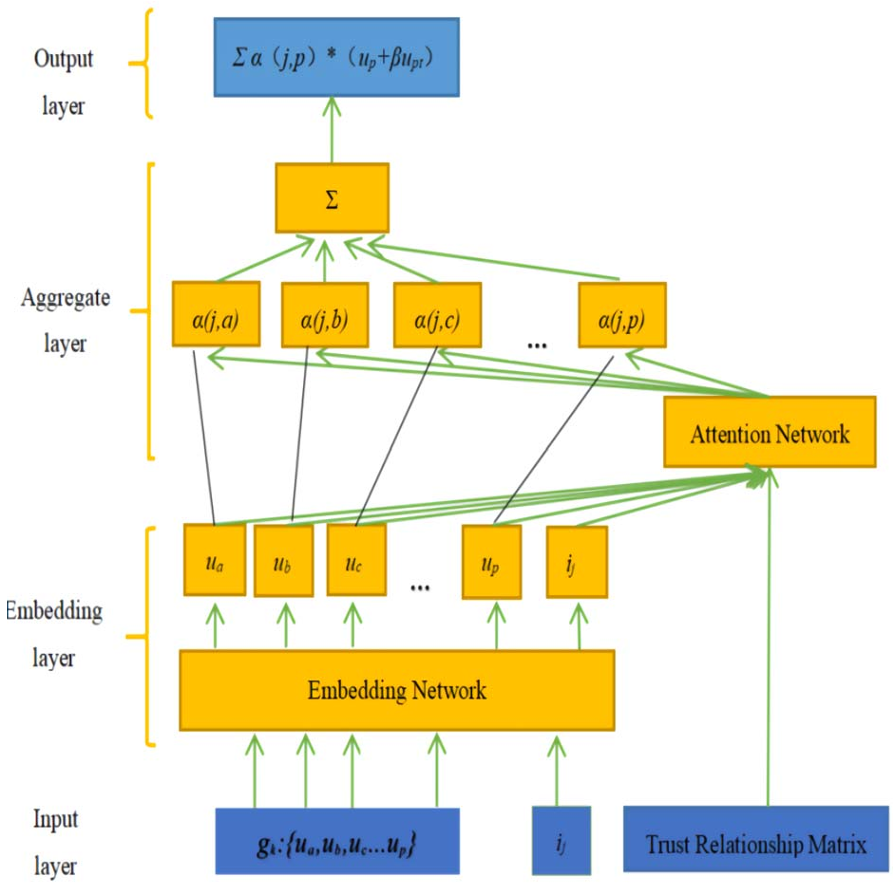 Fig 1: The framework showing how member preferences and trust relations are fused via attention.
2. Interaction Learning via NCF
Once the group preference is aggregated, the model uses Neural Collaborative Filtering (NCF). It performs element-wise products between group and item embeddings and passes them through multiple dense layers to capture high-order non-linearities.
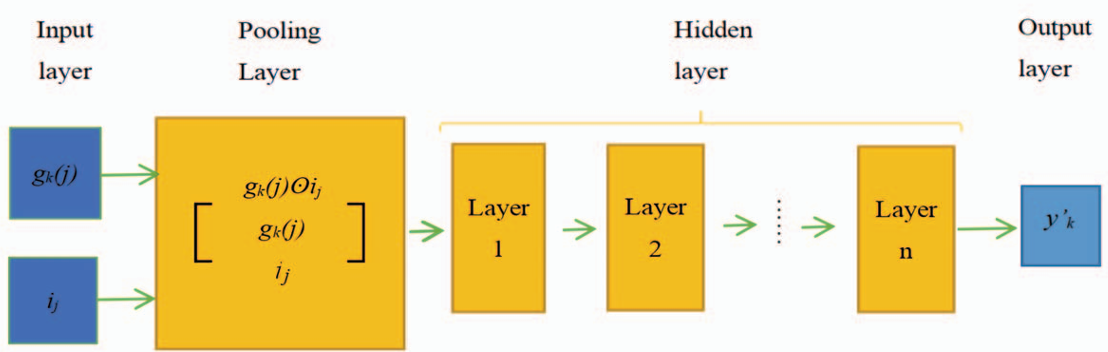 Fig 2: The NCF architecture used to predict the final group-item rating.
Experimental Results
The model was tested against several baselines, including AGREE (Attentive Group Recommendation) and COM (a generative model).
Performance Comparison
The results on the FilmTrust dataset show a clear advantage for the Attention-Trust approach:
- RMSE: 0.4966 (vs. 0.5011 for AGREE)
- MAE: 0.3846 (vs. 0.3949 for AGREE)
Interestingly, the researchers found that as the embedding size increased, performance improved significantly up to 128 dimensions before stabilizing, indicating that richer latent representations are necessary to capture social nuances.
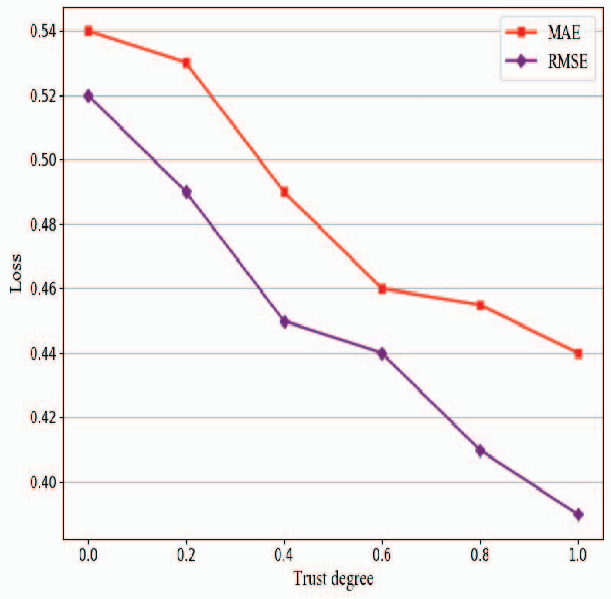 Fig 3: Sensitivity analysis showing the impact of embedding size on model error (MAE/RMSE).
Critical Insight & Conclusion
The primary value of this work lies in the realization that group members are not independent variables. Their internal social hierarchy and trust levels provide a "latent roadmap" for how a group eventually reaches a consensus.
Limitations & Future Directions
While effective, the model currently uses a fixed trust degree (). In the real world, trust is multi-faceted; I might trust your movie taste but not your tech advice. Future iterations could benefit from:
- Dynamic Trust Strength: Learning different trust weights for different item categories.
- Side Information: Incorporating timestamps and location data to understand the context of the group gathering.
This paper provides a solid foundation for more "human-centric" group recommendations by moving away from simple math and toward social intelligence.