
Trust-Aware Routes: Why "Who Recommended It" Matters More Than "What is Recommended"
Trust-Aware Personalized Route Query Using Extreme Learning Machine in Location-Based Social Networks
This paper introduces a Social Trust-based Optimal Trip Selection (STOTS) framework for personalized route queries in Location-Based Social Networks (LBSNs). The core method, STP-ELM, utilizes an Extreme Learning Machine to predict social trust, which is then integrated into a ranking model and an efficient search algorithm called RouteHunter to find optimal trips.
TL;DR
Modern route planning isn't just about the shortest path; it's about the best path based on who you trust. This paper presents STOTS, a framework that predicts social trust using Extreme Learning Machines (ELM) and uses a new algorithm, RouteHunter, to find credible, popular, and constraint-compliant trips in social networks. It beats traditional similarity-based models by focusing on the reliability of the crowd.
Background: The Trust Gap in LBSNs
In Location-Based Social Networks (LBSNs) like Foursquare or Gowalla, we often rely on "User Similarity" (Collaborative Filtering) to suggest routes. However, similarity trust. You might share similar tastes with a stranger but wouldn't trust their safety or quality judgment. This paper identifies a critical gap: Social trust has been neglected in personalized route queries.
The Problem & Motivation
Current systems face a "Cold Start" in trust:
- Unknown Trust Values: Most users in a network aren't directly connected.
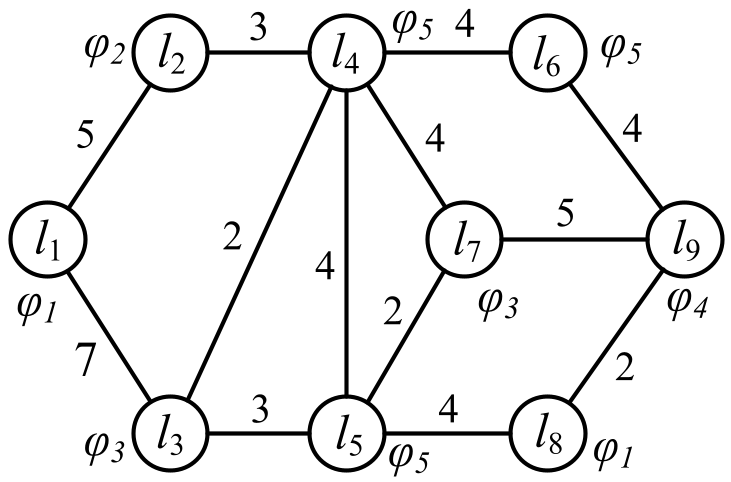
- Algorithmic Complexity: Finding a route that covers specific keywords (e.g., Cafe Gym Pub) while staying under a distance budget is an NP-hard variation of the Traveling Salesman Problem.
- Efficiency: Most trust-inference models are too slow for real-time querying.
Methodology: The STOTS Framework
The authors propose a three-stage solution:
1. Social Trust Evaluation (STP-ELM)
Instead of slow iterative training, the authors use Extreme Learning Machines (ELM). In an ELM, hidden layer parameters are randomly assigned and never tuned; only the output weights are calculated analytically.
- Features: It looks at age/gender differences, Betweenness Centrality (how vital a user is to the network structure), and check-in overlap.
- Propagation: If User A trusts B, and B trusts C, the system infers A's trust in C using a chain multiplication of probabilities.
2. Route Credibility Estimation
To avoid recalculating scores for every query, the authors built a Category-Oracle Inverted Index. This index maps categories to venues and then to check-in counts, allowing the system to rapidly pull "Credibility Scores" for any given venue based on the query user's social circle.
3. RouteHunter: The Search Algorithm
RouteHunter uses a greedy search strategy with aggressive pruning:
- Distance Pruning: If the current distance + the shortest possible distance to the destination exceeds the budget , the path is killed immediately.
- Ranking: It prioritizes venues that fulfill remaining keyword requirements and have the highest social trust scores.

Experiments & Results
The framework was tested against EN-SVM (Ensemble Support Vector Machines) and Sim-PRQ (Similarity-based Route Query).
- Speed: STP-ELM training was roughly 6x-7x faster than SVM-based methods while maintaining or exceeding accuracy.
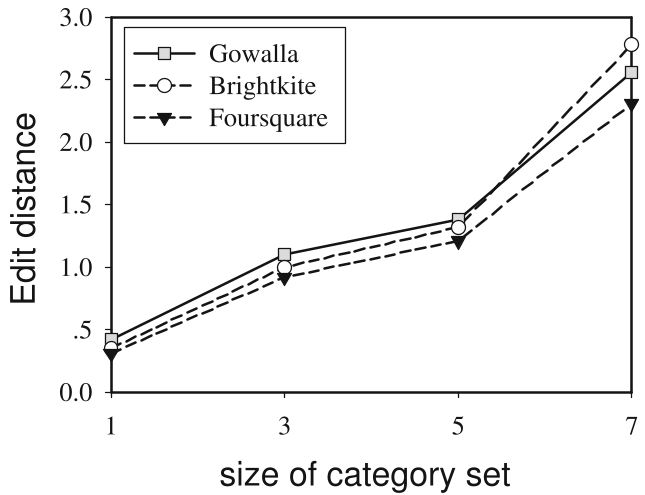
- Relevance: By measuring Edit Distance (how close the suggested route is to actual historical user paths), STOTS provided significantly more "human-like" and acceptable routes than similarity-only models.
Critical Insight & Conclusion
The genius of this work lies in the decoupling of popularity and credibility. While a venue might be popular (many check-ins), it is only "credible" if the people checking in are trusted by the query user. By leveraging the mathematical efficiency of ELM, the authors proved that trust-aware systems can perform at the scale of massive social networks.
Limitations: The model assumes trust is symmetric (), which is rarely true in real-world social hierarchies (e.g., following a celebrity). Future research should address directed trust graphs.