
Trust-Based Communication: Protecting Data Integrity in the Social Media Age
Survey of Trust Based Communications in Social Networks
This paper provides a comprehensive survey of trust-based communication and data protection techniques in Social Networking Services (SNS). It primarily focuses on digital watermarking schemes—including spatial and frequency domain methods—as the essential mechanism for ensuring data integrity and authorship attribution.
TL;DR
This paper explores the technical frontier of protecting user-shared content in social networks. It moves beyond traditional firewalls, focusing on digital watermarking and cryptographic frameworks like ABE (Attribute-Based Encryption) to ensure that even if data is shared or stolen, its authorship and integrity remain verifiable.
Context: The Vulnerability of Digital Persona
In the modern social networking landscape, personal data is the primary currency. However, the survey identifies a critical "trust gap": users treat platforms as safe havens, while attackers utilize tools to alter photos and spread misinformation. The core issue is that once a piece of media is uploaded, the original owner essentially loses control over its bit-level integrity.
The Core Mechanism: Digital Watermarking
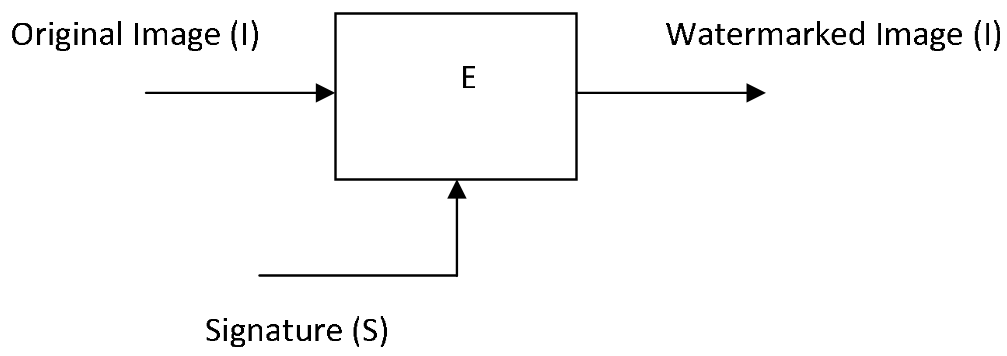
The paper posits that Digital Watermarking is the most viable defense against data alteration. It breaks down the system into a three-part lifecycle:
- The Watermark: The unique signature.
- The Encoder: The embedding algorithm.
- The Decoder: The verification/extraction logic.
Domains of Protection
- Spatial Domain: Modifying pixels directly. It's fast but often fragile against compression.
- Frequency (Transform) Domain: Altering values in frequency bands (e.g., using DWT). This is significantly more robust against common social media actions like cropping or JPEG resizing.
Mapping the Attack Surface
A key contribution of this survey is the classification of attacks against these trust mechanisms:
- Removal Attacks: Attempting to strip the watermark without breaking the algorithm.
- Geometric Attacks: Distorting the signal through rotation or scaling (often seen in meme-sharing).
- Protocol Attacks: Adding a "fake" watermark to claim ownership of someone else's original work (Copy Attack).
Methodology Benchmarks: From Wavelets to Secret Sharing
The paper reviews several SOTA (at the time of writing) methods that offer high-level resistance:
- Wavelet Tree Quantization: Distributes watermark bits across diverse frequency bands, making the hidden signal highly resilient to high-pass filtering.
- SVD & Visual Cryptography: These "blind" watermarking techniques allow ownership identification without needing the original host image, a crucial requirement for decentralized social networks.
- Collaborative Access Control (e.g., NOYB & Persona): These frameworks use "Secret Dictionaries" or ABE to ensure that even if the social network provider is compromised, the user's data remains encrypted and accessible only to trusted nodes.
Critical Analysis & Future Outlook
While the survey provides a solid taxonomy of 2D image protection, it highlights a recurring weakness: Computational Overhead.
- Persona and ABE-based systems are computationally expensive, often lacking efficient "revocation" mechanisms (the ability to take back access once granted).
- Blind Watermarking offers the best balance for social networks, as it allows platforms to verify images automatically without storing massive databases of "original" un-watermarked content.
Takeaway for Engineers: When building secure social modules, the focus should shift from "Access Control" (who can see the file) to "Content Forensics" (ensuring the file hasn't been tampered with). Frequency-domain watermarking remains the gold standard for surviving the "black box" of social media image processing.