
The Physics of Feelings: A Trust-Based Model for Global Happiness Diffusion
A trust-based multi-ego social network model to investigate emotion diffusion
This paper proposes a trust-based multi-ego social network model to simulate dynamic emotion diffusion and its impact on happiness. Using a multi-agent system, the authors demonstrate how positive and negative emotions spread through social ties, achieving SOTA-level insights into the mechanics of social support and "happiness genes."
TL;DR
Why are some people naturally "happier" despite facing similar life hardships? This paper shifts the focus from what makes us happy (money, health) to how happiness moves between us. By modeling emotions as decaying energy in a trust-based social network, researchers found that while our "genes" set the stage, our social connections—our "buffers"—determine whether we sink or swim during a crisis.
Background: Beyond the "Easterlin Paradox"
For decades, economists were baffled by the fact that rising national wealth didn't necessarily lead to rising national happiness. This paper addresses this gap by posits that happiness is a collective phenomenon. It isn't just about what you have; it’s about the emotional resonance and support you receive from your "ego-network."
Methodology: Emotions as Kinetic Energy
The researchers developed a computational model where agents (egos) are nodes in a social graph. Two unique features set this apart from standard social simulations:
- Trust-Weighted Diffusion: Unlike viral marketing models where information spreads indiscriminately, here emotion only flows based on the Trust Strength between individuals.
- Emotional Mechanics:
- Decay: Emotions are not permanent; they evaporate over time (Temporal Decay).
- Comfort: If you are sad, a happy friend can "absorb" some of your negative energy (Social Support).
- Resonance: Sharing a win with a friend actually creates extra happiness for both (Positive Resonance).
 The equations above represent the core logic: an individual's emotional change is proportional to their "Happiness Factor" (genes) and the "Trust" they share with their neighbors.
Key Insights from the Simulation
1. The "Crisis" Simulation
The authors simulated an "Economic Crisis" by flooding the network with negative events. The result? High frequency of emotional diffusion acts as a double-edged sword. While social support can mitigate minor setbacks, in extreme prolonged crises, "negative resonance" can occur—where the collective sadness of a network eventually overwhelms the ability of individuals to comfort one another.
2. Genes vs. Background
One of the most striking findings was the ranking of the "Happiest Egos."
- The Winners: High "Happiness Genetic Factors" + High Number of Friends.
- The Losers: Low Genetic Factors + Social Isolation.
- The Surprise: "Initial Happiness" (representing your starting background/wealth) had almost no long-term correlation with final happiness levels.
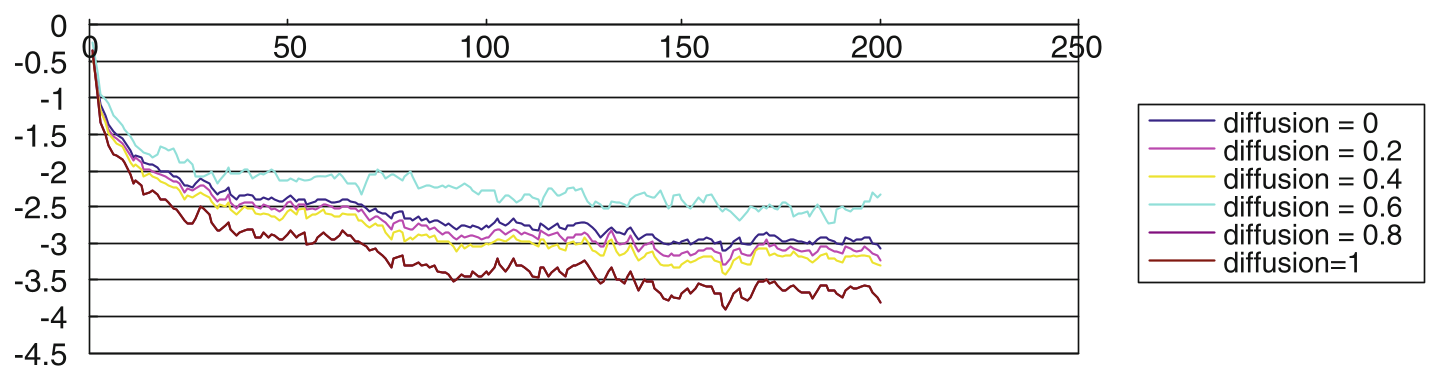 Chart (b) demonstrates that in high-stress environments, increasing the social diffusion probability (the "support" factor) is the only way to maintain a positive societal happiness baseline.
Critical Analysis & Conclusion
This study provides a rigorous computational backbone to the intuition that "no man is an island." By treating trust as the "bandwidth" for emotional transfer, it explains why social isolation is a physiological risk.
Limitations: The model currently assumes a static social network. In reality, people cut ties with "toxic" (perpetually negative) friends. Future iterations that allow for Dynamic Link Pruning would reflect more realistic social behaviors.
Takeaway for the Future
If happiness is indeed a "diffused energy," then the most effective way to improve public wellbeing isn't just to increase income, but to build "high-trust" infrastructures—digital or physical—that allow emotional resonance to flourish.