
Trust-Based Video Recommendation: Decoding Social Influence in the OSN Era
Exploring A Trust Based Recommendation Approach for Videos in Online Social Network
The paper proposes a dual-layered trust-based recommendation framework for videos in Online Social Networks (OSNs). It introduces a User Discovery Model (UDM) to identify influential users via direct and indirect trust, and a Video Discovery Model (VDM) that evaluates video quality through rating and social activity.
TL;DR
Researchers from Shenzhen University have developed a novel trust-based recommendation framework specifically for Online Social Networks (OSNs). By moving beyond simple content similarity and diving into the "trust fabric" of social interactions—such as reposts, mutual following, and video activity levels—the model achieves a 30% boost in precision over traditional social recommendation baselines.
Context: Why Traditional RecSys Fails Social Media
Most video recommendation systems are built for "siloed" platforms. They look at what you watched and suggest something similar. However, in an OSN like Twitter (X) or Weibo, the propagation path matters as much as the content. The pain point is clear: existing methods ignore the varying degrees of "influential weight" between users. A recommendation from a close friend (mutual follower) should carry more weight than one from a casual follow.
The Core Innovation: UDM and VDM
The authors break the problem into two distinct discovery models:
1. User Discovery Model (UDM)
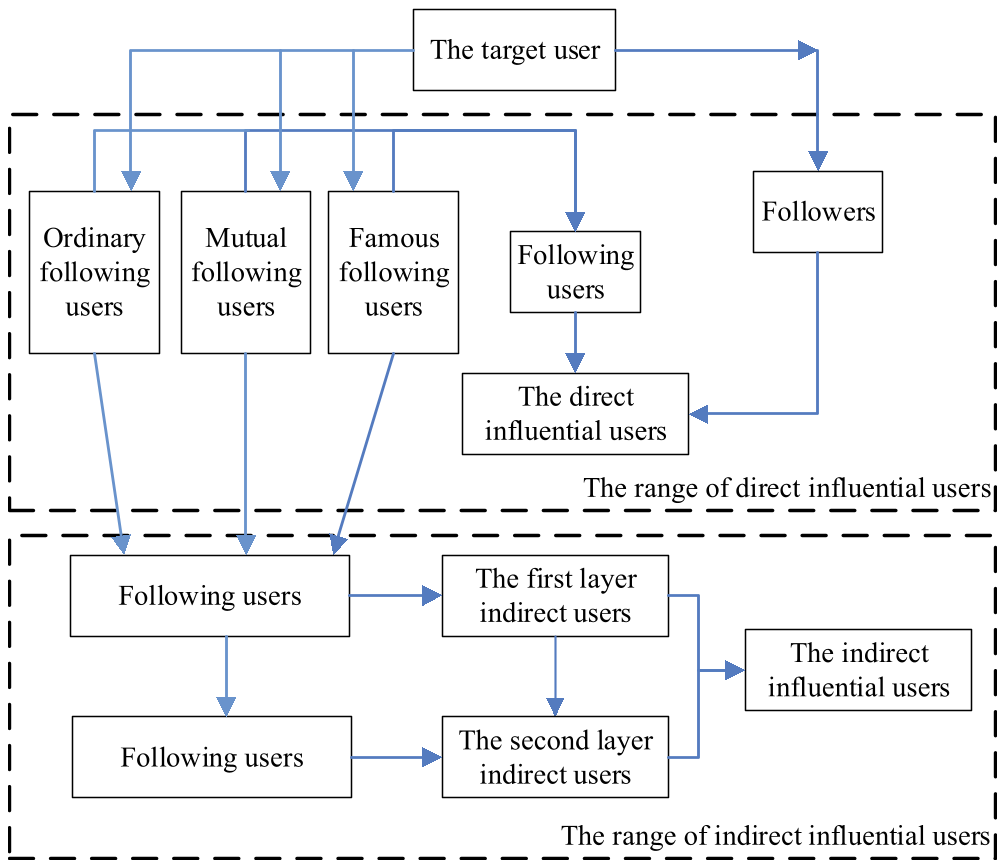
The system doesn't just look for "similar" users; it looks for trustworthy influencers. It categorizes influence into:
- Direct Trust: Calculated via Tag Similarity, Friendship Factor (weights assigned to following vs. mutual following), and Interaction Factors (how often user A reposts user B).
- Indirect Trust: Utilizing a recursive Markov-chain-style propagation (Trust Chains) to find "friends of friends" who might share niche interests.
2. Video Discovery Model (VDM)
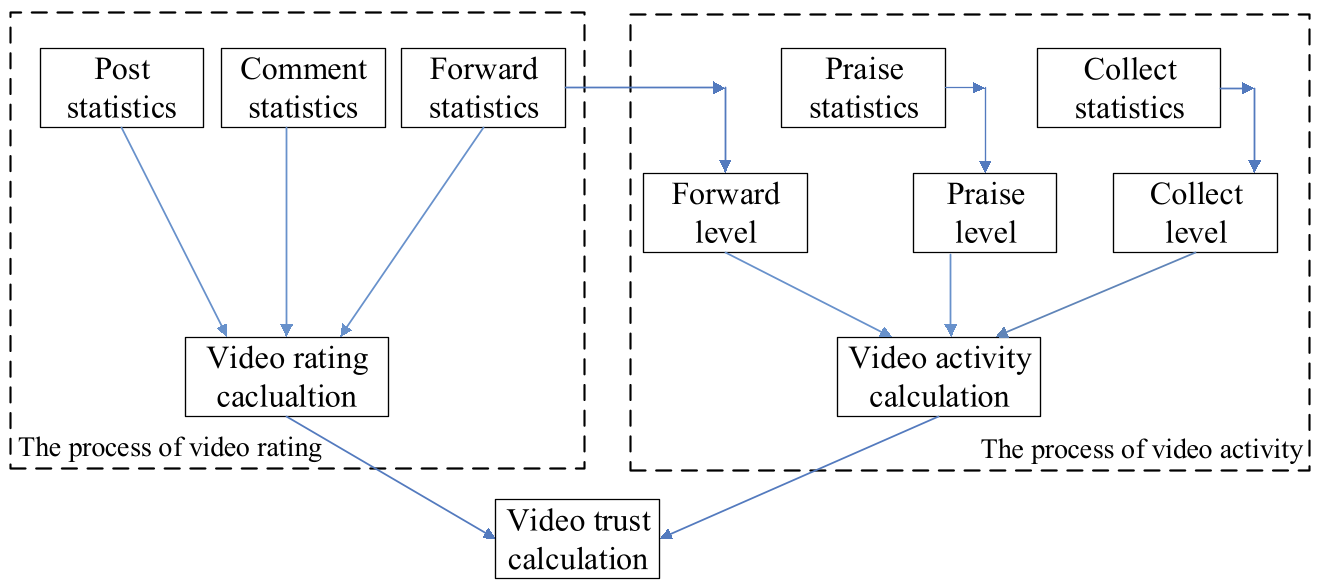
Instead of just looking at view counts, the VDM introduces Video Trust, a synthesis of:
- Video Rating: A binary-to-average score based on whether a user posted, forwarded, praised, or commented on a video.
- Video Activity: A sophisticated authority metric that compares a video's social "vibrancy" (Forward/Praise/Collect levels) against others in its category using damping factors.
Technical Deep Dive: The Trust Equation
The final recommendation rating isn't just a prediction; it's a weighted sum of the target user's average rating plus a trust-weighted deviation. This ensures that if your most trusted "influencers" loved a video that they usually wouldn't, the system identifies that high-signal event.
Experimental Breakthroughs
The team crawled real-world data from Sina Weibo and Youku (2,712 videos, 1,978 users).
- Superior Scalability: Unlike the Mwalker baseline, which suffers from a severe "cold-start" problem when the number of recommendations () is small, this approach provides high precision even at .
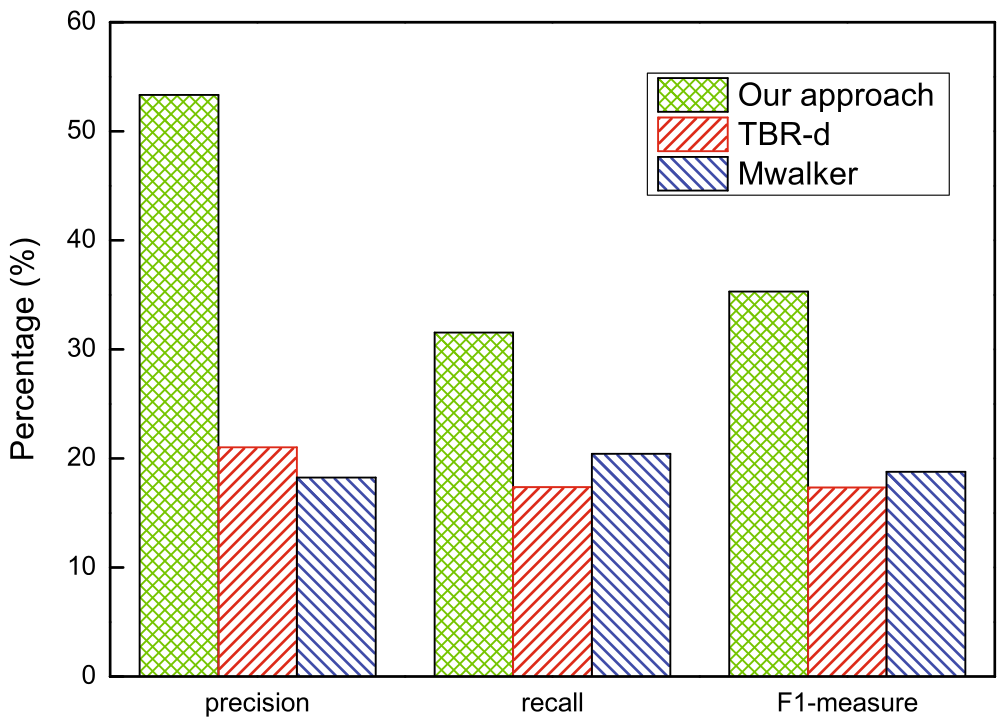
- Precision Peak: The model reaches a precision of ~59%, significantly outperforming TBR-d (~30%) and Mwalker (~20%) on the same dataset.
Critical Insight & Future Outlook
The primary takeaway is that Social Interaction is a Proxy for Preference. By quantifying the "effort" of an interaction (a repost requires more "intent" than a simple view), we can build a much more accurate map of user interests.
However, as the authors note, the next frontier is Privacy. In an era of GDPR and data sensitivity, how do we calculate these trust scores without over-indexing on private interaction data? This paper provides the mathematical foundation; the next step is likely Federated Learning or Differential Privacy to keep this social graph secure.