
GFTrust: Rethinking Social Trust Evaluation via Generalized Network Flow
Trust Evaluation in Online Social Networks Using Generalized Network Flow
The paper introduces GFTrust, a novel trust evaluation scheme for Online Social Networks (OSNs) based on Generalized Network Flow. It effectively addresses the simultaneous challenges of path dependence and trust decay, achieving significant performance improvements over traditional reliability models on datasets like Epinions and Advogato.
Executive Summary
TL;DR: Trust is the currency of Online Social Networks (OSNs), but calculating it across indirect connections is notoriously difficult. GFTrust treats trust propagation like a "leaking water pipe" system. By applying Generalized Network Flow theory, it solves the long-standing problem of trust decay and path dependence, outperforming standard baselines by over 20% in prediction accuracy.
Placement in the Field: This work moves beyond simple probability-based heuristics to a mathematically rigorous flow-based framework, positioning it as a key advancement for Sybil-resistant recommendation systems.
The Core Dilemma: Why Indirect Trust is Broken
Evaluating trust between two strangers in a social network usually requires a "chain of friends." However, two major hurdles often lead to incorrect predictions:
- Path Dependence: In "small-world" networks, paths often overlap. Simply adding them up leads to "double counting" of evidence (information reuse), while picking only the shortest path leads to information loss.
- Trust Decay: Each person in a chain adds a layer of uncertainty. If s trusts u, and u trusts d, s should naturally trust d less than u does. Traditional multiplication-based decay often results in trust vanishing too quickly or staying unrealistically high.
Methodology: Trust as a Leaky Flow
The authors propose GFTrust, which transforms the trusted graph into a specialized network flow model.
1. The Mapping
- Capacity = Trust Value: Each edge has a capacity equal to the direct trust value. This ensures no edge's recommendation is "over-used."
- Leakage = Trust Decay: Instead of edges, nodes cause decay. The authors split each node into and , connected by an edge with a Gain Factor . This represents the "leakage" of trust as it passes through an intermediate person.
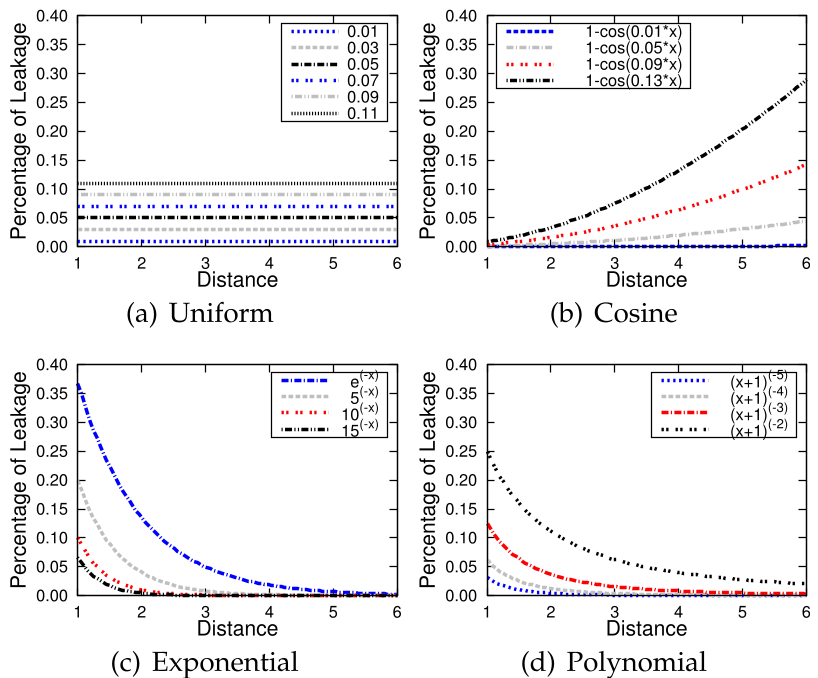 Fig 1: Transformation of node leakage into edge gain factors by splitting intermediate nodes.
2. The Near-Optimal Algorithm
Since calculating the absolute maximum generalized flow is computationally expensive, GFTrust uses a greedy approach:
- It repeatedly finds the shortest augmenting path (Breadth-First Search).
- It pushes flow through these paths until the source's initial trust () is exhausted or no more paths exist.
- Result: The final flow reaching the destination is the indirect trust value—no normalization required!
Experimental Battleground: Epinions & Advogato
The model was tested against several benchmarks, including SWTrust* and TidalTrust derivatives.
- Accuracy Boost: GFTrust achieved a significantly higher FScore (0.6516 vs. ~0.52 for others), proving that the flow-based aggregation captures the "social intuition" of trust much better than average-weighting methods.
- Leakage Patterns: The authors tested uniform, exponential, and polynomial leakage. Interestingly, polynomial leakage () performed the best, suggesting trust decays non-linearly with distance in real OSNs.
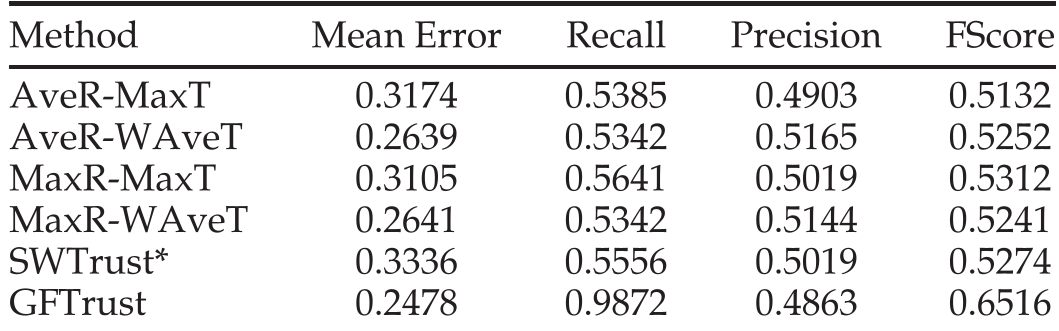 Fig 2: Performance comparison showing GFTrust's superior Recall and FScore.
High-Level Insights & Security
Beyond accuracy, GFTrust provides two "hidden" benefits essential for modern platforms:
- Social Incentive Compatibility: The model encourages users to provide good service. If a provider is honest, more short paths form toward them, increasing their incoming flow (trust) and subsequent "returns."
- Sybil Tolerance: Attackers often create "fake" accounts (Sybils) to boost their reputation. Because GFTrust associates decay with each hop, a Sybil chain actually reduces the trust flow due to extra leakage, making "self-praising" attacks unprofitable.
Conclusion: A Generous but Realistic Model
GFTrust starts with an "initial trust assumption" (giving newcomers a flow of 1), which is friendly to new users. However, the rigorous flow physics ensure that this generosity doesn't compromise security.
Future Outlook: The next step for this research involves integrating tie strength and personality traits into the node leakage functions, moving from a purely topological model to a psychologically-aware trust engine.