
Trusting the Machine: Is Facebook a Tool or a "Person"?
What does it mean to trust facebook?: examining technology and interpersonal trust beliefs
This study investigates the multi-dimensional nature of trust in social networking sites, specifically Facebook. It introduces three technology-specific trust beliefs (functionality, reliability, helpfulness) alongside traditional interpersonal beliefs (competence, integrity, benevolence) and identifies that users perceive Facebook as both a technical artifact and a "quasi-person."
TL;DR
Researchers Nancy Lankton and Harrison McKnight dive into the psychology of digital trust, asking whether we trust Facebook because it works (technology trust) or because we think it's well-intentioned (interpersonal trust). Their findings suggest that for heavy users, this distinction blurs: we blend technical reliability with human-like integrity into "conceptual pairs."
The Core Conflict: Tool vs. Actor
In the early days of the web, "Trust" was something you felt for the vendor behind the site. But as platforms became more autonomous, a new question emerged: Do we trust the code itself?
The authors argue that social networking sites (SNS) are unique. Unlike a calculator (pure tool) or a human advisor (pure actor), Facebook is a "quasi-person." The struggle for researchers has been how to measure this:
- Interpersonal Beliefs: Competence, Integrity, Benevolence.
- Technology Beliefs: Functionality, Reliability, Helpfulness.
Methodology: Mapping the User's Mind
The team surveyed 362 university students to test how these six beliefs cluster in the human brain. They used Structural Equation Modeling (SEM) to compare two different ways of "organizing" trust.
The Two Contending Models
- Model 1 (The Partition): Users keep "Human Trust" and "Tech Trust" in separate mental buckets.
- Model 2 (The Blend): Users group things by their function. They pair "Functionality" (Tech) with "Competence" (Human) and "Reliability" (Tech) with "Integrity" (Human).
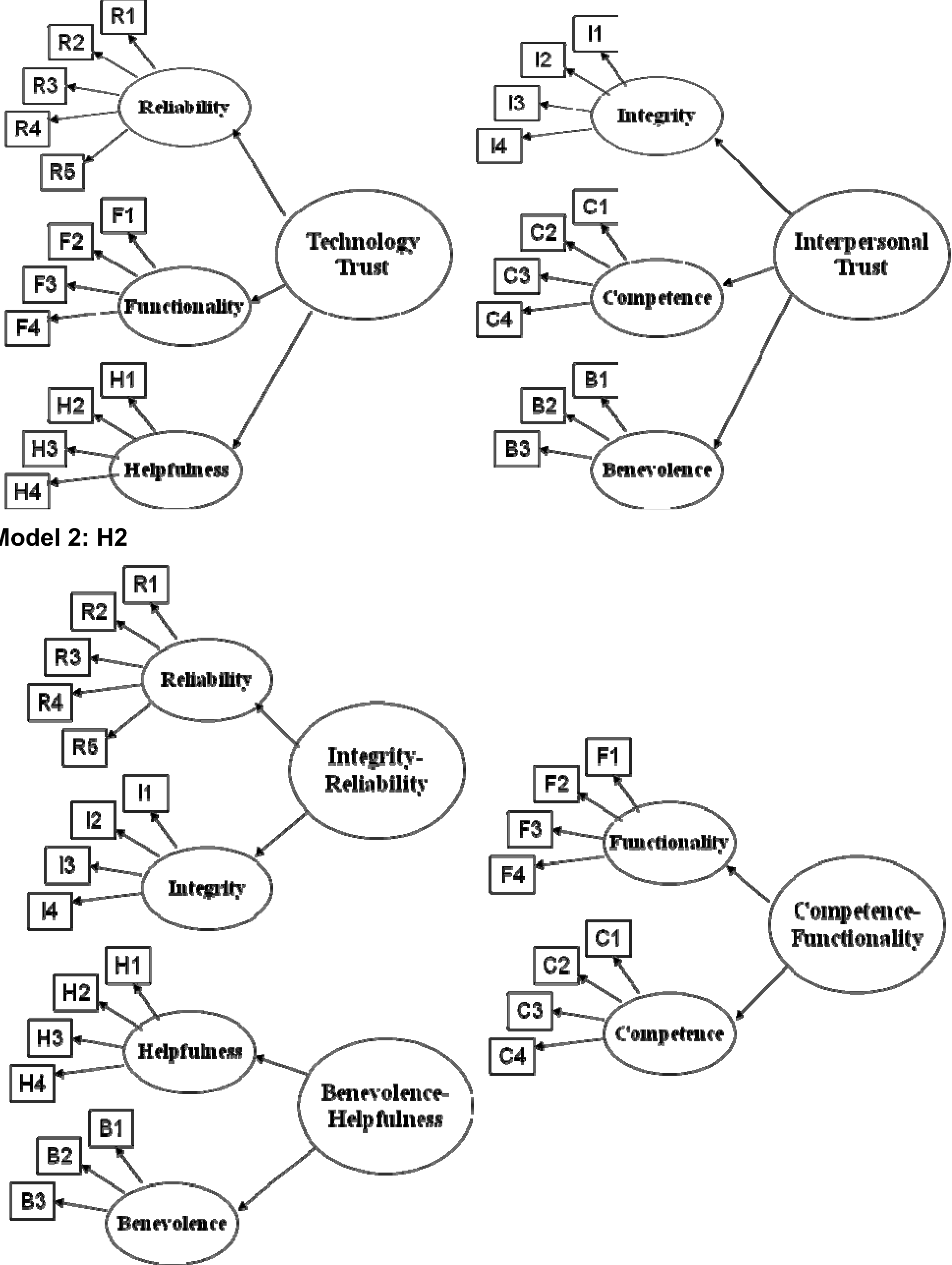 Figure 1: The two alternative second-order factor structures tested in the study.
Key Insights and Results
The data was clear: Model 2 won. Users don't care if a trait is "human" or "technical"; they care about the underlying concept.
- The Power of Tech Trust: Technology-related trust beliefs were stronger predictors of whether someone would keep using Facebook than interpersonal beliefs.
- The Reliability-Integrity Connection: People view a website's "Reliability" (not crashing) as a form of "Integrity" (keeping a promise).
- Privacy Matters: Privacy concerns were found to heavily influence Interpersonal Trust, suggesting that when a site leaks data, we see it as a moral failure, not just a technical bug.
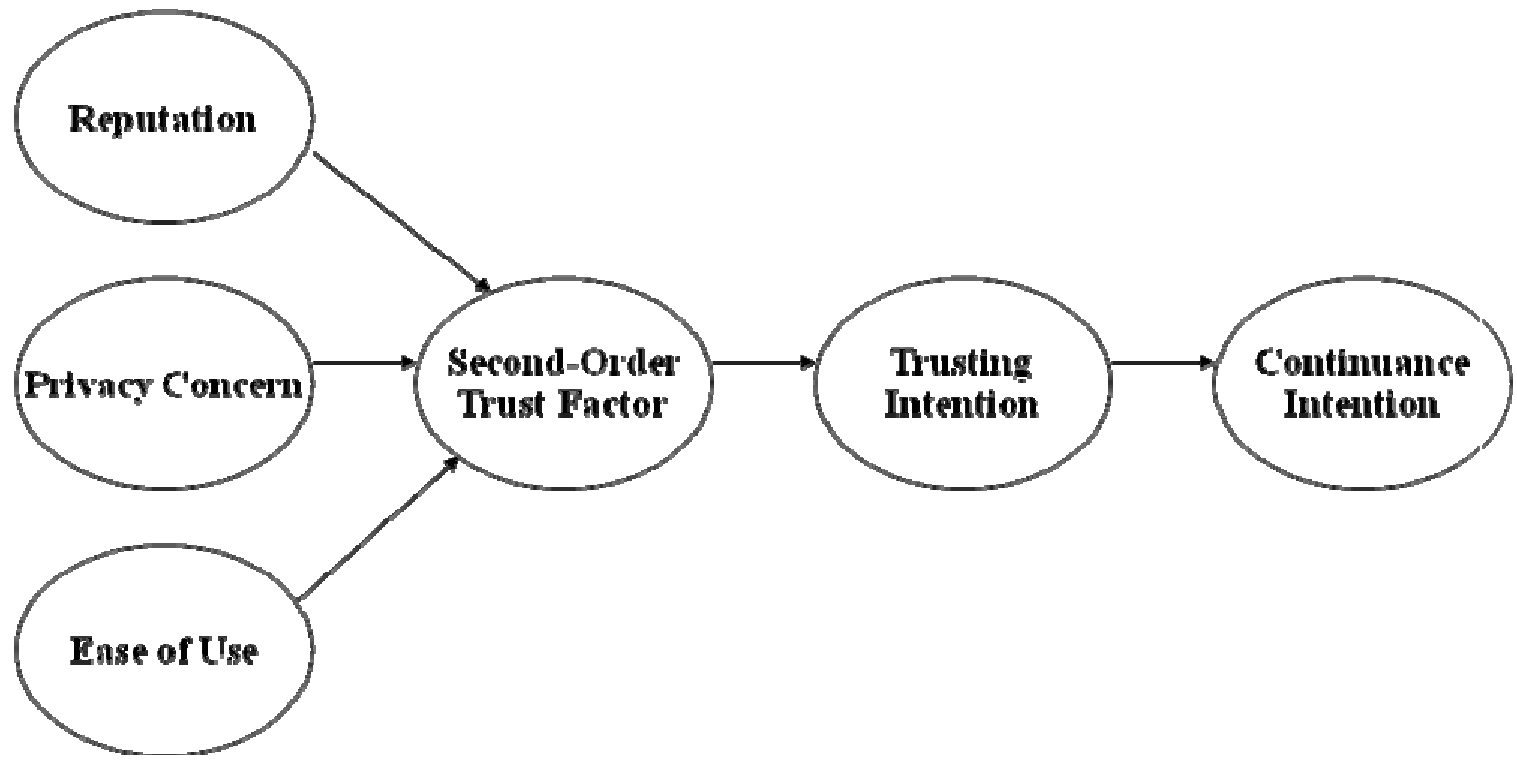 Figure 2: The structural model showing how Reputation, Privacy, and Ease of Use drive Trusting Intentions.
Why This Effectively Matters
For developers and product managers, this paper offers a blueprint for "Trust Design":
- Functionality is Competence: If your app lacks features, users don't just think it's "weak"—they think the platform is incompetent.
- Reliability is Morality: System downtime isn't just a nuisance; it erodes the perceived "integrity" of the organization.
- The Direct Path: Tech trust has a direct impact on continuance intention that bypasses "willingness to be vulnerable." If it works well, people stay.
Critical Perspective: The Age of the Study
While this 2010 study is a landmark in trust theory, it's worth noting the sample was "university students in 2006." In the post-Cambridge Analytica era, the "Benevolence" and "Integrity" scores for Facebook would likely look very different. However, the structure of how we conceptualize trust—the conceptual pairing—remains a robust psychological framework.
Conclusion
We don't just "use" Facebook; we "depend" on it. By proving that users blend technical and interpersonal attributes, Lankton and McKnight showed that the line between "User" and "Social Being" is non-existent in the digital age. To trust a machine is, in many ways, to treat it as a soul.