
Trust Inference in Complex Social Networks: Beyond Simple Node Connectivity
Trust Inference in Complex Trust-Oriented Social Networks
The paper proposes a novel Bayesian network-based trust inference mechanism for complex social networks. Unlike traditional models, it integrates social relationships (intimate degree) and domain-specific recommendation roles to deliver more realistic trust values.
TL;DR
Trust is the bedrock of digital social interactions, yet most algorithms treat it as a sterile number. This paper introduces a Bayesian network-based trust inference mechanism that integrates social intimacy and domain expertise. By moving beyond simple multiplication or averaging, the model captures the nuance of human social psychology, allowing for realistic trust delegation in complex networks.
The Missing Dimensions of Trust
While platforms like Facebook and LinkedIn have billions of users, most participants are "physically unknown" to one another. We rely on Trust Transitivity (if A trusts B and B trusts C, then A might trust C). However, the authors argue that current SOTA models suffer from two major flaws:
- Context Blindness: They ignore if the recommender is an expert in the field (Role Impact ).
- Relation Blindness: They ignore the strength of the bond between participants (Intimate Degree ).
- Constraint Rigidity: They cannot handle complex logical conditions (e.g., "I only trust this product if both a tech expert AND a close friend recommend it").
Methodology: The Bayesian Transformation
The core innovation lies in mapping trust relations into Directed Acyclic Graphs (DAGs). The trust value is treated as a posterior conditional probability.
1. Modeling Intimacy and Expertise
The authors utilize the Beta Distribution to model the probability of trust given social parameters. If a relationship is highly intimate () or a recommender is a known expert (), the likelihood of a strong trust relationship increases monotonically.
2. Handling Multiple Paths and Logic
In real networks, multiple paths exist between a truster and a trustee. The paper proposes an "AND" logic framework where specific constraints (e.g., ) must be satisfied across different paths to establish a final trust bond.
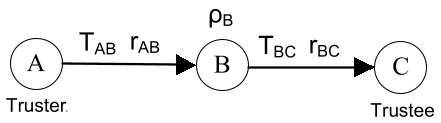 Figure 1: Comparison of trust inference in single vs. multiple paths.
Experimental Results
The researchers compared their Bayesian approach against traditional Multiplication and Average mechanisms.
- Sensitivity to Context: When social intimacy () or expertise () decreased, the proposed model's inferred trust value dropped accordingly, reflecting human intuition. Traditional models remained "flat" and unresponsive to these changes.
- Logic Enforcement: The model was the only one capable of zeroing out trust when specific user-defined constraints (like an "AND" condition between two paths) were violated.
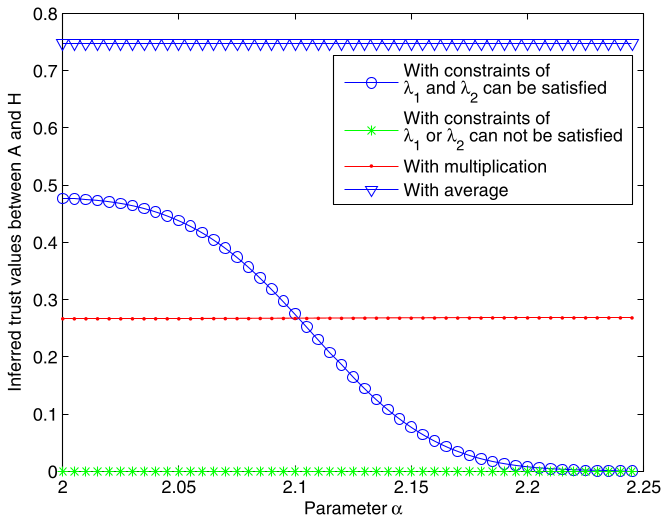 Figure 2: The impact of logical constraints on establishing trust relations.
Critical Insight & Conclusion
This work highlights that Trust is domain-specific. A doctor's recommendation on medicine is high-value (), but their opinion on jazz music might be negligible (). By quantifying these insights into a Bayesian framework, the authors provide a scalable way to filter "noise" in social recommendations.
Future Outlook: As we move toward more automated "Social CRM" and AI-driven recruitment, integrating these psychological dimensions will be essential to prevent the spread of low-quality or "bot-amplified" trust signals.
Takeaway for Researchers: When modeling social graphs, the edge weight shouldn't just be a "trust score"—it should be a vector of social attributes processed through a probabilistic lens.