
TISoN: Navigating Trust in the Web of Strangers
Trust Inference Computation for Online Social Networks
The paper introduces TISoN (Trust Inference for Social Networks), a novel framework designed to estimate trust between non-adjacent users in Online Social Networks (OSNs). It leverages the TISoN model, which includes a Trust Paths' Searching (TPS) algorithm and a Trust Inference Measuring (TIM) algorithm, achieving high-quality trust predictions on real-world datasets like Advogato.com.
TL;DR
TISoN (Trust Inference for Social Networks) is a sophisticated framework that calculates how much a user should trust a "stranger" in an online community. By filtering through millions of possible paths and selecting the Most Trustable Path (MTP) using metrics like trust stability (variance) and chain length, it outperforms traditional algorithms like TidalTrust and RN-Trust.
Contextual Positioning
In the landscape of Online Social Networks (OSNs), trust is the currency of interaction. While direct trust is easy to measure, indirect trust—the ability to assess a user multiple "hops" away—is the real challenge. TISoN shifts the focus from simply finding any path to finding the most reliable logical chain, addressing scalability and accuracy in one go.
The "One Path" and "Bad Information" Trap
Existing SOTA methods often fall into three logical traps:
- The One Path Problem: Some algorithms focus only on the final hop. If Alice trusts Bob (low trust), and Bob trusts Dave (high trust), the system might wrongly tell Alice to trust Dave implicitly.
- Information Overload: Algorithms like RN-Trust use every available path, including those involving malicious or unreliable nodes, which "dilutes" the quality of the trust score.
- The No Help Problem: Averaging all paths often leads to scores that gravitate toward a neutral middle ground, providing zero actionable insight for the user.
Methodology: The TISoN Core
TISoN operates via two interconnected algorithms that mimic human intuition.
1. Trust Paths' Searching (TPS)
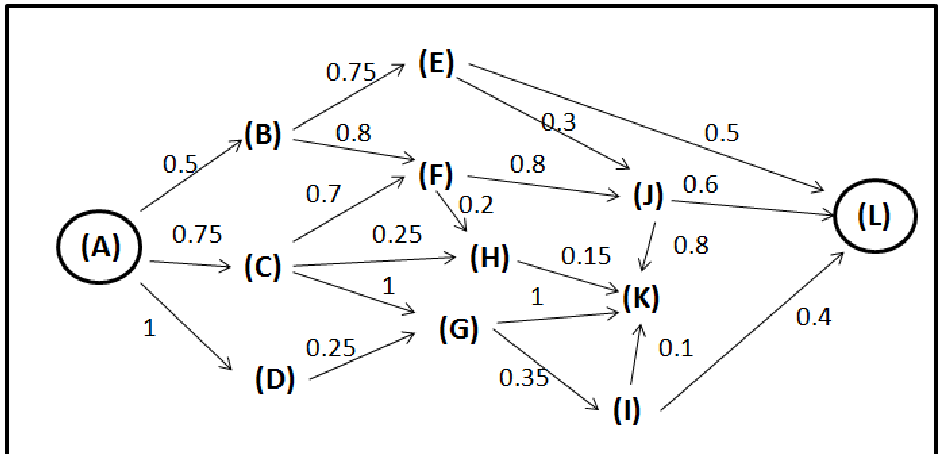
Instead of an exhaustive search, TPS uses constraints:
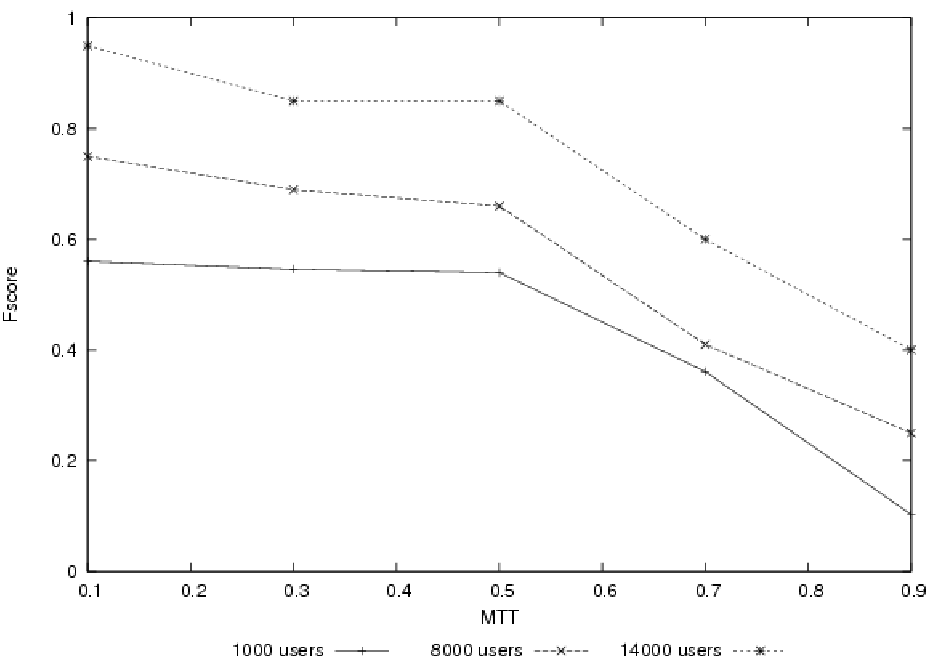
- MTT (Minimum Trust Threshold): It ignores any link that doesn't meet a baseline of reliability.
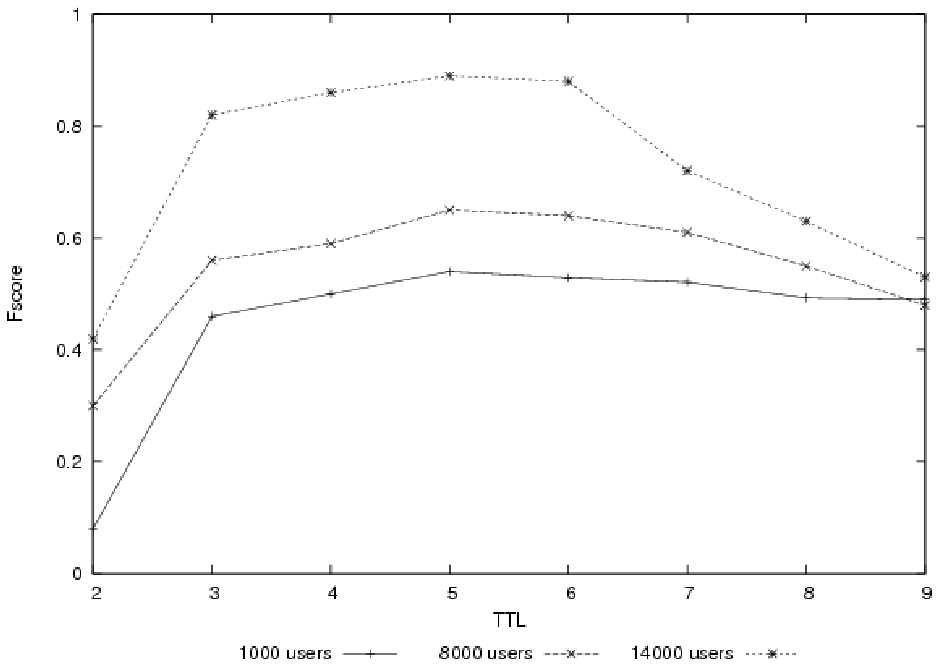
- TTL (Time To Live): It limits the search depth (e.g., within 5-6 hops), as human trust rapidly degrades over long chains.
2. Trust Inference Measure (TIM)
Once paths are found, TISoN calculates a Path Strength () using a balanced formula:
- Path Average (): The mean trust across the chain.
- Path Variance (): Measures stability. A path with wildly fluctuating trust values is seen as "risky."
- Path Weight (): Favors shorter paths ().
The final inferred trust is derived from the Most Trustable Path (MTP), ensuring the most robust recommendation reaches the user.
Experimental Proof: Lessons from Advogato
The authors tested TISoN against the Advogato dataset, which categorizes users from "Observer" to "Master."
Key Findings:
- Scalability: The system's accuracy (measured by Absolute Error) improves as the network grows. With 14,000 users, the error rate becomes nearly negligible.
- The Sweet Spot: Experiments showed that the best results occur when MTT is 0.5 and TTL is 5. If the threshold is too high, you lose information; if the path is too long, you gain noise.
Critical Insight & Conclusion
TISoN's greatest contribution is the realization that Trust Variance is as important as Trust Magnitude. A chain of "mostly reliable" people is safer than a chain containing a "Master" connected to a "Stranger."
Limitations: The model currently assigns equal weights () to all features. Future iterations could use machine learning to optimize these weights based on specific community behaviors.
Future Outlook: Beyond numerical scores, the move towards Fuzzy Linguistic Expressions (e.g., "Highly Trustworthy" vs. 0.87) will be vital for making these academic models user-friendly in real-world apps.