
RN-Trust: Modeling Social Trust Propagation through Resistive Network Analogies
Trust Inference in Web-Based Social Networks Using Resistive Networks
The paper introduces RN-Trust, a novel trust inference algorithm for Web-Based Social Networks (WBSNs) that models social trust using Resistive Networks. By mapping trust values to electrical resistance and using circuit analysis (node voltage or mesh current methods), it calculates indirect trust between non-adjacent nodes in a directed graph.
TL;DR
In the vast web of social networks, determining whether you can trust a "friend of a friend" is a fundamental challenge. This paper proposes RN-Trust, an algorithm that transforms a social graph into an electrical circuit. By treating trust as conductivity and social links as resistors, it leverages classical circuit laws to calculate trust more accurately than previous methods, especially by naturally accounting for trust "decay" along paths.
Problem & Motivation: The Limits of Shortest Paths
Traditional trust inference algorithms, most notably TidalTrust, rely heavily on the shortest path between a source and a target. While computationally efficient, this approach has two fatal flaws:
- Ignoring Evidence: In a social graph, there might be multiple longer paths that, when combined, provide significant evidence of trustworthiness. TidalTrust ignores these, effectively throwing away data.
- The Chain Problem: If user A trusts B (0.9) and B trusts C (0.9), TidalTrust might still yield a high trust value for A to C. However, intuitively, trust should diminish as the chain grows longer—a concept known as transitivity decay.
The authors' insight was to move away from purely heuristic-based path searching and toward a physical metaphor: Electrical Resistance.
Methodology: Trust as a Circuit
The core of RN-Trust is the transformation of the trust graph into a resistive network.
1. The Mapping Function
Trust values () in the range of are mapped to resistance () using a logarithmic scale:
- Full Trust (t=1) results in 0 Resistance (a perfect wire).
- No Trust (t=0) results in Infinite Resistance (an open circuit).
2. Preserving Asymmetry (The Diode)
Social trust is rarely mutual; I might trust a celebrity, but they don't know me. To model this asymmetry, the authors cleverly add an ideal diode in series with each resistor. This ensures that "current" (trust signal) only flows in the direction of the social link.
 Fig 1: Mapping a single trust edge to a resistor-diode pair.
3. Calculating Indirect Trust
Once the circuit is built, the "Equivalent Resistance" () between the source and target is calculated using standard tools like Node Voltage Method or Mesh Current Analysis. The final trust is then extracted as:
Experiments & Results
The authors compared RN-Trust against TidalTrust using a sample network of 12 nodes ( through ).
Key Findings:
- Physics-Based Decay: In a 3-node chain (), TidalTrust gave a trust of 7.5 (on a 10-point scale). RN-Trust yielded 3.7, reflecting the reality that trust weakens across multiple hops. This happens because resistors in series add up (), and since the mapping is logarithmic, adding resistances is equivalent to multiplying trust values.
- Information Aggregation: For nodes connected by multiple long paths (e.g., to ), TidalTrust often yielded 0 because the shortest path was broken. RN-Trust successfully calculated a value of 3.5 by aggregating the "current" flowing through all alternative paths.
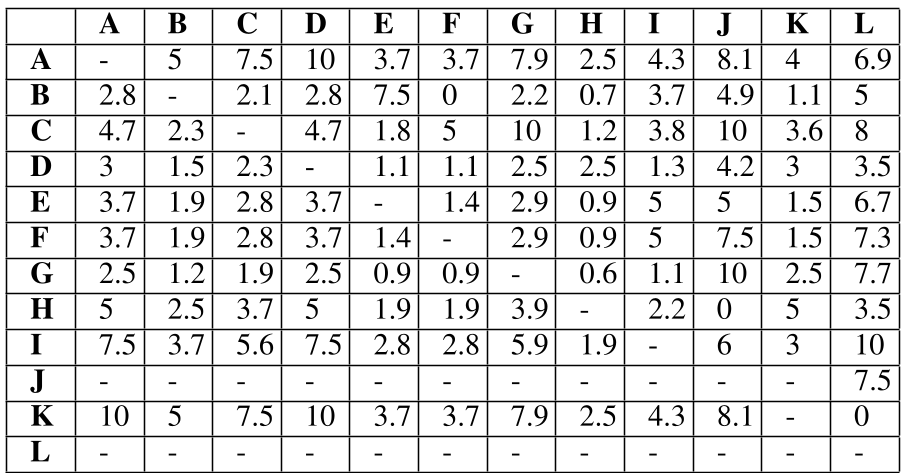 Table 1: RN-Trust values showing more nuanced propagation than traditional methods.
Critical Analysis & Conclusion
Takeaway
RN-Trust successfully bridges the gap between social science intuition and electrical engineering. By using resistors in series and parallel, it solves the dual problem of Transitivity (chains) and Composability (multiple paths) without needing complex, hand-tuned heuristics.
Limitations
- Scalability: The complexity is polynomial but might become a bottleneck for modern social networks with millions of nodes (e.g., Facebook or X), where specialized sparse matrix solvers would be required.
- Distrust: The current model does not account for "negative" trust or distrust. An ideal future work would involve active components (like Dependent Sources) to model how a negative recommendation suppresses current.
Future Outlook
The application of circuit theory to information flow is a powerful paradigm. Beyond trust, this could be utilized in Privacy Analysis (how much personal data leaks through a social chain) or Epidemiology (modeling the resistance of certain communities to virus spread).