
Social Geometry: Reinventing Trust in Multi-Agent Systems via Network Topology
Trust modeling in virtual communities using social network metrics
2008-11-01
Summary
Problem
Method
Results
Takeaways
Abstract
This paper introduces a novel trust evaluation method for autonomous multi-agent systems (MAS) by modeling them as social networks. It integrates complex network metrics—specifically centrality and clustering coefficients—into Subjective Logic to calculate trust as a consensus of modified opinions based on an agent's structural position.
## TL;DR
Trust is the "social glue" of autonomous systems, yet we often rely on intrusive rating systems to measure it. This paper proposes a structural shift: evaluating trust by looking at the **geometry of the social network**. By combining **Subjective Logic** with complex network metrics like **Centrality** and **Clustering Coefficients**, the author provides an algorithm that allows agents to calculate reliability based on their "location" in the system rather than just historical feedback.
## Background: The Security of Subjectivity
In open multi-agent systems (MAS), no agent is 100% secure, and information authenticity is notoriously difficult to verify. Traditional models (like Answer Garden) depend on explicit user involvement—asking users to rate every interaction. This is cumbersome and fails in autonomous environments.
The author’s core insight is that **multi-agent systems are social networks**. Therefore, the mathematical properties that describe the Internet or transportation grids—Small-World and Scale-Free properties—can be harvested to model trust.
---
## Methodology: Mapping Math to Morals
The framework relies on two pillars: **Subjective Logic** and **Social Network Metrics**.
### 1. Subjective Logic (The Engine)
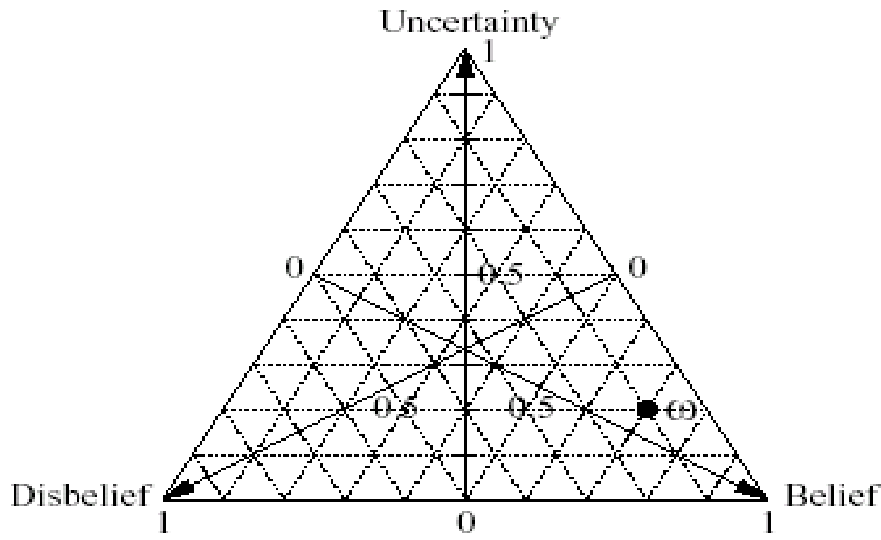
Instead of a binary "Trust/No Trust," the paper uses Jøsang’s Subjective Logic, where an opinion is represented as a triplet:
- **Belief (b)**: Evidence favoring the agent.
- **Disbelief (d)**: Evidence against the agent.
- **Uncertainty (u)**: The void where evidence is missing.
### 2. Network Metrics (The Context)
The paper translates network "physics" into trust parameters:
- **Centrality (e.g., PageRank)**: Agents at the center of the graph are deemed more "important." Their opinions are given higher weight in the **Belief** component.
- **Clustering Coefficient (CLIQUE)**: Highly clustered groups (cliques) are a double-edged sword. While members know each other better, they might also collaborate to "cheat" the system. Thus, high clustering is mapped to the **Uncertainty** component.
---
## The Trust Evaluation Algorithm
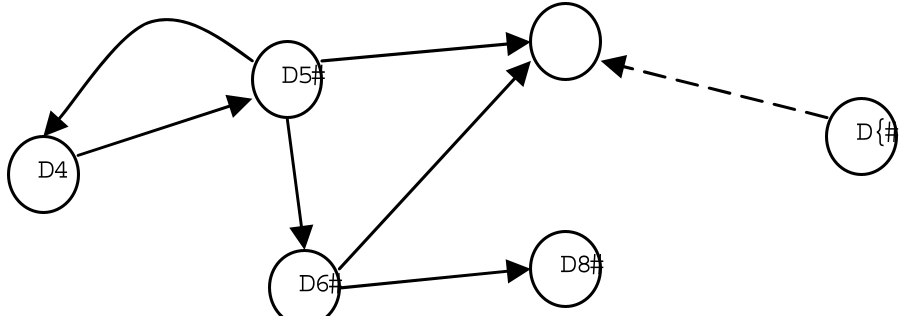
The paper details how a new agent (Ax) can derive trust in another agent (A4) by aggregating the opinions of existing neighbors.
**The workflow is as follows:**
1. **Collect Opinions**: Gather all opinions from agents who already know the target.
2. **Contextual Modification**: Adjust these opinions based on the recommender's position. For example, if Recommender C is very central, increase the belief in their opinion.
3. **Subjective Consensus**: Use the consensus operator (⊕) to merge multiple adjusted opinions into one final trust level for agent A.
## Results & Deep Insight
The model effectively addresses the "cold start" problem in MAS. When an agent joins a network, it doesn't need a history of interactions; it only needs to observe the **structure of trust** that already exists.
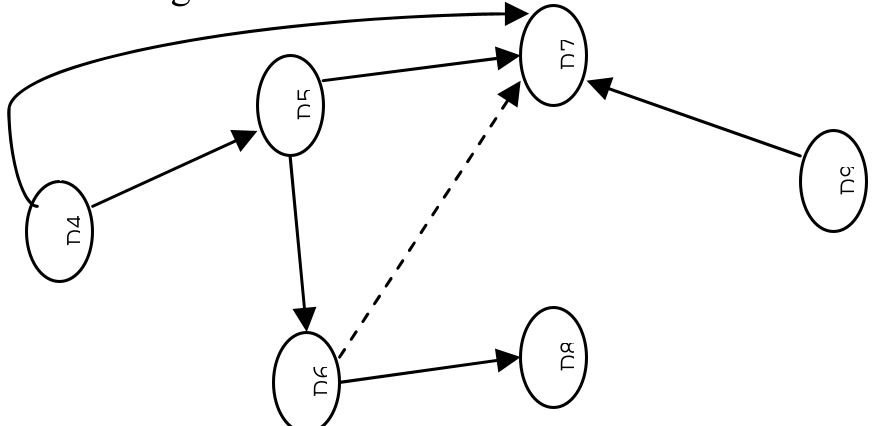
The mathematical beauty lies in Step 4.1.2 (Trust Update), where the algorithm doesn't just look at direct neighbors but finds **all paths** leading from agent A to agent B, discounting each "hop" based on the uncertainty of the intermediate agents.
## Critical Analysis & Future Outlook
**Takeaway**: This work bridges the gap between graph theory and information security. It recognizes that in a digital society, "who you are" is defined by "where you are" in the network.
**Limitations**:
- **Computational Complexity**: Calculating all paths between two nodes and running consensus operations can be exponentially expensive in very large, dynamic networks.
- **Deception Resistance**: While the author mentions cliques as a source of uncertainty, the model needs more robust testing against *coordinated sybil attacks* where malicious agents artificially inflate their own centrality.
**Future Prospect**: As we move toward decentralized autonomous organizations (DAOs) and IoT swarm intelligence, these graph-based trust models will likely become the standard for automated security audits without human intervention.