
iSim: Revolutionizing Trust Prediction via Integrated Time-Aware Similarity
Trust Prediction for Online Social Networks with Integrated Time-Aware Similarity
This paper introduces iSim, an integrated time-aware similarity-based collaborative filtering approach for trust prediction in Online Social Networks (OSNs). It uniquely combines Vector Space Similarity (VSS), time-aware Matrix Factorization (TLFS), and Propagated Trust (PT) to significantly outperform state-of-the-art methods like SCMF and TISoN.
Executive Summary
Trust is the bedrock of online interactions, yet predicting it remains a formidable challenge due to the extreme sparsity of social graphs and the fluid nature of human relationships. This paper presents iSim, a sophisticated collaborative filtering framework that bridges the gap between graph theory, matrix factorization, and temporal dynamics. By synthesizing explicit preferences, latent behaviors, and structural propagation, iSim achieves a new SOTA in both accuracy and computational efficiency.
The "Why": Why Trust Prediction is Hard?
Trust is not a static property; it is a psychological phenomenon that evolves. The authors identify four critical bottlenecks in current research:
- Information Shortage: Dunbar's number limits stable relationships, leading to sparse trust matrices.
- Trust Evolution: Modeling how human sentiment changes over time is mathematically non-trivial.
- Heterogeneity: User behavior patterns vary wildly across platforms (e.g., Twitter vs. LinkedIn).
- Inefficiency: Most global graph algorithms fail to scale to millions of users.
Prior works like TidalTrust (graph-based) or SCMF (matrix-based) often pick one "viewpoint," missing the holistic picture. iSim's core insight is that similarity is multi-dimensional.
Methodology: The iSim Triad
The paper decomposes user similarity into three complementary components:
1. iSim-VSS (Explicit Similarity)
This measures the overlap in how two users rate common third parties using cosine similarity. To overcome the complexity, the authors implement inverted indexing, allowing the system to skip non-interacting user pairs entirely.
2. iSim-TLFS (Latent & Temporal Similarity)
This is the "brain" of the model. Unlike standard Matrix Factorization (MF), iSim-TLFS introduces Time-Awareness. It assumes a user's latent trustor profile () is a linear combination of their previous state and the influence of the people they trust.
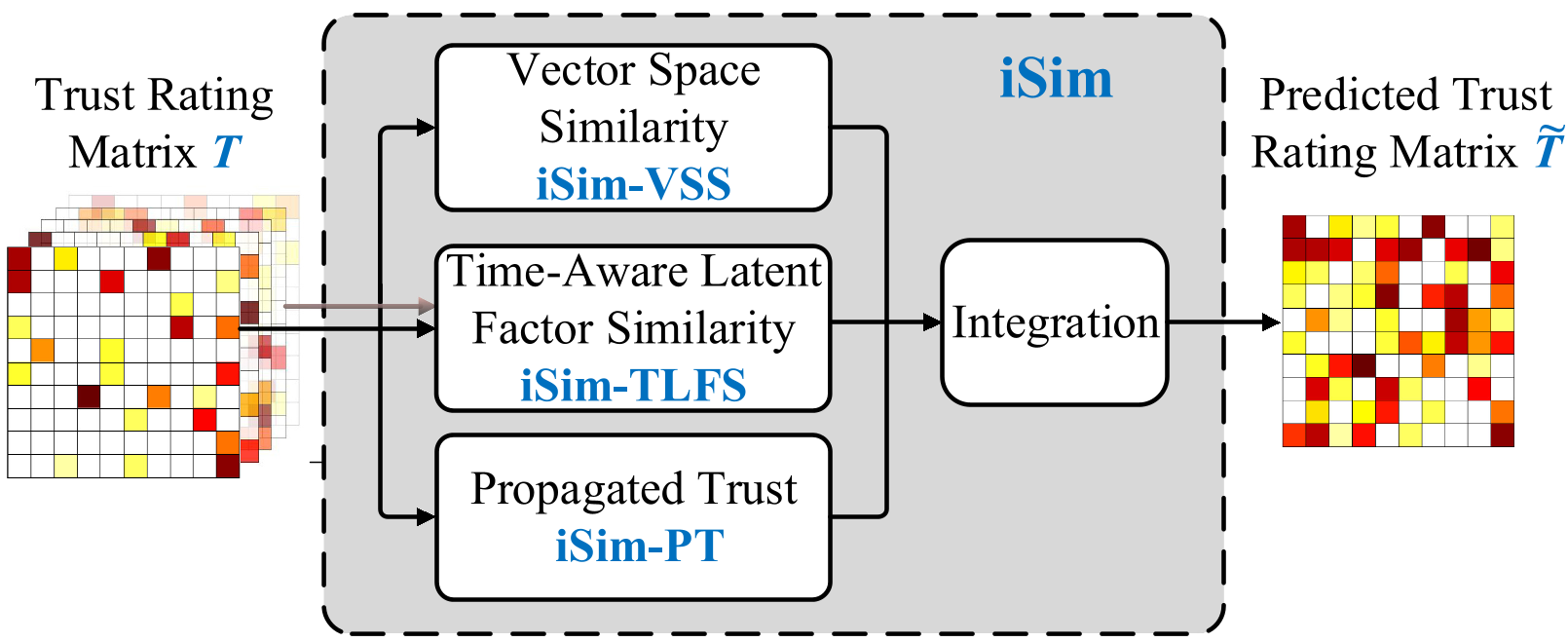 Figure 1: The iSim architectural pipeline integrating VSS, TLFS, and PT.
3. iSim-PT (Structural Baseline)
Using a Min-Max strategy derived from Kruskal’s algorithm principles, PT calculates trust propagation across the network to provide a "similarity baseline." It assumes that if a trusted path exists, there is a higher probability of latent preference alignment.
Experimental Results & Performance
The authors conducted rigorous testing against SCMF and TISoN across three major datasets: Advogato, RobotNet, and Squeak.
Accuracy Gains
iSim significantly lowered Mean Absolute Error (MAE) and Root Mean Square Error (RMSE). Notably, on the Squeak dataset, iSim improved the F1-Score by nearly 30% over SCMF, proving its robustness in highly dynamic environments.
Efficiency Benchmark
The efficiency gain is perhaps the paper's most impressive feat. By optimizing the pre-training process and using K-NN for local prediction, iSim achieves near-linear scalability.
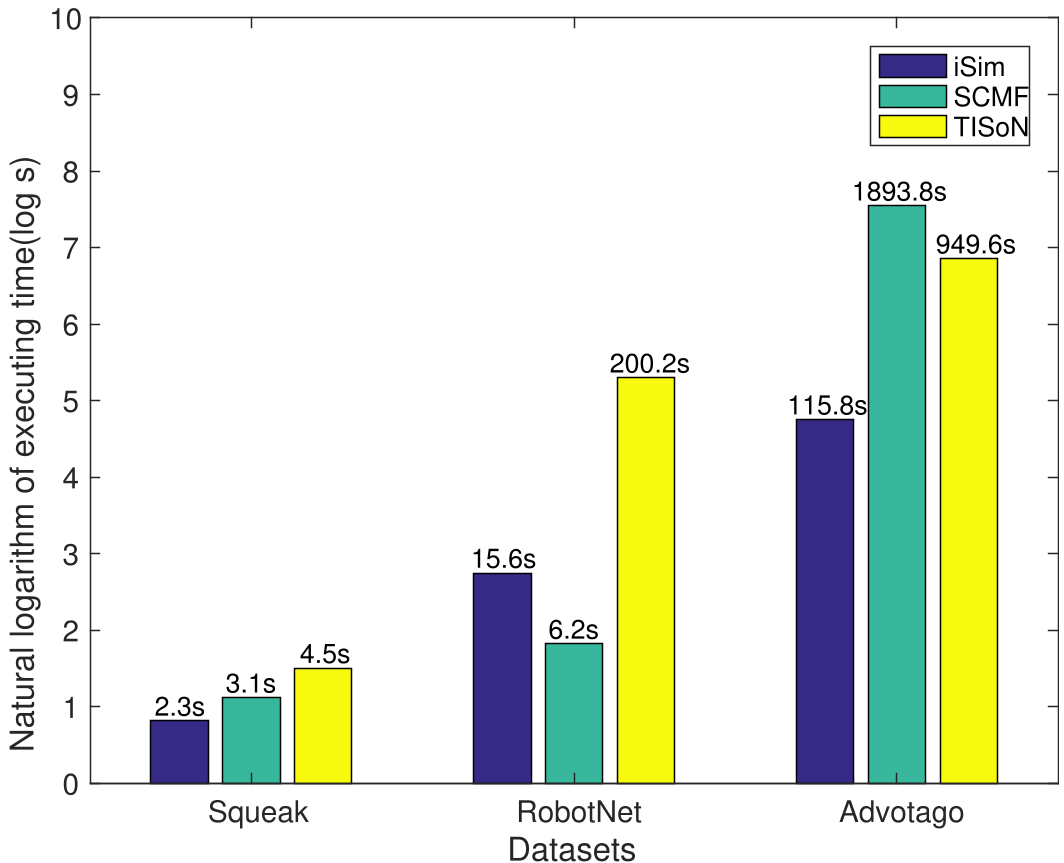 Figure 2: Execution time comparison demonstrating iSim’s superior speed (lower is better).
Critical Insight: The Power of Integration
The ablation studies (Tables 6, 7, and 8) reveal that no single component carries the model. While VSS handles the "obvious" connections, TLFS tackles the "hidden" styles, and PT ensures structural consistency. The synergy between these factors allows iSim to maintain high precision even when 80% of the data is removed.
Conclusion
iSim represents a significant leap in social network analysis. By treating trust as a time-aware, multi-faceted similarity problem rather than a simple link-prediction task, it provides a scalable blueprint for recommendation systems, reputation management, and secure online collaboration.
Limitations: While iSim is fast, it still relies on a centralized matrix. Future work might explore how to implement iSim in a decentralized or federated environment where privacy is paramount.