
Beyond Encryption: Rethinking Trust and Reputation in Modern Healthcare Systems
Trust and Reputation Management in Healthcare Systems: Taxonomy, Requirements and Open Issues
This paper provides a comprehensive taxonomy and reference model for Soft Trust and Reputation Management Systems (TRSs) in healthcare. It systematically categorizes trust characteristics, identifies critical system requirements, and evaluates current SOTA healthcare TRSs like Hedaquin and MDTA against a robust framework of potential malicious attacks.
TL;DR
While we often think of healthcare security as a matter of passwords and encryption (Hard Trust), this paper argues that the "human element"—the reliability of data and the past behavior of providers—requires a Soft Trust management system. The authors introduce a taxonomy and a reference model to build Trust and Reputation Systems (TRS) that are resilient against malicious participants and contextually aware of medical complexities.
The "Authorized Malicious User" Problem
Most e-health security focuses on keeping outsiders out. But what happens when an authorized doctor provides inaccurate data, or a patient leaves a fraudulent review to ruin a clinic's reputation?
Traditional "Hard Trust" mechanisms (cryptography) are binary: you are either authorized or not. They cannot monitor behavior over time. The authors identify this gap as a major hurdle for e-health adoption. Without a way to "compute" reputation, we remain vulnerable to:
- The Traitor Attack: Entities that behave well to build trust, then strike on specific critical occasions.
- The Sybil Attack: One user creating multiple fake identities to inflate their own ratings or bury a competitor.
Methodology: The Anatomy of Soft Trust
The paper posits that for a TRS to be effective in medicine, it must reflect the "physical intuition" of medical practice—trust is not a static number but a dynamic, context-heavy belief.
1. The Reference Model
The authors propose a model based on several core pillars:
- Context Sensitivity: A provider reputable in dental hygiene is not necessarily reputable in oncology. Reputation must be "tagged" to specific medical domains.
- Time Sensitivity: Old positive behavior should not serve as a permanent shield for current malpractice. The system must implement a "forgetting" factor or time-decay for ratings.
- Adaptive Behavior: The system must use entity credibility (how trustworthy is the person giving the rating?) to weight the final score.
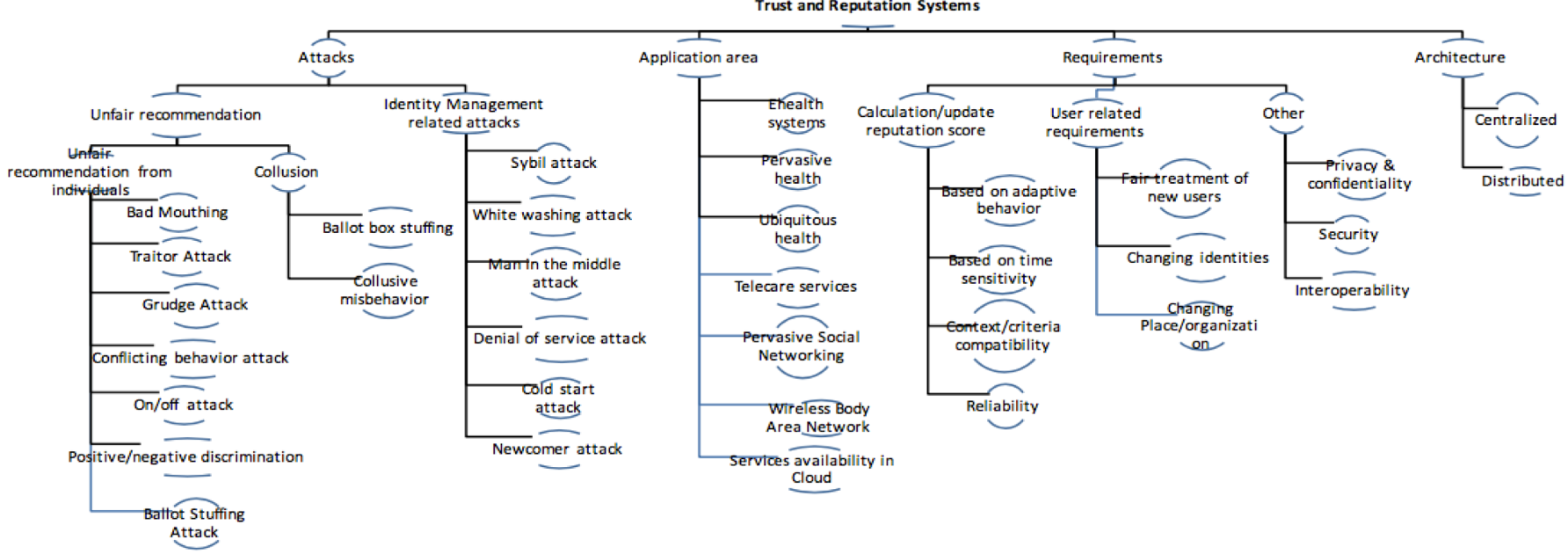 Figure 1: The paper's taxonomy classifying trust by architecture (centralized vs. distributed) and mechanism (hard vs. soft).
Evaluating the State of the Art
The paper critiques existing solutions like Hedaquin (a data quality indicator) and MDTA (Medical Data Trustworthiness Assessment). While these systems use advanced math (like the Beta Reputation System), they often fall short in security and privacy.
 Table 1: Most current systems partially address "Bad-mouthing" but completely ignore "Sybil" and "Whitewashing" attacks.
Key Insights: Why "Average Ratings" are Dangerous
A critical insight from the authors is that "Average Reputation" is a poor default for new users. If a newcomer enters the system with a neutral score, they might be ignored (Cold Start). If they enter too high, they can exploit the system. The paper suggests using Community-based Defaults—assigning a new node the average score of its specific professional community (e.g., a verified hospital network) rather than a global average.
Future Frontiers: WBAN and Social Health
The roadmap for the next decade of healthcare trust lies in:
- Wireless Body Area Networks (WBAN): Trust management for real-time physiological data collection.
- Pervasive Social Networking: Identifying the accuracy of public health messages in social "echo chambers."
- Hybrid Security: Fusing cryptographic proof with behavioral trust to create an "Intelligent Firewall."
Conclusion
Trust in healthcare is asymmetric and subjective. To transition to a truly patient-centered e-health era, we must stop treating "Trust" as a feeling and start treating it as a computable, secure, and multidimensional metric. This paper provides the first comprehensive blueprint for that transition.
Takeaway for Researchers: The next SOTA will likely come from combining Differential Privacy (to protect raters) with Subjective Logic (to handle the uncertainty of medical outcomes).