
Beyond Static Ties: Why Time is the Secret Ingredient in Social Trust Computation
Trusted Friends’ Computation Method Considering Social Network Interactions’ Time
This paper introduces a time-aware implicit trust computation method designed to identify "Trusted Friends" within social networks like Facebook. By integrating temporal decay into user interactions, the authors developed a system that outperforms static trust models in recommendation accuracy.
TL;DR
Most social recommender systems assume your "best friend" from five years ago is just as relevant as the one you messaged yesterday. This paper challenges that by introducing a Time-Sensitive Method for calculating implicit trust on Facebook, proving that accounting for interaction "age" and diverse media (like videos) leads to far more accurate "Trusted Friend" identification.
The Problem: The "Stale Friend" Dilemma
In the world of social web applications, trust is the currency of recommendation. We buy what our friends suggest. However, existing models suffer from a major flaw: Temporal Blindness.
Previous SOTA (State-of-the-Art) methods often calculated trust based on the quantity of interactions (likes, comments, tags) but ignored when they happened. In reality, a "Tag" on a photo from 2018 should not carry the same weight as a "Wall Post" from 2026. Without a decay factor, recommender systems suggest items based on outdated social circles.
Methodology: Engineering the "Freshness" of Trust
The authors move from binary or simple continuous trust to a Time-Aware Implicit Metric.
1. The Temporal Weighting Function
The core innovation lies in Formula 2, which calculates a weight for every interaction:
- Intuition: An interaction that is 40 days old (~0.1 years) receives a weight of 0.99.
- Decay: An interaction from 2.5 years ago drops to 0.75.
- Cut-off: Interactions older than 10 years are discarded (Weight = 0).
2. Expanded Interaction Set
Unlike prior work that focused on text and photos, this method incorporates Video Interactions (VT, VL, VC), recognizing that video-sharing is a high-signal social activity.
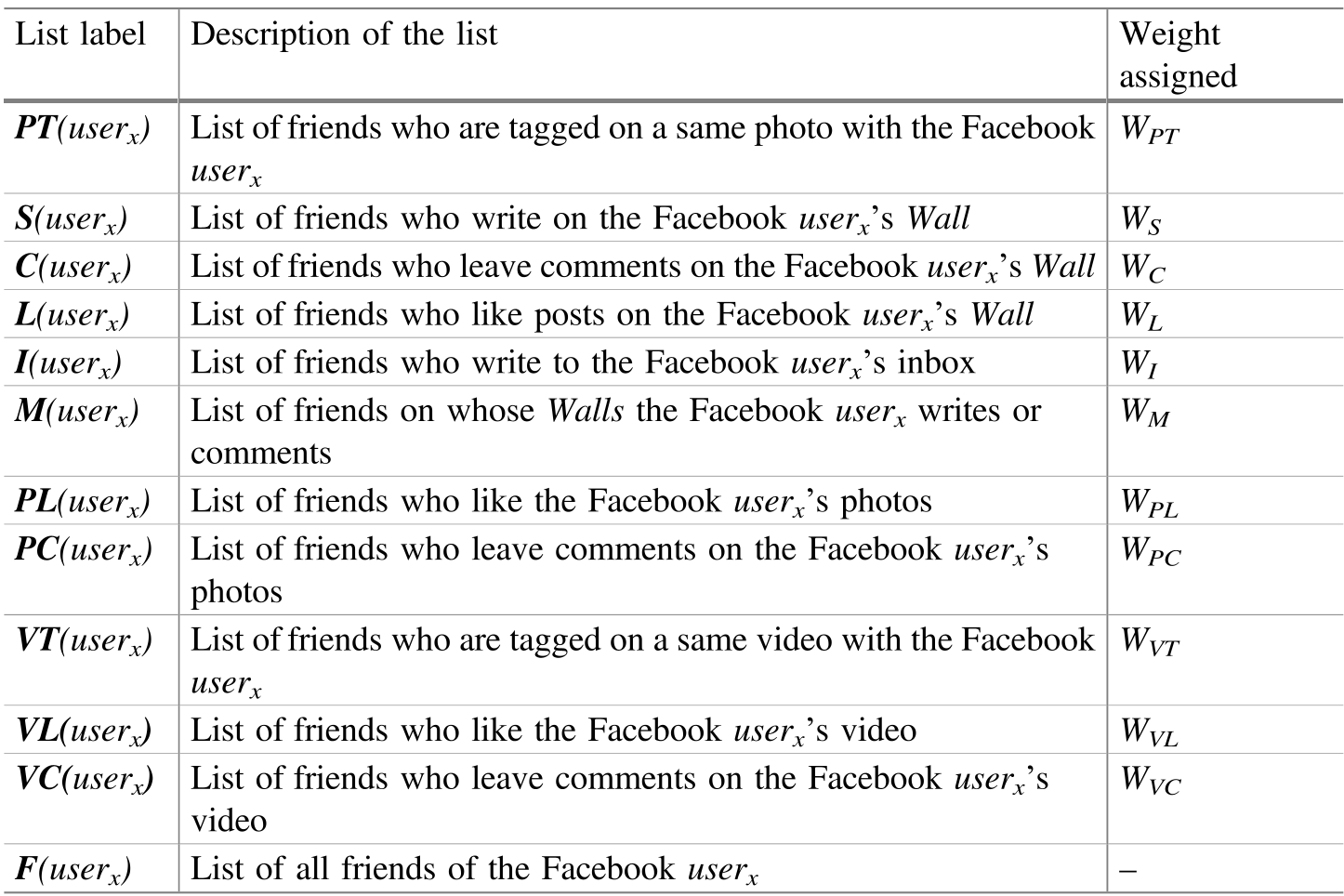 Figure 1: The weighted interaction categories, including the newly added Video metrics.
Experiments: Validating the "Trusted Friends" App
The researchers built a Facebook application to collect real-world behavioral data and compared their "Trusted Friends" algorithm against the established "Closest Friends" baseline.
Key Findings:
- The Optimal Threshold: By testing dynamic thresholds, they found that a cutoff of 1.8 yielded the best F-measure (0.68), balancing precision and recall.
- Outperforming the Baseline: The inclusion of the time factor and video data resulted in a "Mean Precision" that consistently stayed above the baseline across diverse user groups.
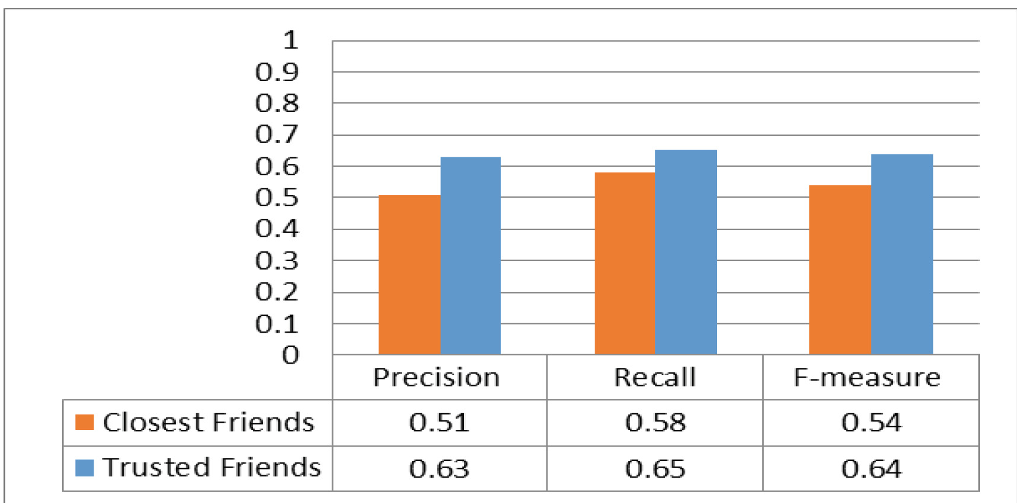 Figure 2: Head-to-head comparison showing the higher average precision of the proposed method.
Critical Insight: The "Why" behind the Success
The success of this work isn't just in the math—it's in the Inductive Bias. By encoding the human reality of "relational drifting" into the algorithm, the model naturally filters out noise from past social phases.
Furthermore, the weighting strategy (assigning the highest weights to Inbox messages () and Wall writes ()) correctly identifies that private and direct communication is a stronger proxy for trust than passive "Likes" ().
Conclusion & Future Outlook
This paper provides a robust framework for making social systems more "human." The next frontier? The authors suggest integrating Geographic Proximity via GPS. Imagine a system that knows not only who you trust and when you last spoke, but also who is physically close enough to actually grab that recommended cup of coffee with you.
Takeaway for Developers: If your recommendation engine doesn't have a variable in its trust coefficient, you're likely recommending products to a version of the user that no longer exists.