
Beyond Killing: How Irradiation "Dresses" Dendritic Cells to Fuel CAR T Cell Persistence
Tumor irradiation promotes antigen dressing of dendritic cells to enhance CAR T cell persistence and efficacy in lung metastases.
This study demonstrates that tumor irradiation (8 Gy) significantly enhances the persistence and efficacy of CAR T cells in metastatic solid tumor models (lung adenocarcinoma and melanoma). The core mechanism involves a transformation of the tumor microenvironment where irradiation promotes "antigen dressing" of tumor antigens onto dendritic cells (DCs), which then act as potent stimulators for CAR T cell expansion.
TL;DR
A breakthrough study published in Nature Cancer reveals that local tumor irradiation (8 Gy) acts as a powerful catalyst for CAR T cell therapy in solid tumors. By promoting the transfer of tumor antigens onto dendritic cells (DCs)—a process called antigen dressing—radiotherapy creates an "in-tumor vaccine" effect that drives massive CAR T cell expansion and persistence without increasing toxicity in healthy tissues.
Background: The Persistence Problem
The success of CAR T cells in B-cell lymphomas is largely due to the continuous presence of healthy B cells that act as "fuel," keeping the T cells active. Solid tumors like lung adenocarcinoma lack this internal support system. Once CAR T cells enter the toxic, immunosuppressive tumor microenvironment (TME), they often "stall" and die out. Furthermore, many solid tumor antigens (like EpCAM) are also found on healthy organs, making high-dose CAR T therapy dangerous.
The Insight: Turning DCs into "Antigen-Dressed" Stimulators
The researchers found that a moderate dose of radiation (8 Gy) doesn't just kill tumor cells; it conditions them. Through a process called trogocytosis, dendritic cells "nibble" at the surface of irradiated tumor cells, acquiring their antigens.
These "antigen-dressed" DCs then present the target directly to the CAR T cells. Unlike standard antigen presentation (which uses the TCR), the CAR T cells recognize these antigens directly through their chimeric receptors. This interaction provides the necessary costimulatory signals that solid tumors usually withhold.
 The study reveals that irradiation promotes the interaction between CAR T cells and dendritic cells within the tumor site.
Key Methodology & Discovery
Using a syngeneic Kras-mutant lung cancer model (KP cells), the team demonstrated:
- Requirement of DCs: Using a
Zbtb46-DTRmodel to deplete dendritic cells, they proved that without DCs, the benefits of irradiation vanish. Irradiation fails to sustain CAR T cell persistence if DCs are absent. - Spatial Selectivity: While antigens like EpCAM are present in both the tumor and healthy lung tissue, the "antigen dressing" effect was largely confined to the irradiated tumor. This allowed for potent anti-tumor activity without damaging adjacent healthy lung tissue.
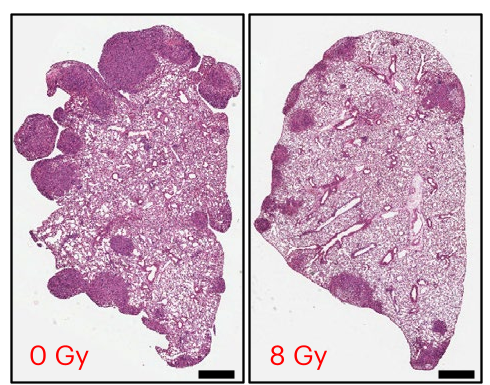 Fig 1: Notice the divergence in CAR T cell bioluminescence (panel K). Irradiated tumors (8 Gy) show sustained T cell activity, whereas T cells in unirradiated mice rapidly decline.
Results: A New Benchmark for Solid Tumors
The combination of 8 Gy Thoracic Radiotherapy (TRT) and CAR T cells achieved:
- Infiltration: A 5-fold increase in intratumoral CAR T cell density.
- Metabolic Fitness: RNA-seq showed that T cells in irradiated tumors upregulate pathways for oxidative phosphorylation and IL-2 signaling, indicating they are "metabolically armed."
- Survival: Durable remissions in models where CAR T therapy alone typically fails within two weeks.
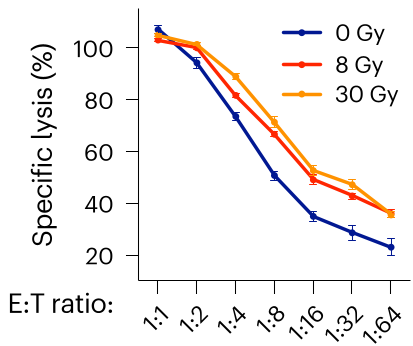 Fig 1c-e: Histology shows a dramatic reduction in tumor area (percentage of lung cross-section) in the TRT + CAR T group compared to controls.
Professional Insight: Widening the Therapeutic Window
The most significant finding for clinical application is the widened therapeutic window. Targeted therapies for solid tumors often hit a "toxicity ceiling" because antigens like EpCAM are expressed on normal epithelial cells.
Because irradiation-induced DC engagement is a local phenomenon, the CAR T cells expand where the radiation was delivered. This suggests we can use lower, safer systemic doses of CAR T cells and "supercharge" them locally at the tumor site using radiotherapy.
Conclusion & Future Outlook
This work shifts the paradigm of radiotherapy from a "debulking" tool to an "immune-modulatory" switch. The discovery that CAR T cells can be "fed" by endogenous, antigen-dressed DCs opens the door for a new generation of combination trials.
Limitations: The study notes that low-dose irradiation (2 Gy) or total-body irradiation was insufficient; a "sweet spot" of focal, higher-dose (8 Gy) radiation is required to license the DCs effectively. Future research will need to determine if human DCs exhibit the same trogocytic efficiency as observed in these mouse models.