
Unmasking the Digital Turk: A 2005 Time Capsule of Orkut Behavior
Discover behavior of Turkish people in Orkut
This research investigates the sociological and demographic profiles of Turkish users on Orkut, an early online social network. Using random sampling and regression analysis, it maps behavioral patterns including friendship networks, smoking, and alcohol consumption among the youth population of Turkey during the mid-2000s.
TL;DR
Researchers analyzed a random sample of Turkish Orkut users to decode the demographics and social habits of early internet adopters in Turkey. The study reveals a population that is young (average age 26), predominantly male, and heavily influenced by cultural factors in their networking, drinking, and smoking habits.
Background Positioning
In the mid-2000s, Orkut was a global social media titan before being eclipsed by Facebook. Turkey represented the seventh-largest nationality on the platform. This paper acts as a sociotechnical artifact, capturing the exact moment a burgeoning digital community was disrupted by government filtering and the emergence of local competitors.
Problem & Motivation: The Data Vacuum
Despite the rapid growth of the internet in Turkey—surpassing 2 million users by 2005—there was a profound "lack of data" regarding who these users actually were. The authors recognized that Orkut, covering 7% of the potential Turkish internet population, offered a unique "window" into the youth culture.
The primary intrigue was the sudden plateau in Orkut's growth in Turkey. Unlike typical diffusion curves that flatline due to market saturation, early 2005 saw a "sharp stop" caused by external inhibitors: government filtering, slow connection speeds, and the rise of rival networks.
Methodology: High-Tech Sociology
To study this hidden population, the authors employed a novel sampling technique:
- Name-Based Retrieval: They searched for 120 common Turkish family names to identify users.
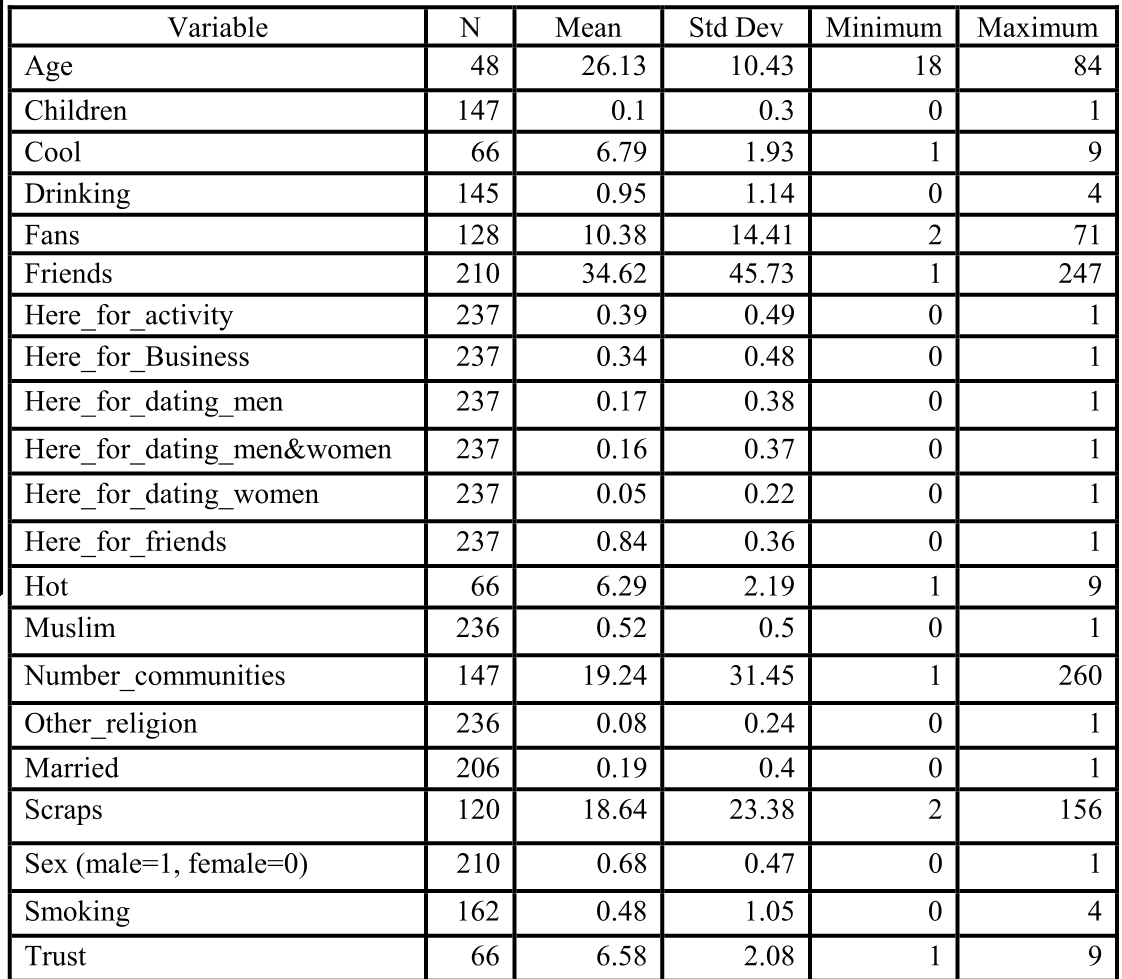
- Random Selection: 237 individuals were chosen for deep analysis.
- Statistical Rigor: The study moved beyond simple correlations to Linear Regression, allowing them to answer "Why" (e.g., do married people have more friends because they are older, or specifically because they are married?).
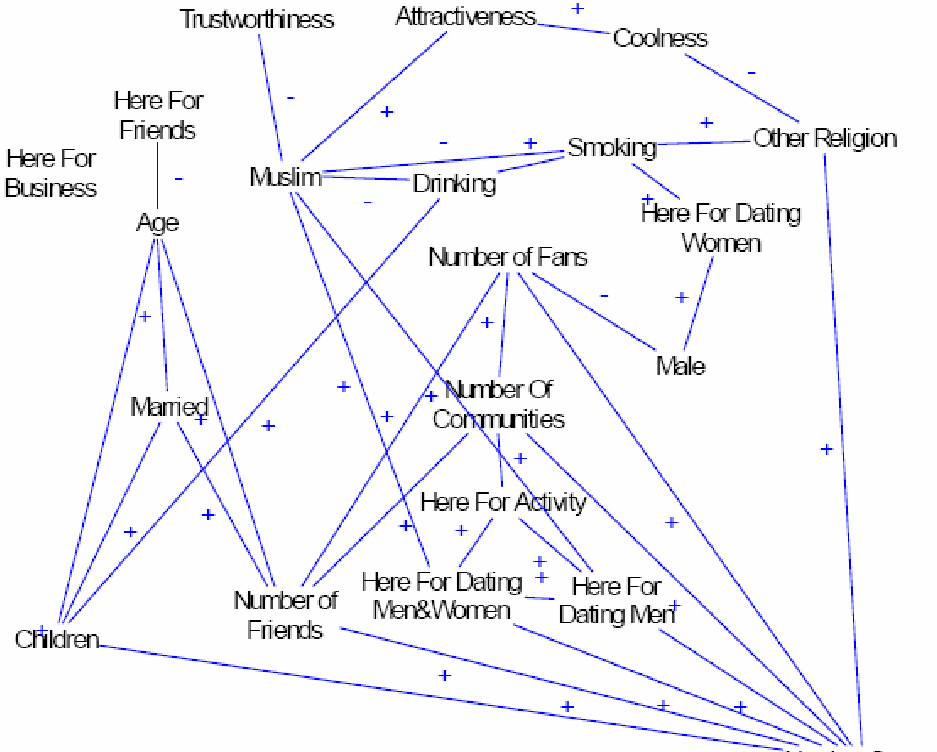 The conceptual diagram above illustrates the complex interplay between demographic inputs and social outcomes like popularity and health habits.
Key Insights & Results
The statistical breakdown revealed several counter-intuitive findings that challenge basic assumptions about online behavior:
- The Popularity Paradox: While younger users joined for "meeting new friends," it was actually the older and married users who maintained larger friend networks (average of 34 friends). The authors attribute this to "accumulated social capital" and combined spouse networks.
- Gender Dynamics: Women consistently garnered more "fans" (a measure of passive popularity) than men, despite men having slightly more active "friends."
- Cultural Nuance in "Dating": A fascinating linguistic mismatch was discovered. Turkish users often listed their purpose as "dating both men and women" without being bisexual; they interpreted the English term "dating" as a synonym for general "socializing" or "friendship."
- Behavioral Links: The study confirmed a strong nexus between smoking and drinking. However, it added a surprising specific: users with children were more likely to drink, regardless of their age or marital status.
Data Summary Table
Critical Analysis & Conclusion
Takeaway
The paper successfully demonstrates that online social networks are not vacuum-sealed environments; they are deeply porous, reflecting the religious (lower drinking in Muslims) and cultural (fear of being seen "dating" among women) realities of the physical world.
Limitations
The sample size (N=237) is relatively small for a population of 150,000. Furthermore, the reliance on self-reported data for sensitive topics like alcohol and religion in a conservative society likely introduced a "social desirability bias," potentially underreporting certain behaviors.
Future Outlook
This research paved the way for modern "Social Data Science." By proving that digital footprints can be used to perform demographic census-taking, it foreshadowed the massive scale of behavioral analytics used by platforms today. For those interested in the evolution of the Turkish web, this study remains a foundational pillar for understanding the transition from global platforms to localized digital ecosystems.