
TV Meets Internet: A Decade of Digital Transformation (2002–2013)
TV-related content online: a brief history of the use of webplatforms
This paper presents a longitudinal case study analyzing the evolution of TV-related web platforms using the Finnish MTV3 website for the soap opera Emmerdale (2002–2013). It traces the transition from rich Web 2.0 content to the integration of Online TV (VOD) and the eventual dominance of social media.
TL;DR
How did we go from printing recipes from a TV show’s website to "liking" a post on Facebook? This paper explores the 11-year evolution of the Finnish digital TV landscape through the lens of the soap opera Emmerdale. It documents the rise of Web 2.0 participation, the birth of VOD, and the eventual surrender of interaction to social media giants.
Contextualizing the Digital Shift
Before the age of algorithms and TikTok, TV broadcasters struggled to keep viewers "active" between broadcasts. The paper identifies that the media experience is no longer a single-screen event but a "multi-platform project." The central question is: What happened to the TV website?
The Evolution: Four Eras of the Web Platform
The author utilizes a case study of MTV3’s Emmerdale site to categorize the development of online TV content into four distinct phases.
1. 2002: The Golden Age of Participation
Surprisingly, 2002 featured the richest variety of content. Despite a "visually boring" layout, the site offered:
- Trivia and Spoilers: Deep background for fans.
- Community: Chats, discussion forums, and blogs.
- Niche Value: Even food recipes from the fictional "Woolpack" pub.
2. 2006: The Rise of Commercialization
By 2006, the visual interface improved, and the "Marketing Place" emerged. Broadcasters began leveraging the site to sell merchandise and cross-promote other teletext and video services.
3. 2010: The Arrival of "Online TV"
This period marked a technical milestone: the integration of VOD (Video-on-Demand). With the launch of the "Katsomo" application, viewers could finally watch episodes outside of scheduled broadcast times, fulfilling the "Transmission of Content" level.
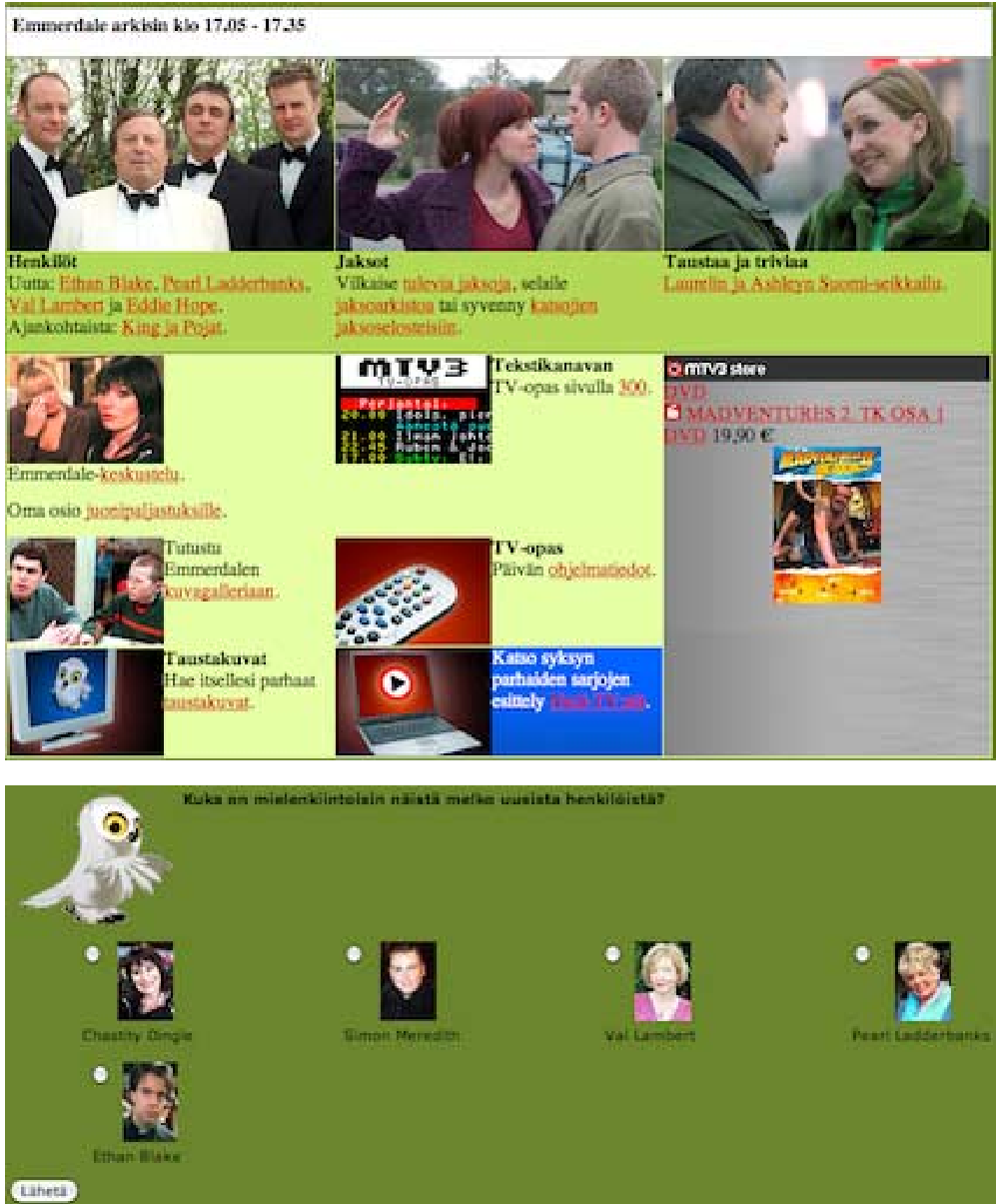 Figure: The 2010 interface showing the integration of Katsomo (Online TV) and organized navigation for trivia, blogs, and discussions.
4. 2013: The Social Media Takeover
By 2013, the website's role drastically changed. Most active communication moved to Facebook. The website's footprint shrank, becoming a lean gateway to VOD and social links rather than a community hub.
Critical Insight: The "Archive" vs. The "Social"
The paper’s core takeaway is the shift from asynchronous participation (forums/blogs) to real-time interaction (Social Media).
- The Website as an Archive: In the current landscape, dedicated sites serve as repositories for "heavy" information (character bios, episode guides) that is too cumbersome for social media feeds.
- Social Media as the Front-End: Facebook and Twitter provide the "engagement hooks" that websites once provided.
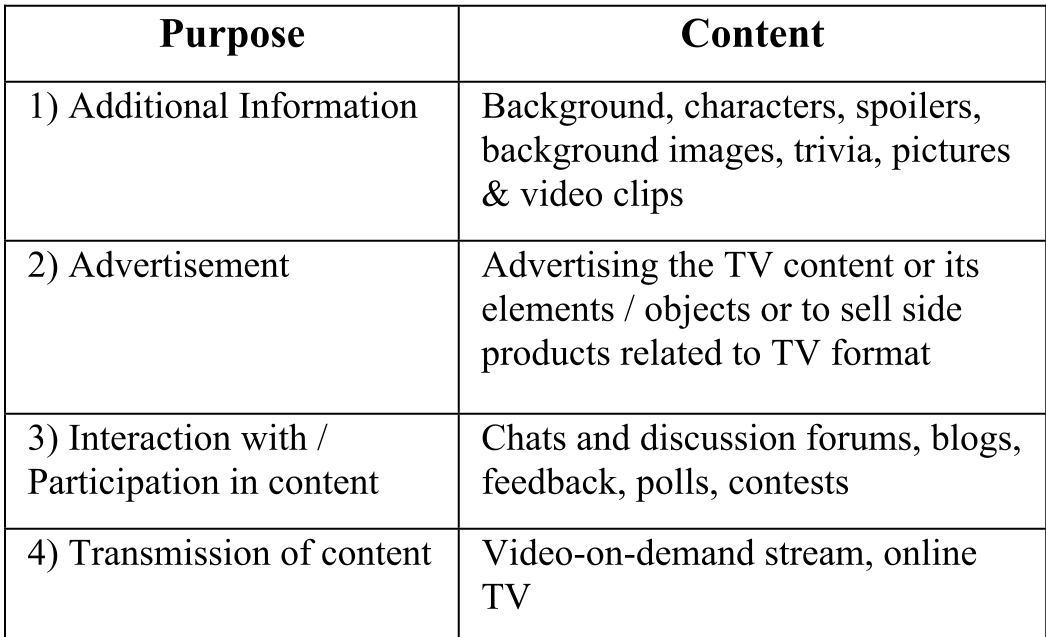 Table: The four levels of purpose for TV-related web platforms defined in the study.
Conclusion and Future Outlook
While written in 2013, this study perfectly predicted the current state of media: broadcasters no longer "own" the community space; they merely rent it on social platforms. The web platform has evolved from a "playground" to a "library," while the real conversation has moved elsewhere.
Limitations: The study focuses on a "linear" soap opera (Emmerdale). The author notes that "experimental" or "spectacle" TV (like Big Brother) might yield different interaction patterns, suggesting that the type of TV format dictates the digital strategy.
Takeaway for Today: For modern product managers and media researchers, this paper serves as a reminder that technological "progress" often involves a trade-off: we gained instant, real-time social feedback but lost the deep, curated community niches of the early 2000s web.