
Engineering Social Signals: A Real-Time Recruitment Engine for Smoking Cessation
A Twitter-based smoking cessation recruitment system
This paper presents an innovative Twitter-based recruitment system designed to identify and engage human subjects for a smoking cessation clinical trial. By leveraging real-time data streaming and custom ranking algorithms, the system successfully transitioned from passive online recruitment to active social media engagement, amassing over 1,600 user interactions and 1,100 followers in a pilot phase.
TL;DR
Researchers have developed an automated Twitter-based system that scans millions of tweets in real-time to identify users expressing a desire to quit smoking. By combining a rule-based expert system with a custom prestige scoring algorithm, the system successfully recruited participants at a fraction of the cost of traditional methods, generating over 1,000 website visits in just weeks.
Background: The Recruitment Crisis in Biomedicine
Recruiting human subjects is often the most expensive and time-consuming phase of biomedical research. Traditional methods like bus ads and newspaper listings are failing to reach modern audiences, and digital ads have become a "pay-to-play" arena where a single recruit can cost up to $500. The University of Vermont team identified an opportunity: Twitter is not just a social network; it is a real-time stream of human needs and intentions.
The "Spam" Barrier and Research Intuition
The core challenge in social media recruitment is the "Spam Barrier." If a bot identifies a smoker and immediately replies with a "Call Now" message, the user feels harassed (a major concern for Institutional Review Boards).
The authors' insight was to move beyond simple keyword matching. They realized that effective recruitment requires Prestige Filtering. By calculating the influence (prestige) of a user and the timing of their message, the system can determine whether to retweet them (soft-recruit), mention them (direct recruit), or simply wait for a better opportunity.
Methodology: The Recruitment Pipeline
The system architecture is a three-tier pipeline:
- Twitter Monitors: Intercepting 1% of the global stream filtered by keywords like "tobacco," "quit," and "nicotine."
- Tweet Analyzer: A JESS-powered classifier that labels tweets as Platinum (explicit help seekers), Golden (indirect seekers), or Info (knowledge sharing).
- Event Processor: The decision engine that executes the engagement strategy.
 Figure 1: High-level overview of the real-time stream processing architecture.
The Prestige Algorithm
To simulate "intelligent" human behavior, the authors developed a scoring mechanism () based on a local approximation of PageRank. The formula considers:
- In-degree Approximation: Estimating user influence based on follower counts.
- Contextual Boosting: Rewarding tweets that include trending hashtags or verified profiles.
- Penalization: Deducting points for "irrelevant" or low-quality accounts.
Experimental Results: High-Volume Engagement
The pilot study under the @TobaccoQuit handle yielded impressive metrics that dwarf traditional outreach programs:
| Metric | Achievement |
|---|---|
| Tweets Sent | 23,000 |
| Followers Gained | 1,100+ (in 8 weeks) |
| Direct Interactions | 1,600 (Replies, RTs, DMs) |
| Website Clicks | 1,000 |
The wordcloud below illustrates the system's focus, centering on "Smoking," "Quitting," and "Tobacco," while also capturing correlated health topics like "Cancer" and "Lungs."
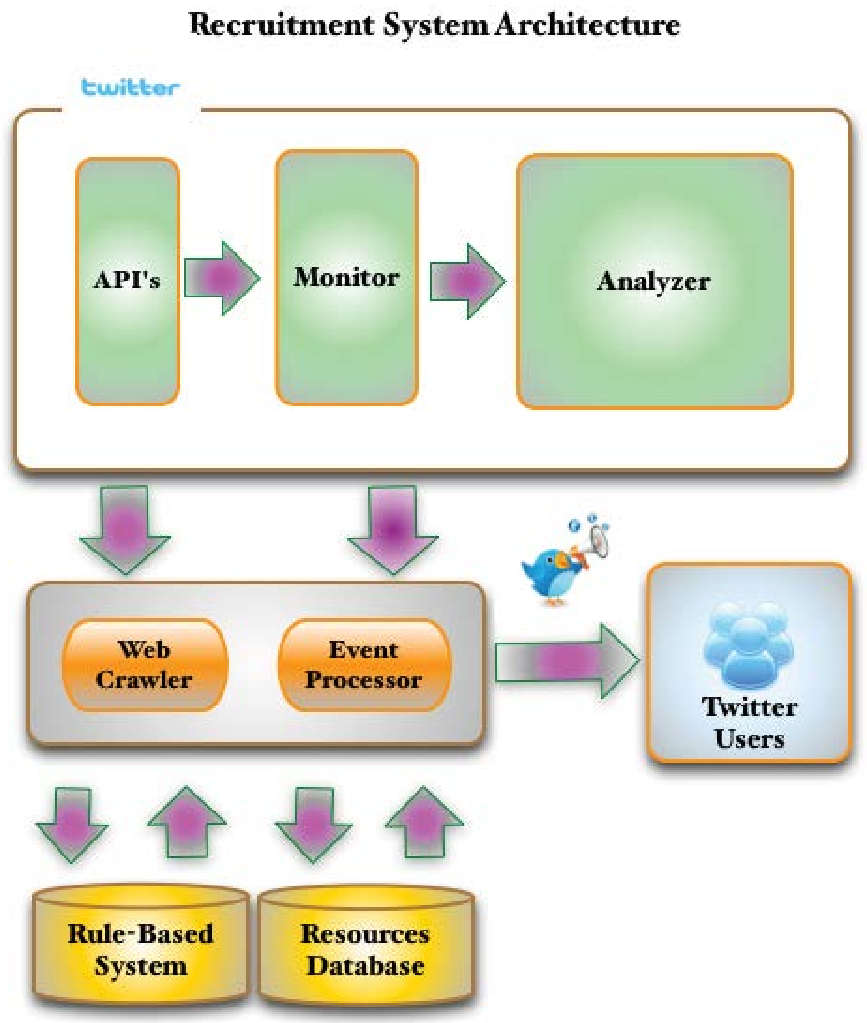 Figure 2: Distribution of topics discussed and tracked by the recruitment system.
Critical Analysis & Future Outlook
While the system is powerful, the authors acknowledge current limitations:
- Manual Supervision: Ethical requirements still necessitate a human "in-the-loop" to handle sensitive DM responses.
- Lack of Adaptive Rates: The system uses fixed delays (e.g., 90 seconds) rather than adapting to the fluctuating "velocity" of the Twitter stream.
Takeaway: This paper serves as a blueprint for the future of "active" digital recruitment. By treating social media features (RTs, Mentions) as clinical recruitment tools, researchers can reach participants at the exact moment their health needs are expressed. As AI and NLP continue to evolve, we can expect these systems to become even more indistinguishable from human recruiters, making the "digital lab" the primary source for clinical data.
Conclusion: Twitter-based recruitment is not just a low-cost alternative; it’s a more targeted, real-time, and community-driven approach to medical science.