
Twitter, Sensors, and UI: Re-engineering Interruption Management
Twitter, Sensors and UI: Robust Context Modeling for Interruption Management
This paper introduces a robust context-modeling system for mobile laptop users that leverages existing status updates (like Twitter) as "virtual sensors" alongside hardware data. By employing a novel Kullback-Leibler Divergence (KLD) algorithm to detect contextual shifts, the system triggers intelligent UI interruptions to prompt users to update their availability.
TL;DR
In an era of constant digital noise, managing when and how software interrupts us is critical. This paper presents a system that uses Kullback-Leibler Divergence (KLD) to compare historical sensor patterns against current reality, alerting users to update their social status when their context shifts. Experimenting with various UI methods, the study finds that while statistical modeling can accurately predict context changes, user satisfaction is highly sensitive to the modality of the interruption.
Contextual Blindness: Why Simple Rules Fail
The central challenge in "Awareness Systems" is determining when a user's situation has actually changed. Previous attempts relied on hard-coded rules: “If the IP address changes, the user must have moved.” However, in the real world, IP addresses flip during DNS refreshes or when moving between co-located WiFi nodes without the user ever leaving their chair.
The authors argue for a more robust "probabilistic" view of context. Instead of looking for a single binary trigger, they look for a divergence in the environment's signature.
Methodology: Divergence as a Proxy for Change
The core innovation is the application of Kullback-Leibler Divergence (KLD). The system treats sensor readings (WiFi MAC addresses, battery status, running processes) as a multinomial probability distribution.
- Historical Baseline (): What does "at home" usually look like in terms of WiFi signals and open apps?
- Current Distribution (): What does the environment look like right now?
- The Trigger: When begins to rise, it indicates the current environment no longer matches the expected signature of the current status.
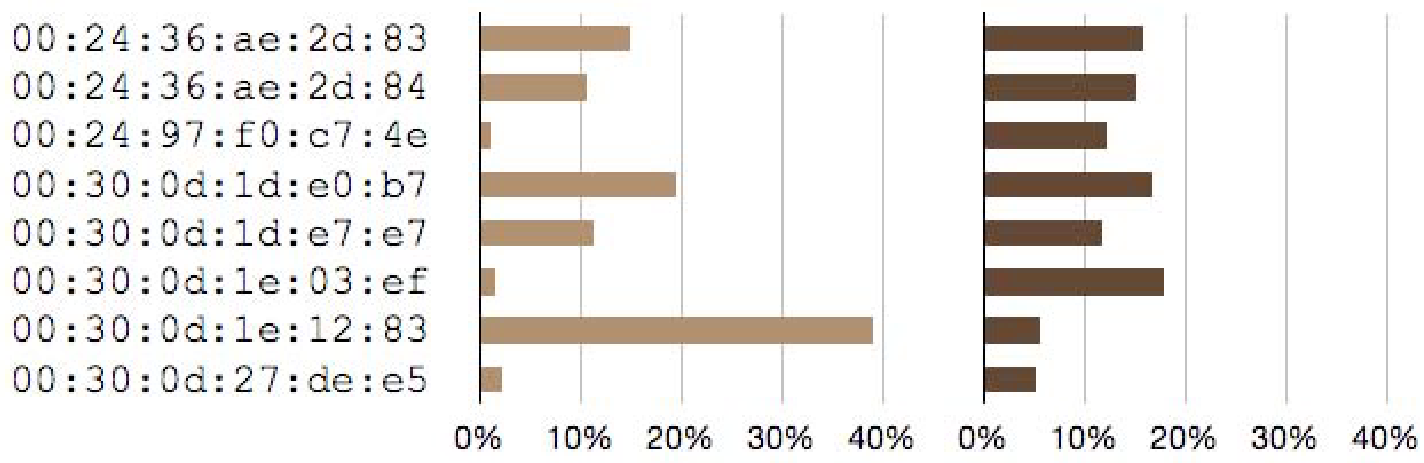 Fig 1: Example of comparing historical WiFi distributions (left) with current observations (right) to detect context shifts.
Designing the "Internalized" Interruption
How do you tell a user their status might be stale without being annoying? The authors distinguish between external interruptions (a supervisor walking in) and internal interruptions (remembering a task). The latter are easier to handle because the user chooses when to attend to them. They tested five UI modalities to see if software could mimic this "internal" quality:
- Systray-Balloon-UI: Small, familiar, and non-persistent.
- Cursor-Change-UI: Changing the mouse icon (highly persistent).
- Fading-Window-UI: A pop-up that changes opacity based on urgency.
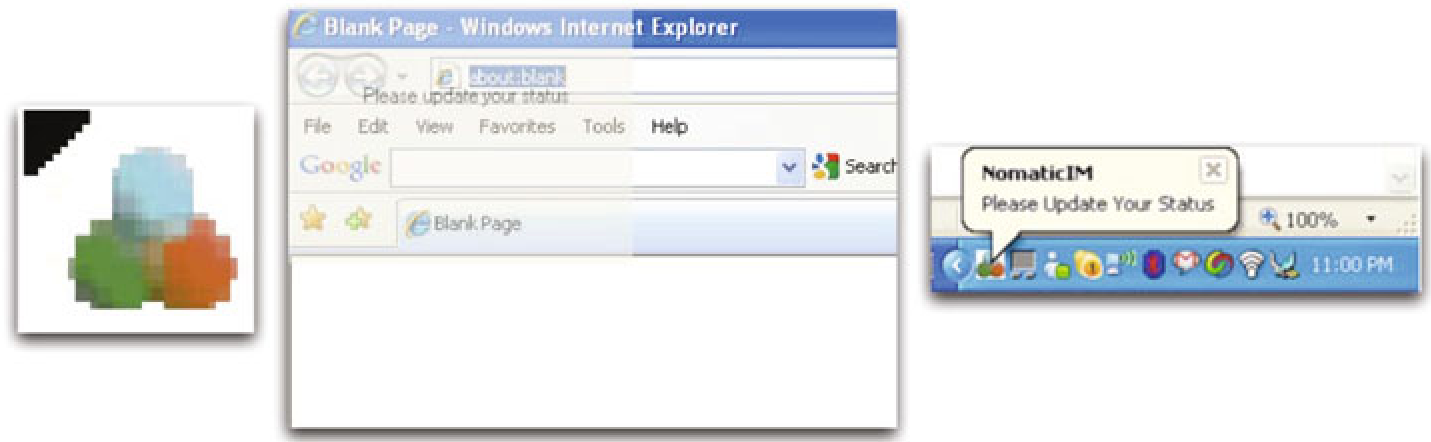 Fig 2: Diverse UI approaches tested: Cursor changes, Fading windows, and System Tray balloons.
Key Results: Accuracy vs. Annoyance
The KLD-based approach proved significantly more accurate than raw sensor rules. While monitoring a MAC address change only correctly predicted a status update 11% of the time, the KLD metric achieved 48% accuracy.
However, the UI study provided a surprising twist. Even though methods like the Cursor-Change were effective (it was hard to ignore), they were rated as the most intrusive. Users overwhelmingly preferred the Systray-Balloon (89% acceptance) and Audio Chimes.
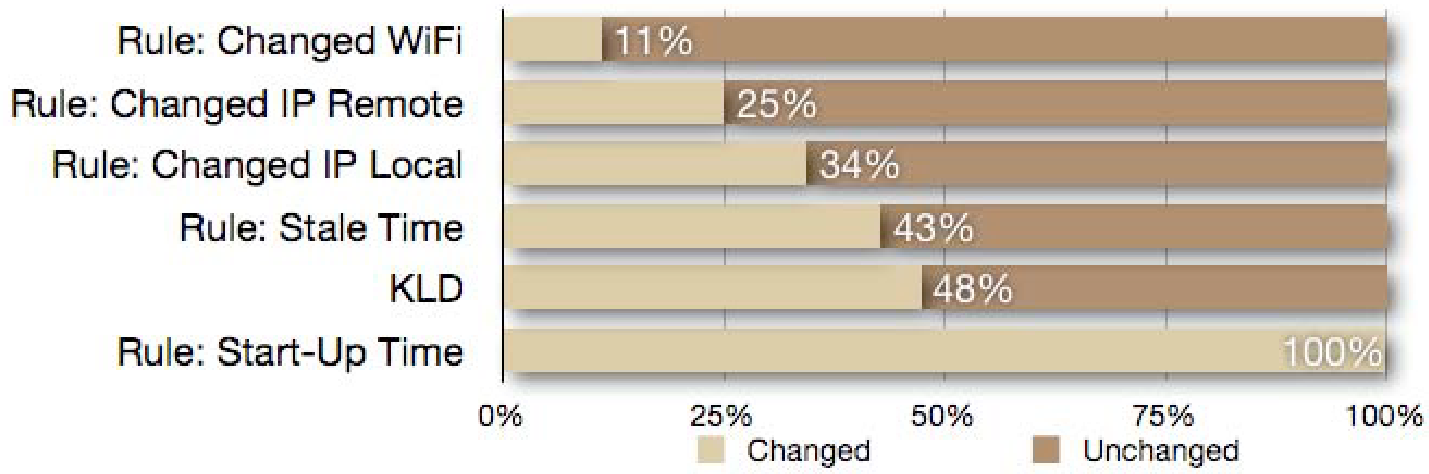 Fig 3: Performance of KLD vs. standard rules in prompting successful status updates.
Critical Insights & Future Outlook
The study highlights a fundamental tension in HCI: Noticeability vs. Intrusiveness.
- Familiarity Matters: Users preferred UI elements that felt native to their OS (System Tray) rather than novel persistent indicators.
- Virtual Sensors: Using the user's last "Twitter-like" status as a sensor input (a virtual sensor) provides a semantic anchor that raw hardware data lacks.
- Limitations: The system still has a ~50% "false alarm" rate. Future work could benefit from integrating multi-modal machine learning to further refine the divergence threshold.
The Takeaway: To build respectful AI assistants, we must couple robust statistical change detection with UI patterns that allow users to acknowledge alerts during natural "breakpoints" in their workflow.