
Twitter100k: Bridging the Gap Between Academic Benchmarks and Real-World Social Media Retrieval
Twitter100k: A Real-World Dataset for Weakly Supervised Cross-Media Retrieval
This paper introduces Twitter100k, a large-scale dataset for weakly supervised image-text retrieval containing 100,000 pairs with informal language and diverse domains. The authors propose an OCR-assisted retrieval method and a Dual-CNN architecture with bi-directional triplet loss, establishing a new SOTA for real-world social media cross-media retrieval.
TL;DR
Researchers have long struggled with the "cleanliness" of cross-media retrieval datasets. Traditional benchmarks like Wikipedia or Flickr30k use formal language and highly-correlated pairs, which fail in the "wild" world of social media. This paper introduces Twitter100k, a dataset of 100,000 image-text pairs featuring informal language, abbreviations, and loose correlations. By introducing a Dual-CNN architecture and an OCR-assisted retrieval method, the authors show that social media retrieval requires specialized strategies that go beyond simple visual-semantic alignment.
Problem & Motivation: The "Formal Language" Trap
Most current cross-media retrieval research relies on datasets where the text is essentially a "caption" for the image. However, on platforms like Twitter (X), the relationship is much more complex:
- Informal Language: Users use abbreviations (e.g., "ppl" for "people"), hashtags, and omit subjects/verbs.
- Loose Correlation: A tweet might express a sentiment or an opinion only vaguely related to the visual content.
- Domain Diversity: Unlike the 20 classes in Pascal VOC, social media covers everything from food to political news.
Existing datasets like Wikipedia (2,866 pairs) are too small to train "data-hungry" deep models, and their formal tone makes models brittle when faced with real-world noise.
Methodology: Specialized Models for Messy Data
The authors propose two primary ways to tackle the Twitter100k challenge:
1. Dual-CNN Architecture
Instead of using pre-extracted features, the authors designed a Dual-CNN stream. The image stream uses a VGG hierarchy, while the text stream processes word embeddings (GloVe). The core innovation is the use of a Bi-directional Triplet Loss, which forces matching pairs closer in a 1024-dimensional shared space while pushing non-matched pairs further away.
2. OCR-Assisted Retrieval
A unique insight from the Twitter100k dataset is that roughly 25% of images contain text (memes, posters, screenshots) that is highly relevant to the tweet. The authors utilize OCR (Tesseract) to extract this text and calculate a Hybrid Distance:
Where is the Jaccard distance between the tweet and the OCR-extracted text, and is the standard subspace distance.
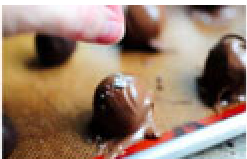 Figure 1: Examples of the Twitter100k dataset showing informal text and hashtags.
Experiments & Results: The Power of Scale
The authors benchmarked subspace learning (CCA, PLS), AutoEncoders (Corr-AE), and their Dual-CNN model.
Key Findings:
- Dual-CNN Dominance: Dual-CNNs performed best because they allow the convolutional layers to adapt specifically to the retrieval task rather than relying on frozen ImageNet features.
- The Scale Effect: Increasing the training set from 10k to 50k pairs led to a significant jump in accuracy (over 6% for Full Corr-AE), proving that the quantity of "noisy" data can outweigh the quality of "small" data.
- OCR is a "Cheat Code": Incorporating OCR text significantly improved the median rank for all baseline methods, proving that "reading" the image is as important as "seeing" it in social media contexts.
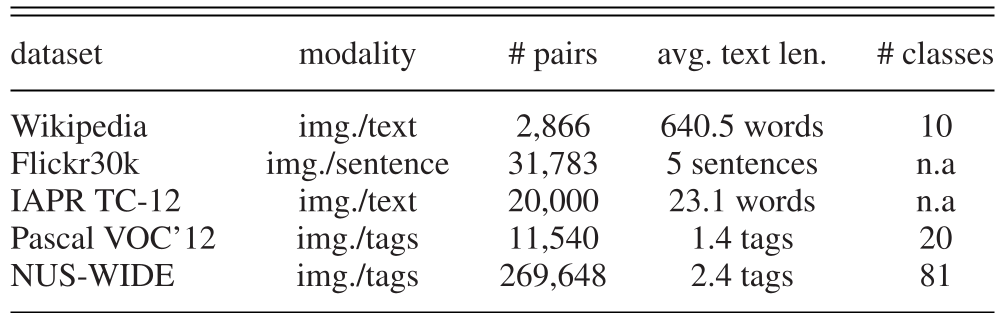 Table 1: Comparison of baseline datasets. Twitter100k stands out in terms of scale and real-world complexity.
Critical Analysis & Conclusion
Takeaway: Twitter100k represents a shift toward "Weakly Supervised" learning where we stop assuming we have perfect class labels or perfect descriptions.
Limitations:
- The OCR method used (Tesseract) is somewhat dated; modern Transformer-based scene text recognition could likely push these results further.
- The Jaccard distance is a bag-of-words approach; it doesn't capture the semantic meaning of the OCR text as well as modern embeddings would.
Future Outlook: The authors suggest that future work should focus on opinion and sentiment—on Twitter, an image is often shared to convey an emotion rather than a literal object. Understanding the "vibe" of an image will be the next frontier in cross-media retrieval.
This blog is based on the paper "Twitter100k: A Real-World Dataset for Weakly Supervised Cross-Media Retrieval" by Hu et al.