
The Architecture of Social Sentiment: A 2D Model Based on Social Life-Logging
The Two Dimensional Model of Social Emotion Based on Social Life Logging
This paper proposes a novel two-dimensional model for social emotions by analyzing 1,153 emotional adjectives extracted from 24 Korean SNS platforms. The resulting model identifies "Work vs. Leisure" and "Relationship vs. Isolation" as the fundamental orthogonal dimensions defining social emotion in digital life-logging.
TL;DR
Human emotion in the digital age is no longer just about feeling "happy" or "sad"; it is intrinsically tied to our social interactions and daily activities. This paper moves beyond traditional psychological models to define a Two-Dimensional Social Emotion Model specifically for Social Network Services (SNS). By analyzing Korean linguistic patterns across 24 platforms, the researchers identified two core axes: Work-Leisure and Relationship-Isolation.
Background & Motivation: Why Individual Emotion Models Aren't Enough
Historically, emotion modeling has been dominated by the Circumplex Model of Affect, which maps emotions onto Arousal and Valence. However, as humans migrate their social lives to the digital "life-logging" space, these models fail to capture the social utility of emotion.
The authors argue that SNS emotions are "interactive emotions." The pain of a "busy" workday or the joy of a "delicious" meal shared online carries social weight that simple valence doesn't describe. The gap they aimed to bridge was the lack of a dimensionally structured vocabulary that reflects how we actually express social connectivity.
Methodology: From 1,153 Adjectives to a Structured 2D Space
The research followed a rigorous four-step linguistic pipeline:
- Extraction: 1,153 emotional adjectives were pulled from platforms like Naver, Kakaotalk, and Instagram.
- Filtering: Using frequency analysis and a "goodness-of-fit" test with 95 participants, the list was narrowed to 56 representative adjectives.
- Factorization: Through Likert-scale testing (118 participants), six representative factors emerged: Depressed, Unimportant, Bored, Busy, Pleasant, and Surprising.
- Mapping: Using the Ross Model for circular statistics, 51 participants performed ordering and sorting tasks to place these words into a final 2D coordinate system.
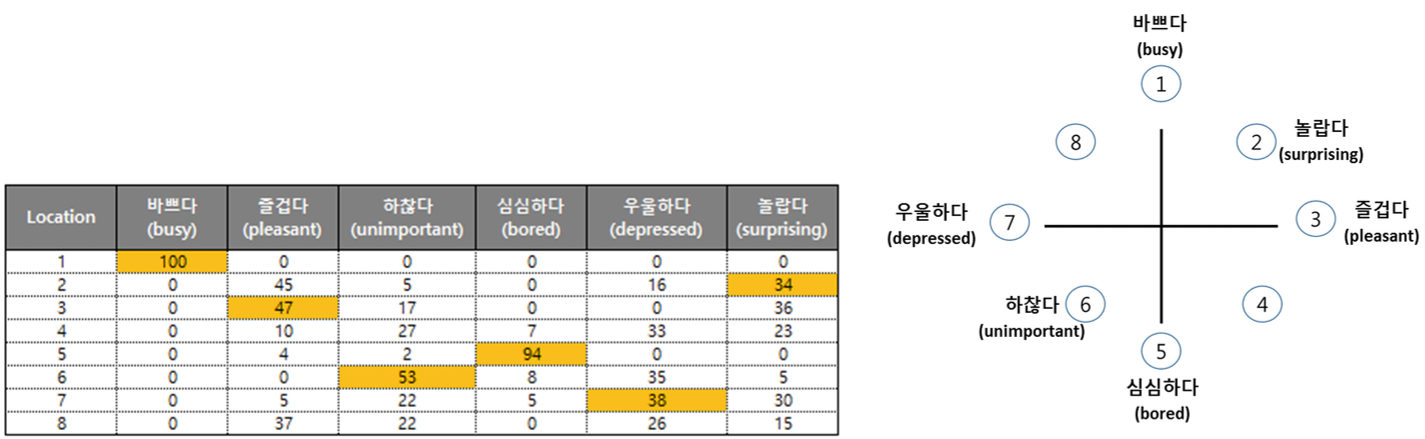 Fig 1: The result of the circular ordering task used to define the spatial relationship between core emotional factors.
Understanding the Two Dimensions
The core contribution of this work lies in the definition of the two orthogonal axes:
Axis 1: The Activity Dimension (Work-Leisure)
- Work-Centric: Characterized by words like Busy, Manic, Difficult, and Tired. These represent high-energy, often negative or stressed states related to productivity.
- Leisure-Centric: Characterized by Bored, Free, and Trivial. These represent lower-energy states associated with a lack of structured activity.
Axis 2: The Social Dimension (Relationship-Isolation)
- Relationship-Centric: Words like Delicious (sharing food), Glad, Happy, and Thankful. These are extroverted emotions that foster social bonds (altruism).
- Isolation-Centric: Words like Unhappy, Depressed, and Sad. These are introverted states often linked to self-achievement or the lack of social connection (egoism).
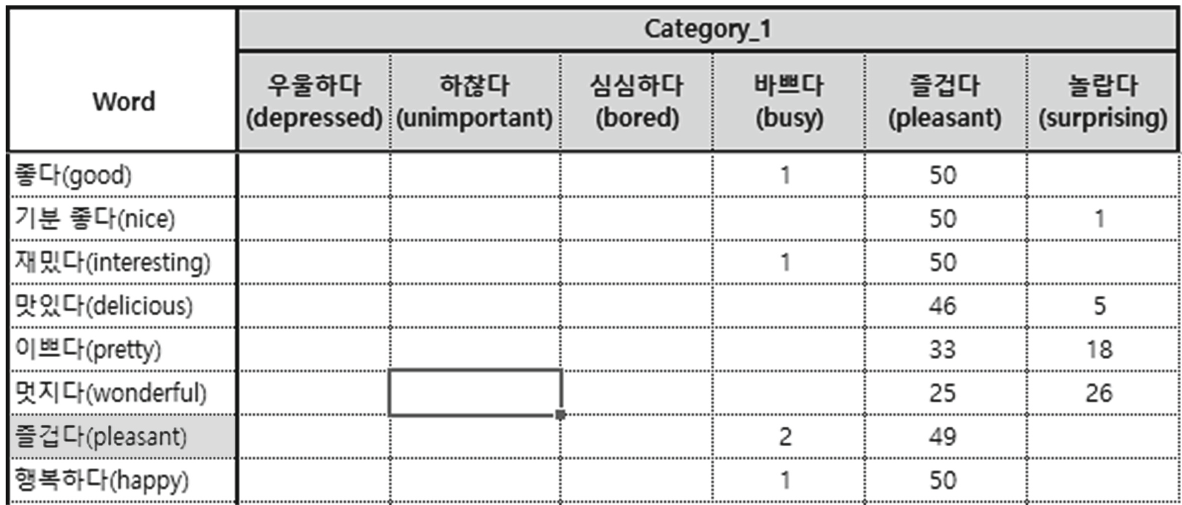 Fig 2: Statistical categorization of emotional words into the representative factors.
Results and Implications
The final mapping (visible in Fig 4 of the paper) shows a fascinating clustering of human digital experience. For example, "Surprising" and "New" sit between the Work and Social axes—suggesting these are dynamic emotions that bridge achievement and interaction.
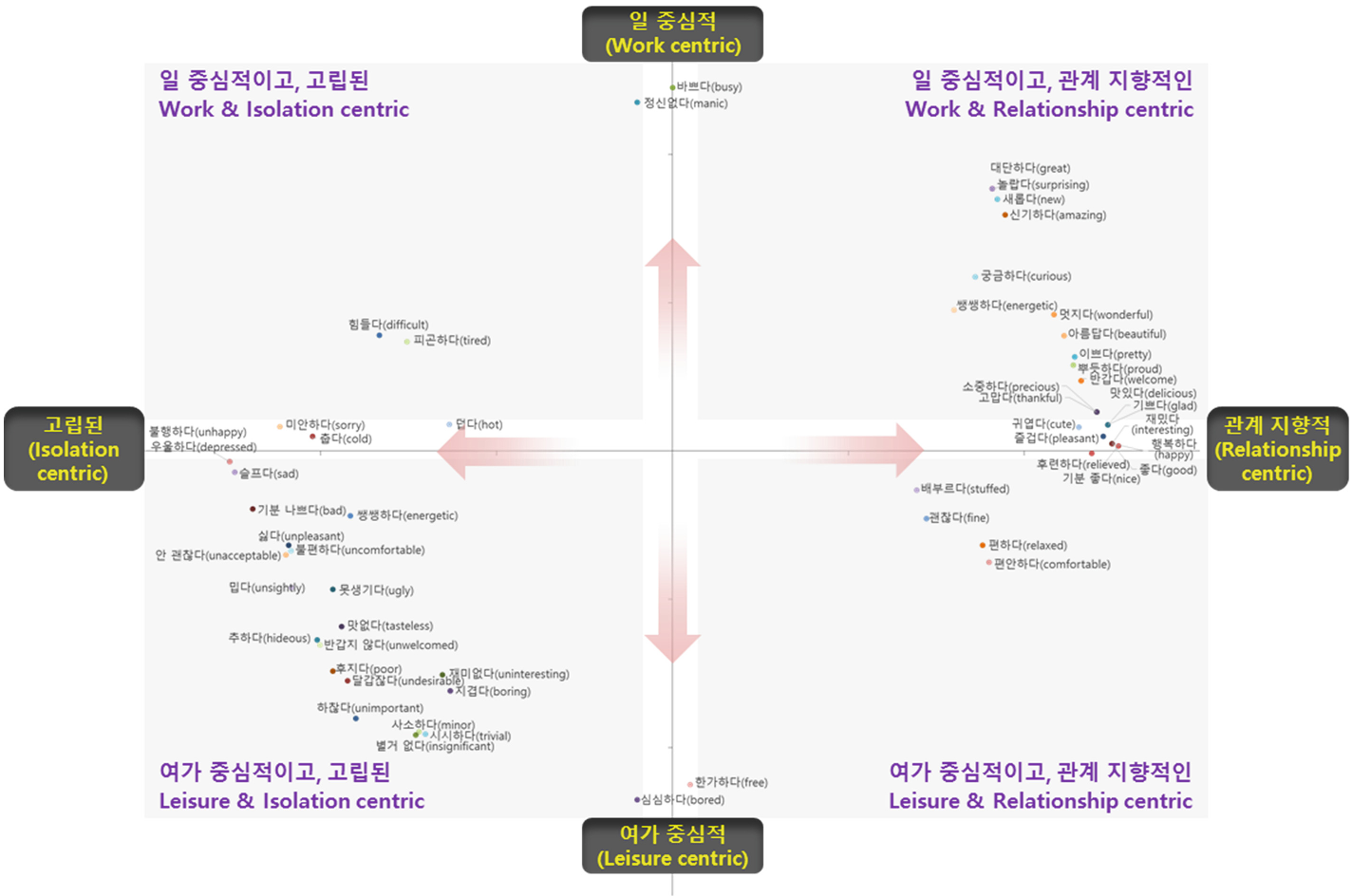 Fig 3: The final 2D Social Emotion Model showing the distribution of the 56 adjectives.
Critical Insight: The model reveals that we "modulate" ourselves between playing and working and between self and others. This provides a blueprint for SNS designers to create better "Emotional Life-Logging" features—perhaps by balancing "Work" stressors with "Relationship" rewards.
Conclusion: The Future of Digital Emotion
While this study focuses on the Korean linguistic context, it provides a universal framework for understanding how social platforms function as emotional ecosystems.
Limitations: The study is culturally specific to Korean SNS users. Future work will need to validate if the "Work-Leisure" axis remains as dominant in cultures with different work-life balances.
Takeaway: Social emotion is not just an internal state; it is a coordinate point between what we do (Activity) and who we are with (Connectivity).