
Modeling the Viral Crisis: A Two-Layer Network Analysis of Corporate Negative Sentiment
The Communication Model of Negative Public Opinions of Corporate Based on Two-Layer Network
This paper proposes a two-layer coupled network model (BA for online, ER for offline) to simulate the spread of negative corporate public opinion. It introduces "Purifiers" as a control mechanism and applies Image Restoration Theory to define optimal response strategies, validated through a case study of the Samsung Galaxy Note 7 battery crisis.
TL;DR
In the hyper-connected era, a single corporate blunder can spiral into a global crisis within hours. This paper introduces a sophisticated two-layer network model that bridges virtual social media (online) and real-world interactions (offline). By introducing "Purifier" nodes and mathematical thresholds, the authors provide a scientific roadmap for when and how enterprises should respond to negative PR.
The "Single-Layer" Fallacy: Why Conventional Models Fail
Most public opinion models assume a vacuum. They treat "the internet" as the only theater of war. However, the authors argue that the interpenetration of online social platforms and offline face-to-face communication creates an accelerated feedback loop. Previous works often assumed equal nodes online and offline; this paper corrects that by using the 70.4% internet penetration rate to scale the networks, making the simulation grounded in demographic reality.
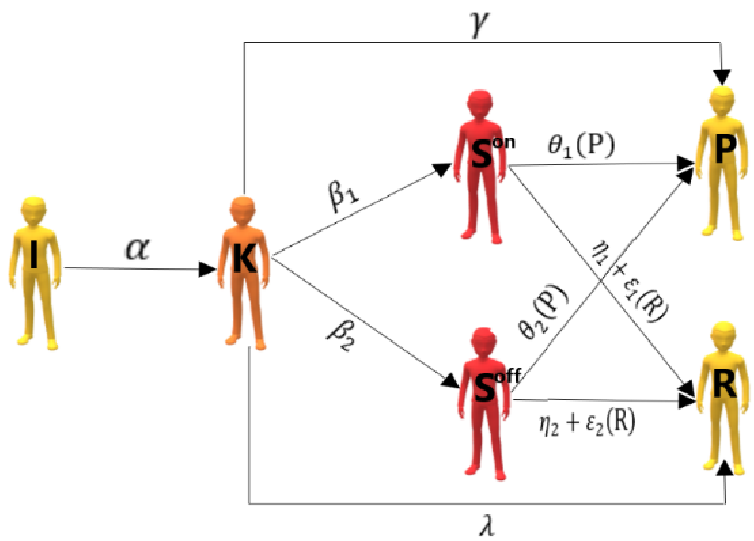
Methodology: The I-K-S-P-R Framework
The core of the paper is an extension of the classic SIR epidemic model, adapted for corporate communication:
- Ignorant (I): Unaware individuals.
- Known (K): Aware but haven't shared.
- Spreader (S): Actively diffusing negative news.
- Purifier (P): Authorities or the company attempting to correct the narrative.
- Removal (R): Those who have lost interest.
Architecture & Thresholds
The authors utilize a BA (Barabási–Albert) network to simulate the scale-free nature of online platforms (where influencers hold massive weight) and an ER (Erdős–Rényi) network for more uniform offline interpersonal relationships.
The mathematical "tipping point" for an opinion outbreak is defined as: Where is the information acquisition rate and is the immunity rate.
Lessons from the Samsung Note 7 Disaster
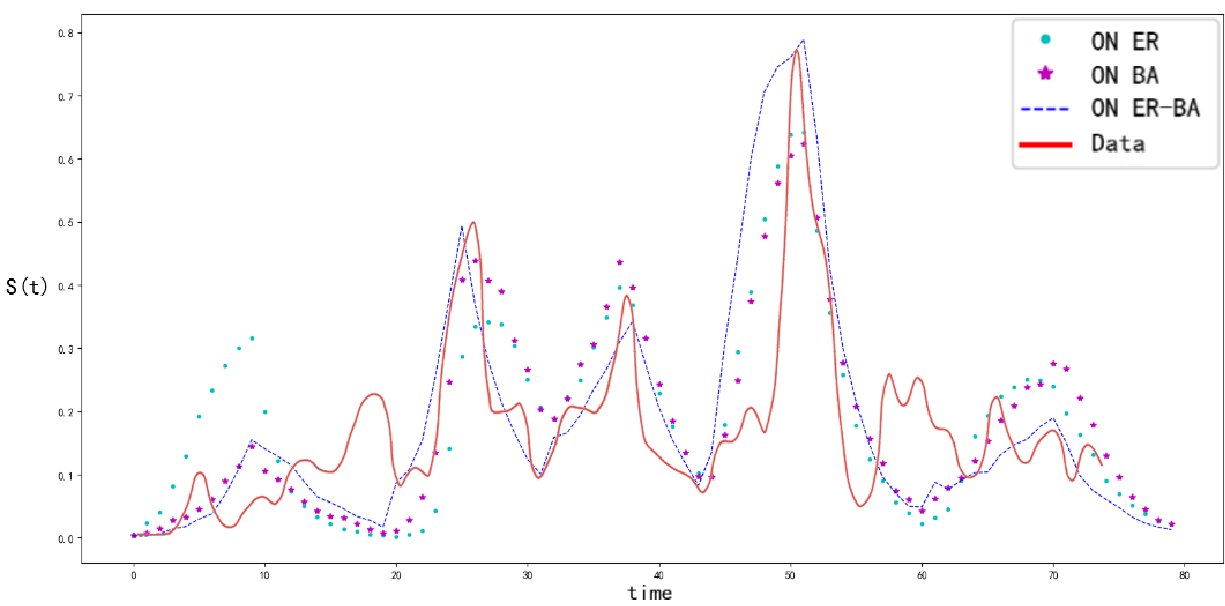
The authors validate their model using the 2016 Samsung battery explosion incident. The simulation highlights a critical tactical error: Samsung's initial "Denial" strategy.
By analyzing real-time data versus their two-layer simulation, the research shows that early-stage intervention is high-stakes. Samsung's initial false claims (blaming specific suppliers) temporarily slowed the "Known" count but caused a violent second surge when the truth emerged, ultimately leading to a market share collapse in China from 20% to <1%.
Strategic Insights for Decision Makers
The paper categorizes response strategies into two distinct types based on Image Restoration Theory:
- Reducing Acquisition (): Denial or shifting responsibility. Effective only for very short durations and high risk.
- Increasing Immunization (): Apology, corrective behavior, and compensation. This is the most effective way to "extinguish" the Spreader (S) population.
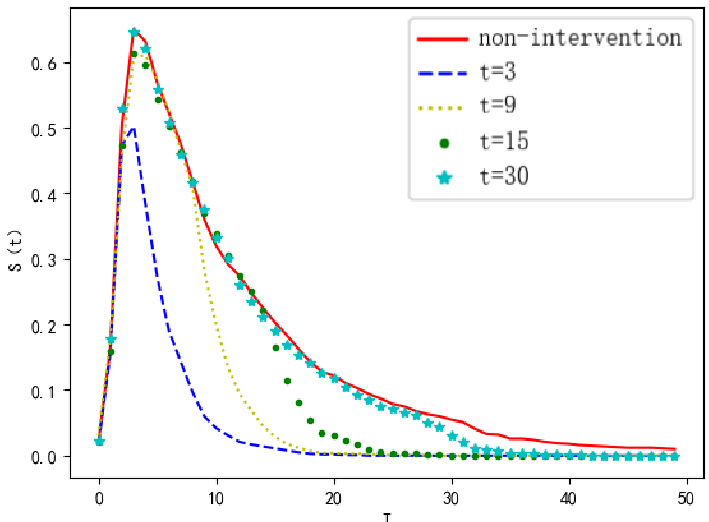
Critical Action Window: The simulation (Figure 3) proves that if the "Purifier" (Corporate PR) acts before the density of communicators stabilizes (pre-), the duration of the crisis is significantly slashed. Once the opinion hits a "steady state," the effectiveness of even the best PR strategy drops to near zero.
Critical Insight & Conclusion
This work transcends pure mathematics by anchoring complex network theory in corporate management. Its primary contribution is the proof that offline management and online feedback must be synchronized.
Limitations: The model assumes random connections between the layers. In reality, people's online and offline circles are often highly correlated (Homophily). Future research should explore "echo chambers" where negative opinion is reinforced by the same group of people across both layers.
The Takeaway: For modern enterprises, PR is no longer just art—it's a race against the network's mathematical threshold.