
Two-Phase Stance Classification: Breaking Down Opinions with NER and Term Frequency
A Two-Phase Approach for Stance Classification in Twitter Using Name Entity Recognition and Term Frequency Feature
The paper introduces a two-phase machine learning framework for stance classification in Twitter, utilizing Named Entity Recognition (NER) and n-gram term frequency features. By decoupling the task into target recognition (neutral vs. non-neutral) and polarity classification (favor vs. against), the system achieved a macro-average F1-score of 68.6 on SemEval-2016 Task A and 59.2 on Task B.
TL;DR
Determining whether a tweet is "For" or "Against" a topic is notoriously difficult due to the brevity and linguistic noise of social media. This paper proposes a structural solution: a two-phase framework that first uses Named Entity Recognition (NER) to detect if the tweet is target-relevant (Neutral vs. Non-neutral) and then applies n-gram Term Frequency with a Decision Tree to classify the stance. The results show a massive performance leap in cross-target scenarios (Task B), doubling the baseline F1-score.
Problem & Motivation: The Noise in the Crowd
Stance detection isn't just sentiment analysis; it's about the relationship between an author and a specific target (e.g., "Hillary Clinton" or "Climate Change"). Traditional methods often treat this as a simple 3-way classification problem (Favor, Against, None).
The authors argue that this approach is flawed because the feature space for "Neutral/None" (irrelevant information) is vastly different from "Favor/Against" (polarized information). By mixing them, models suffer from high variance and poor generalization. The core insight here is that NER acts as an anchor—if a tweet contains entities relevant to the target, it is likely not neutral.
Methodology: The Two-Phase Pipeline
The architecture is designed to handle three labels by splitting the logic into two specialized classifiers.
Phase 1: Target Recognition (Filtration)
The system first pre-processes tweets (tokenization, stemming, stop-word removal). It then extracts NER features using the Stanford CoreNLP toolkit. These categorical features are fed into a Naïve Bayes classifier.
- Goal: Distinguish between Neutral (None) and Non-neutral (Favor/Against).
- Logic: Entities are strong indicators of whether a tweet is "on-target" or "off-target."
Phase 2: Stance Polarity (Classification)
For tweets identified as Non-neutral, the system extracts n-gram Term Frequency features (1-3 words). These are processed by an ID3 Decision Tree.
- Goal: Determine if the stance is "Favor" or "Against."
- Logic: Decision Trees provide a clear, hierarchical path to conclusion based on the most informative words (Entropy reduction).
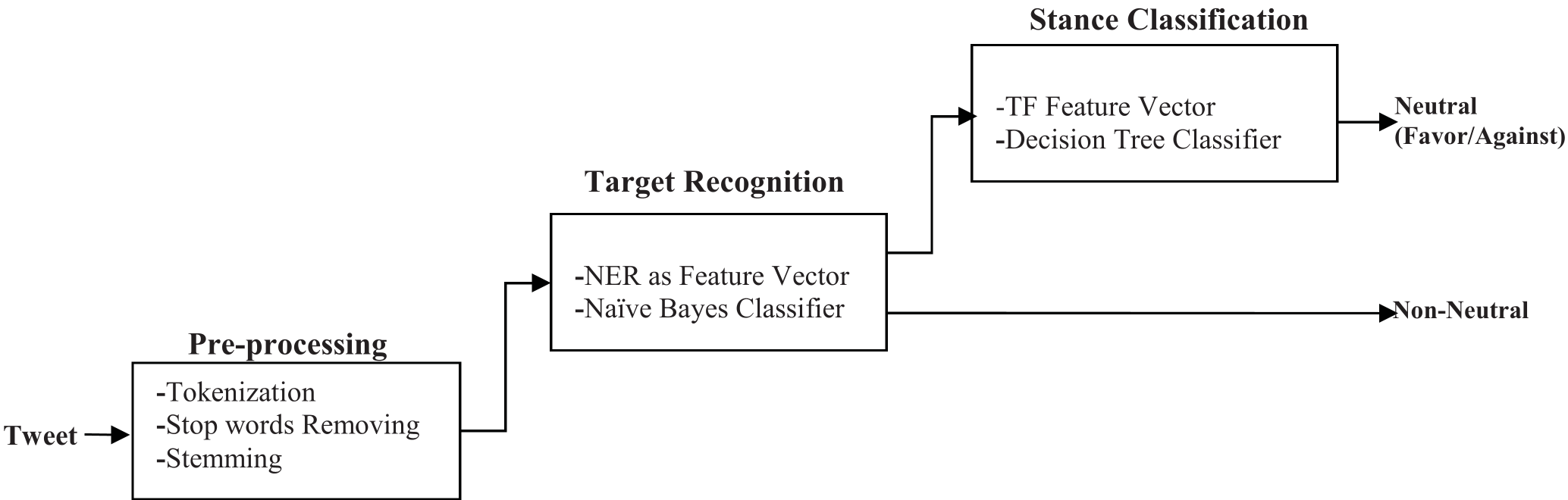 Fig 1: The proposed hierarchical pipeline separating target recognition from stance classification.
Experiments & Results: Winning the Unseen Battle
The model was validated on the SemEval-2016 Task A and B datasets. While it performed competitively on Task A (standard targets), its true strength appeared in Task B (Cross-target classification), where the model was tested on a target it hadn't seen during training (Donald Trump).
| Approach | Task A F1-avg | Task B F1-avg |
|---|---|---|
| Proposed (NB+ID3) | 68.6 | 59.2 |
| SVM-unigrams | 63.31 | - |
| SVM-grams-comb | 62.06 | 28.43 |
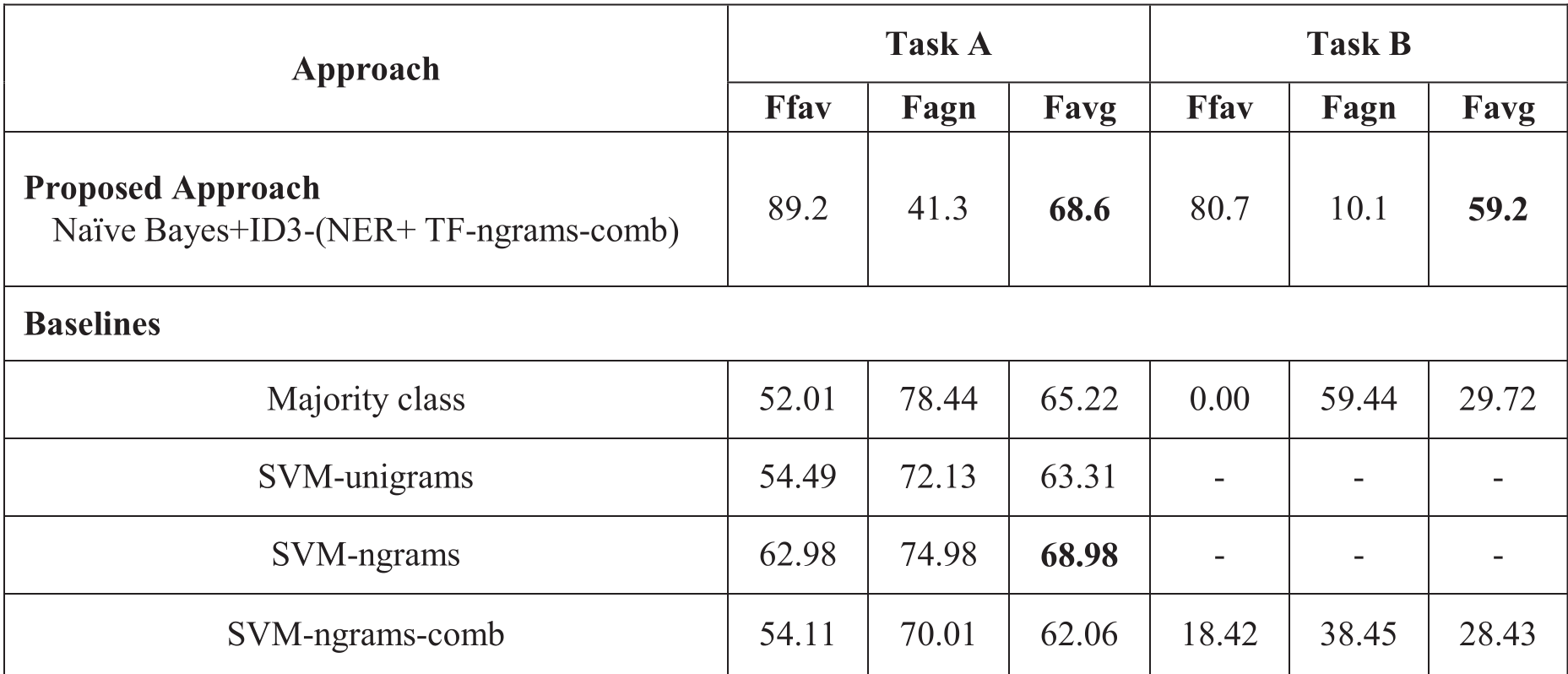 Table 1: Comparative results showing the robustness of the two-phase approach in Task B.
The model achieved a 59.2 F1-avg on Task B, whereas the popular SVM-grams-comb baseline crashed to 28.43. This suggests that separating target detection (via NER) from polarity allows the model to retain better logic for polarized language even when the subject changes.
Critical Insight & Conclusion
Takeaway
The success of this two-phase approach proves that structural decomposition is often more effective than "end-to-end" complexity for noisy data. By using NER as a first-level filter, the model reduces the noise that the second polarity classifier has to deal with.
Limitations
Despite the high overall F1-score, the authors noted that the model had a lower F1-score specifically for the "Against" label compared to "Favor." This suggests that negative sentiment or oppositional stance in Twitter is harder to capture with standard n-grams, likely due to the use of irony and indirect negation.
Future Outlook
The next logical step for this research would be replacing the classical Naïve Bayes and ID3 components with Transformer-based embeddings (like BERT or RoBERTa) while maintaining the two-phase architecture. Retaining the structural split while upgrading the feature extraction could set new SOTA records for cross-domain opinion mining.