
Genetic Type-2 Fuzzy Logic: Bridging the Gap Between Accuracy and Transparency in Banking
Towards a Type-2 Fuzzy Logic Based System for Decision Support to Minimize Financial Default in Banking Sector
Towards a Type-2 Fuzzy Logic system is a decision support framework designed to minimize financial loan default. It integrates Interval Type-2 Fuzzy Logic with Genetic Algorithms (GAs) to provide high-accuracy risk prediction while maintaining a "white box" transparent reasoning model.
TL;DR
The global financial crisis exposed the fragility of traditional risk models. While modern AI offers better accuracy, most are "black boxes" that bankers can't trust. This paper introduces a Genetic Type-2 Fuzzy Logic System that handles the messy, uncertain nature of financial data while providing human-readable "IF-THEN" rules to explain why a loan was denied or approved.
Background: The Transparency Crisis
In the wake of economic instability, the banking sector faces a paradox: they need powerful predictive tools, but regulations and internal audits demand transparency. Most existing solutions fall into two flawed categories:
- Statistical Models (Regression, DA): Easy to understand but often too simple for complex, non-linear real-world data.
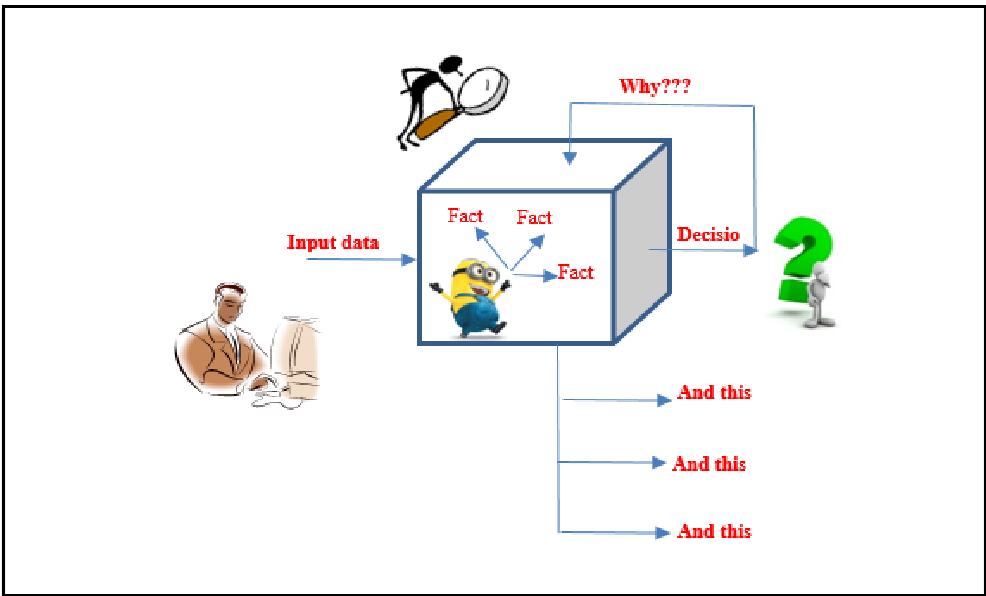
- Black Box AI (Neural Networks, SVM): High performance but zero explainability. If a model rejects a loan, an analyst cannot easily explain the "why" behind the math.
This paper positions itself as a White Box alternative, specifically leveraging Type-2 Fuzzy Logic to manage the high-level uncertainty that Type-1 systems simply cannot handle.
Why Type-2 Fuzzy Logic?
The core insight of the authors is that "uncertainty" in banking isn't just a single value. A "high income" for one demographic might be "average" for another.
- Type-1 Fuzzy Logic uses crisp membership functions.
- Type-2 Fuzzy Logic utilizes "fuzzy" membership functions, allowing it to model the uncertainty about the uncertainty itself.
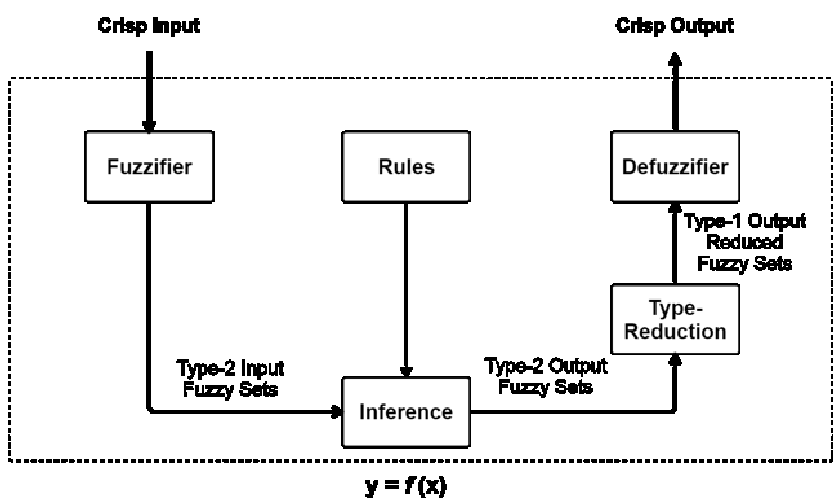
Methodology: The Genetic-Fuzzy Hybrid
The system follows a sophisticated pipeline to transform raw data into decisions:
- Fuzzification: Inputs like age, education, and income are converted into Type-2 fuzzy sets.
- Inference Engine: The system matches inputs against a rule base.
- Genetic Optimization (GA): This is the "secret sauce." Because Type-2 systems can generate a massive, unmanageable number of rules (the curse of dimensionality), the GA evolves the system to find the most efficient membership functions and the smallest possible set of rules that still maintain high accuracy.
- Type Reduction & Defuzzification: The complex fuzzy output is processed back into a crisp "Default/No Default" decision.
Experiments and Real-World Impact
Unlike many academic papers that use synthetic datasets, this study utilizes real-world data from Alshimal Bank in Sudan.
- Data Volume: 101,258 records.
- Features: Demographic and financial indicators (Age, Education, Income, etc.).
- Setup: 70% training, 30% testing.
The "White Box" approach (Fig. 1) ensures that the output isn't just a probability score, but a linguistic rule like:
- IF Income is Low AND Education is Primary THEN Default Risk is High.
Critical Insight: Accuracy vs. Interpretability
The authors argue that the future of Fintech isn't just about more data, but better interpretation. By using Genetic Algorithms to prune the rule base, they ensure the model remains "rational." A model with 1,000 rules is a black box in disguise; a model with 20 highly optimized rules is a decision-support tool.
Conclusion & Future Outlook
The Genetic Type-2 Fuzzy Logic model offers a compelling path forward for risk management. It respects the "noise" in financial data while keeping the human in the loop.
- Limitations: The computational cost of Type-2 reduction is higher than Type-1, and GA training can be time-consuming.
- What's Next?: Future iterations could look into "Z-slices" or "General Type-2" sets for even finer uncertainty handling, or integrating this with modern Big Data streams in real-time.