
U+F Protocol: Breaking the Walled Gardens of Social Networks
U+F Social Network Protocol: Achieving Interoperability and Reusability between Web Based Social Networks
The paper introduces the U+F Social Network Protocol, a decentralized framework combining User-Managed Access (UMA) and the Friend-Of-A-Friend (FOAF) project. It enables interoperability and reusability of identity data, resources, and access control policies across heterogeneous Web-Based Social Networks (WBSNs).
TL;DR
The U+F Social Network Protocol is a technical framework designed to end the "Walled Garden" era of social media. By merging the User-Managed Access (UMA) protocol with the Friend-Of-A-Friend (FOAF) ontology, it allows users to reuse their profiles, photos, and privacy settings across different platforms like Facebook, Badoo, or MySpace without re-uploading them.
Background: The Interoperability Crisis
In the current digital ecosystem, every new social network requires a fresh start: a new profile, a new friend list, and new privacy settings. This fragmentation is known as the Walled Garden Problem. Previous attempts at solving this focused either on identity (OpenID) or simple resource sharing, but failed to provide a comprehensive solution that includes reusability of access control policies.
The authors argue that for true social interoperability, we need to decentralize three pillars:
- Identity Data: Who you are and who you know.
- Resource Management: Your photos, videos, and posts.
- Access Control: Who is allowed to see what.
Methodology: The U+F Architecture
The U+F (UMA + FOAF) protocol shifts the power from the platform to the user. Instead of the social network "owning" the data, the network becomes a mere interface (a Requester) that accesses data stored in user-controlled repositories.
Key Components:
- Identity Provider (IdP): Stores FOAF files (RDF-based) describing the user and their social graph.
- Host (H): A personal "data vault" for resources.
- Authorization Manager (AM): The brain that evaluates security policies.
- Social Network (SN): Acts as a "Fat Requester," fetching data only when authorized.
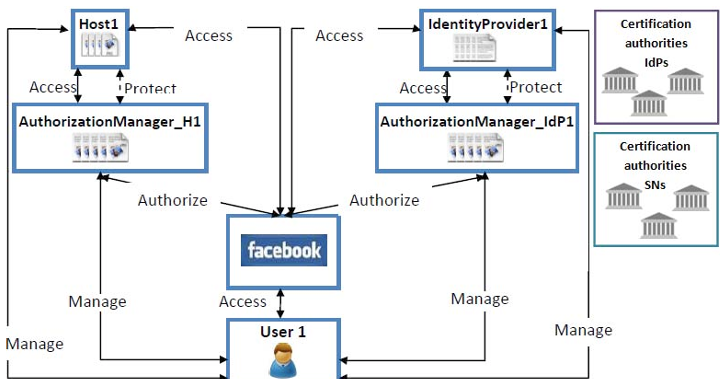 Figure 1: The decentralized U+F architecture decoupling identity, resources, and authorization.
The "Fat Requester" Concept
In U+F, when you log into a new social network, the site doesn't ask you to fill out a profile. Instead, it interacts with your IdP. If you want to see a friend's photo on a different network, your current network (SN1) communicates with your friend's network (SN2) via a secure handshake, verifying your relationship through signed FOAF claims.
Technical Deep Dive: FOAF & Claims
The protocol leverages FOAF (Friend-Of-A-Friend) to create a machine-readable social graph. A unique contribution of this paper is the extension of FOAF attributes to include trust levels (1-10) and relationship durations.
When accessing data, U+F uses Claims-Based Authorization. Instead of just checking a password, the AM requests specific "Claims" (e.g., "Prove you are Bob" and "Prove you have been Alice's friend since 2024").
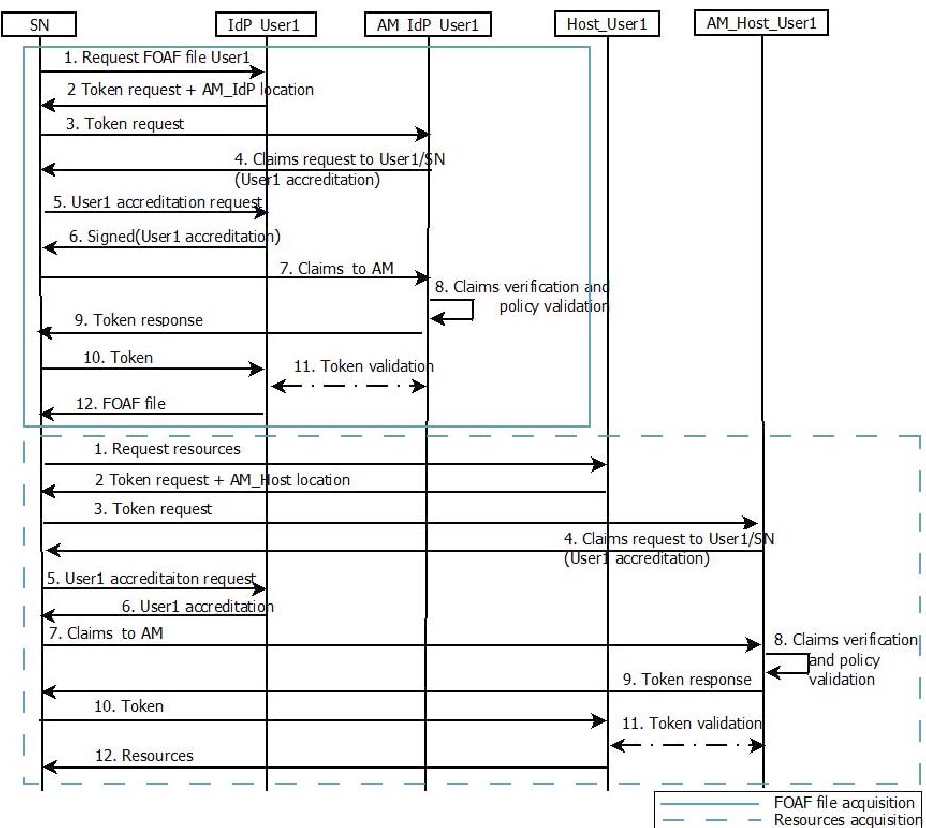 Figure 2: The sequence of authentication and claim acquisition during a user login.
Performance & Security Results
The authors conducted a rigorous evaluation of the protocol's overhead. While the decentralized nature introduces more network "hops" compared to centralized systems, the optimization of token and claim reuse significantly mitigates latency.
| Phase | Messages (Worst Case) | Messages (Best Case) |
|---|---|---|
| User Login | 11 + 11RX | 11 + 5RX |
| Contact Access | 23 + 23R2 | 23 + 9R2 |
Table 1: Performance gains through claim caching (R represents resource count).
From a security perspective, U+F ensures Mutual Authentication. Since the IdP and Host are independent, a social network cannot easily impersonate a user. Furthermore, by using Least Privilege principles, social networks only receive the specific data points they need to render a page, rather than your entire profile.
Critical Analysis & Future Outlook
While U+F provides a robust blueprint for interoperability, it faces some real-world hurdles:
- The "Post-Access" Problem: Once a social network fetches your data to show it on a screen, how do we prevent them from scraping and storing it? The authors suggest future work in cryptography.
- Complexity: Setting up an IdP, Host, and AM might be too high a bar for non-technical users unless bundled into user-friendly "Personal Data Stores."
Conclusion
U+F is a visionary step toward a Decentralized Social Web. It proves that we can have the convenience of modern social networks without the lock-in of the "Walled Garden" model. By treating social data as a portable asset rather than a platform-owned commodity, U+F sets the stage for the next generation of digital sovereignty.