
UBICON: Bridging the Gap Between Physical Proximity and Social Intelligence
Ubicon: Observing Physical and Social Activities
This paper introduces UBICON, a comprehensive platform that bridges ubiquitous and social computing by tracking physical and social activities through active RFID and smartphone sensors. It demonstrates the framework's versatility through three real-world applications (CONFERATOR, MYGROUP, and WIDENOISE), achieving a localization accuracy of nearly 90% and providing advanced social recommendations and environmental mapping.
TL;DR
UBICON is a multi-purpose platform designed to observe and analyze physical and social activities in real-time. By combining active RFID tracking with smartphone sensor data and social network analysis, it provides a unified framework for applications ranging from conference guidance (CONFERATOR) to environmental monitoring (WIDENOISE). The core innovation lies in its ability to turn "face-to-face" interactions into actionable data for recommendations and localization.
Problem & Motivation: The Silo Effect in Ubiquitous Computing
While social networks (Facebook, Twitter) excel at capturing digital interactions, they are often disconnected from our physical reality. Conversely, traditional ubiquitous systems (like GPS or standard RFID) track where we are but rarely whom we are interacting with or the quality of those interactions.
The authors identified a gap: we lack a platform that can seamlessly process "Face-to-Face" (F2F) proximity as a first-class data citizen. Without this, recommendation engines in professional settings are missing the vital "water cooler conversation" context that drives real-world collaboration.
Methodology: The UBICON Architecture
UBICON employs a Model-View-Controller (MVC) architecture built on the Spring framework. The physical backbone relies on Active RFID Proximity Tags. These tags, worn on the chest, detect other tags within a 1.5-meter range—serving as a proxy for actual face-to-face communication because the human body effectively blocks signals from behind.
1. Social Boosting for Localization
Traditional RFID localization often suffers from signal noise. UBICON utilizes a "Social Boosting" algorithm. The intuition is simple: if Tag A and Tag B are in a F2F conversation (detected via proximity), their likely physical locations must be highly correlated. This social constraint refined their room-level localization accuracy to a staggering 90%.
2. The Hybrid Social Graph
To recommend experts or collaborators, the system doesn't just look at who you talk to. It builds a weighted graph combining:
- External Links: Twitter, LinkedIn, BibSonomy.
- F2F Contacts: Duration and frequency of physical meetings.
- Artifact Interaction: For software developers, the system mines CVS/SVN logs to see who touched which code and matches it with who spoke to whom before the commit.
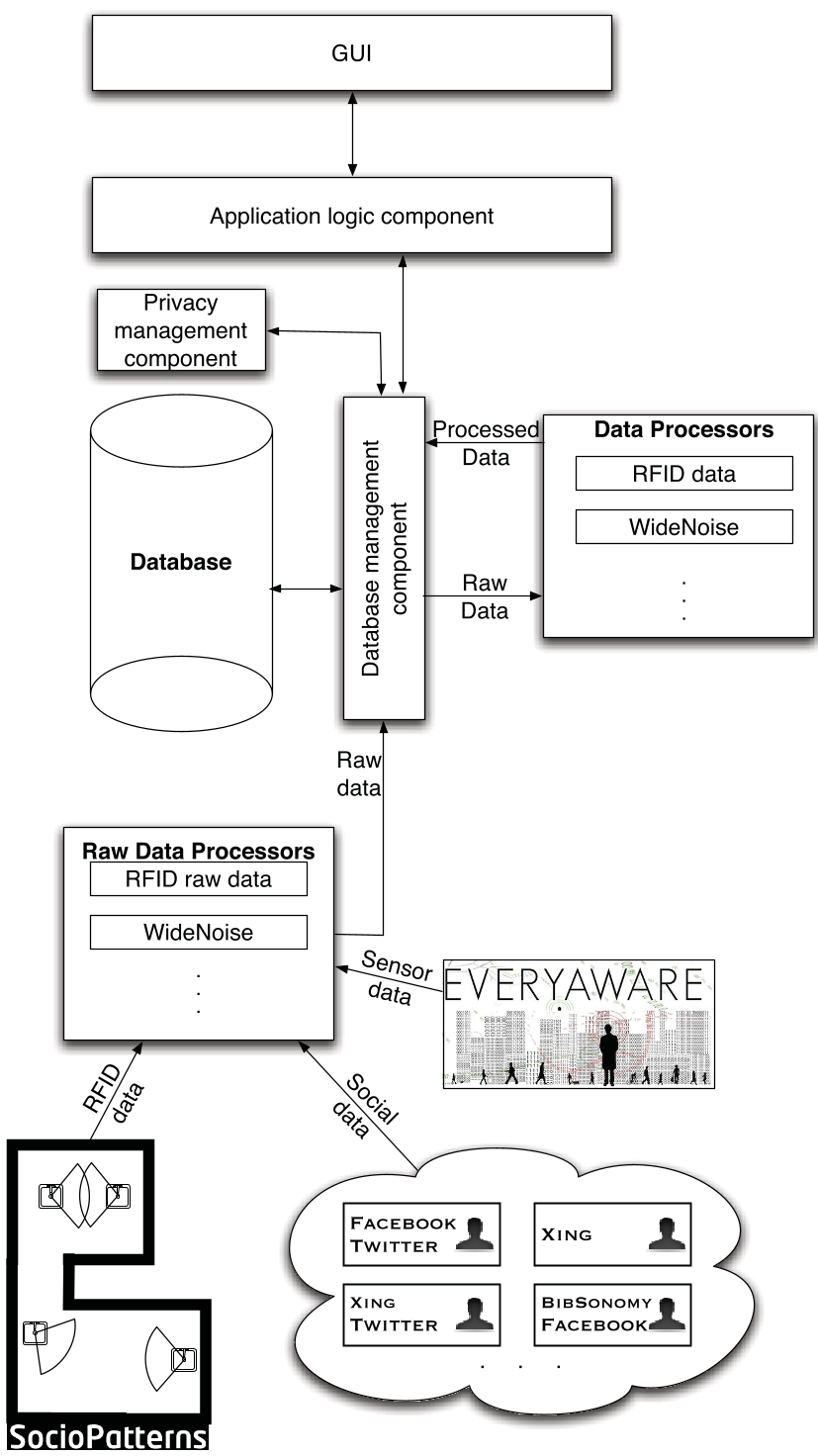 Figure 1: Conceptual overview of the UBICON platform's integrated architecture.
Experiments & Real-World Case Studies
The paper validates UBICON through three distinct deployments:
- MYGROUP: Tracked a research group for 6 months. It revealed that longer conversations (>20 mins) typically occur in the evening, and established "Centrality" metrics to identify key influencers within the lab.
- CONFERATOR: A social conference guide that uses the "Acquaint-O-Matic" to recommend people you should meet based on shared talk interests and mutual F2F contacts.
- WIDENOISE: A participatory sensing app where users contribute noise level data. Analysis showed that city noise is perceived as more "man-made" and "hectic" compared to global averages.
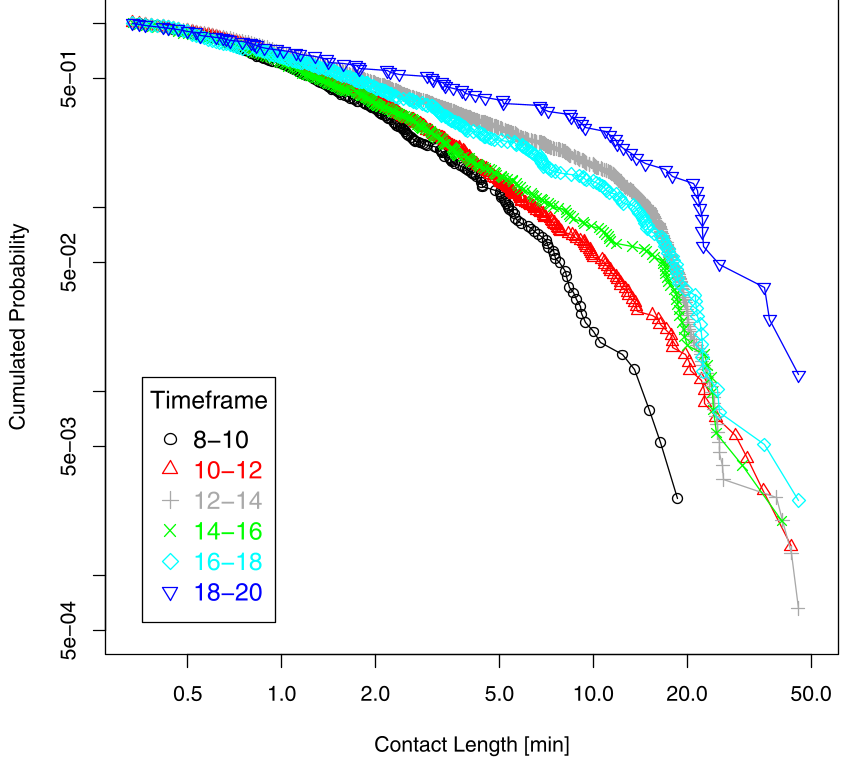 Figure 2: The power of longitudinal data—mapping the probability of conversation lengths across different times of the day.
Critical Analysis & Conclusion
Takeaway
The true value of UBICON is its Interconnectivity. By using a single storage and processing backend for diverse sensors (RFID, Noise, Social Web), it allows researchers to find correlations that isolated systems would miss—such as how physical office layout affects software commit quality.
Limitations & Future Work
While the 90% localization accuracy is impressive, it relies on participants consistently wearing tags. Furthermore, the "face-to-face" proxy (1.5m range) can occasionally be fooled by people standing back-to-back in very crowded spaces.
The authors plan to integrate "Community Mining" and "Link Prediction" (predicting who will talk to whom) to make the platform proactive rather than just observational. As we move toward more hybrid work environments, platforms like UBICON will be essential in maintaining the "social fabric" of distributed teams.