
Wi-City: Elevating Smart City Recommendations via Collective Fuzzy Intelligence
Ubiquitous City Information Platform Powered by Fuzzy Based DSSs to Meet Multi Criteria Customer Satisfaction: A Feasible Implementation
This paper presents Wi-City, a ubiquitous city information platform that utilizes Fuzzy-based Decision Support Systems (DSS) to provide personalized service recommendations. By integrating Computing with Words (CWW) and a fuzzy-extended TOPSIS algorithm, the system balances location intelligence with multi-criteria customer satisfaction derived from collective social data.
Executive Summary
TL;DR: Wi-City is a next-generation urban platform that moves beyond simple "near me" searches. By employing Fuzzy Logic and a specialized TOPSIS (Technique for Order of Preference by Similarity to Ideal Solution) framework, it provides mobile users with service recommendations that respect weather, age, and the collective satisfaction of the community.
In the landscape of Intelligent Cities, this work represents a transition from spatial-only navigation to context-aware decision support, positioning itself as a robust bridge between raw urban data and nuanced human expectations.
Problem & Motivation: Why "Near Me" Isn't Good Enough
Current navigation tools are mathematically precise but contextually blind. If you are 70 years old and it is raining heavily, a pharmacy 500 meters away is fundamentally "further" than it is for a 20-year-old on a sunny day.
The authors identify several gaps in existing systems:
- Rigidity: Most systems use crisp "if-then" logic that doesn't handle the "gray areas" of human comfort.
- Ignorance of Social Context: Proximity is often prioritized over service quality or specific demographic preferences (e.g., a restaurant popular with teenagers might not suit an elderly traveler).
- Complexity of Choice: Real-world decisions involve conflicting criteria (Price vs. Safety vs. Speed), which typical Bayesian or Decision Tree models struggle to process on low-power mobile devices.
Methodology: The Fusion of Logic and Words
The heart of the Wi-City platform is its Fuzzy DSS, which operates on the principle of Computing with Words (CWW). Instead of processing binary digits, it processes linguistic variables.
1. Location Intelligence Rules
The system establishes fuzzy sets for variables like age, temperature, and rain. For instance, the rule "the higher the age, the closer the service" uses a trapezoidal membership function to calculate a dynamic dmax (maximum acceptable distance).
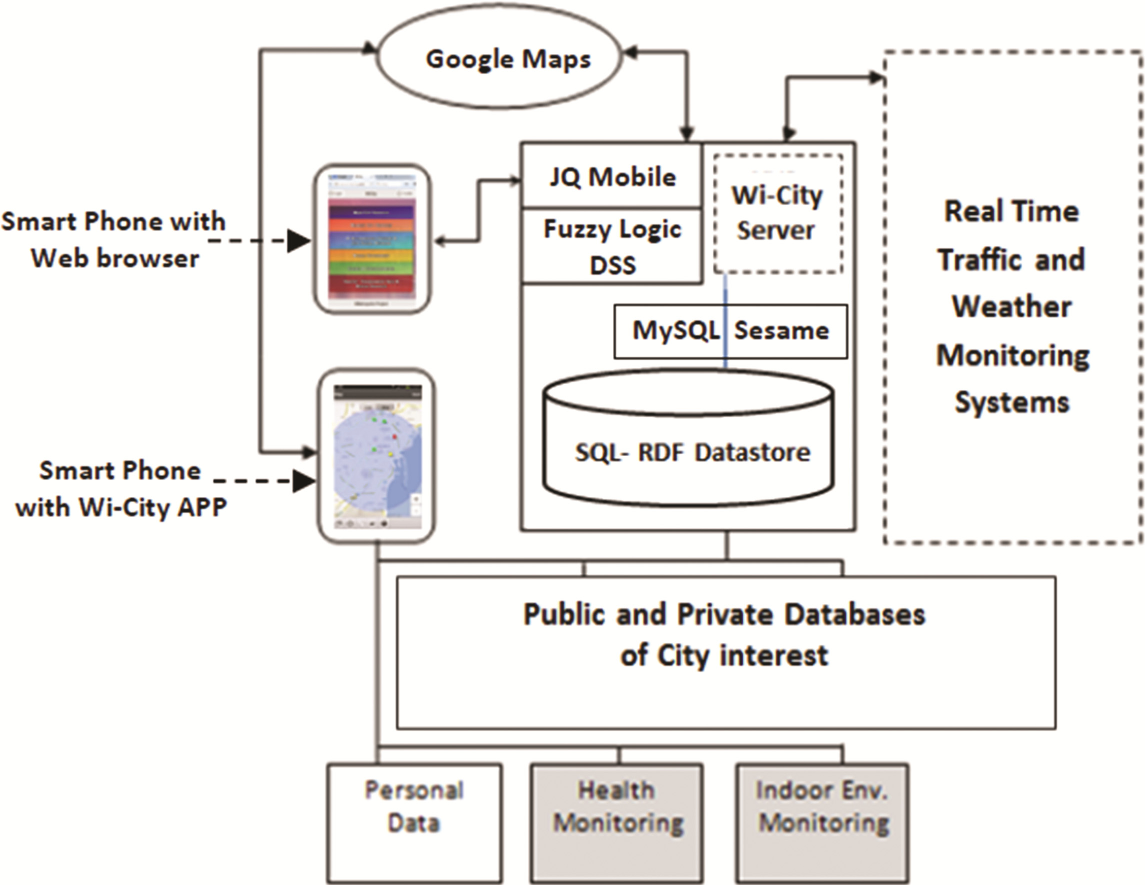 Figure 1: The Wi-City platform architecture, bridging central servers and mobile DSS.
2. Multi-Criteria Customer Satisfaction (Fuzzy TOPSIS)
To handle complex preferences, the authors adapt the TOPSIS method. It identifies the "Ideal Solution" (maximum satisfaction across all criteria) and recommends the option with the shortest geometric distance to the positive ideal and the furthest from the negative one.
Crucially, they introduce a Market Segmentation layer. The system calculates the evidence of "Very High Satisfaction" () specifically for the user's age group, ensuring the "collective intelligence" is relevant to the individual.
Experiments & Results
The paper showcases a practical implementation where users searching for a parking garage or pharmacy receive filtered results.
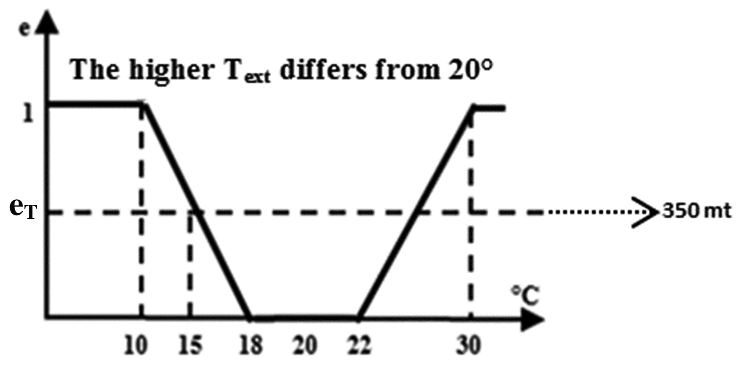 Figure 2: Fuzzy membership functions for age-based distance calculations.
In a test scenario for a parking garage, the DSS weighed "Price" and "Safety" using linguistic ratings (Poor, Medium, Good). By applying a defuzzification formula, the system calculates a score . In the provided example, a garage with high safety () and moderate price results in a score of , triggering a recommendation.
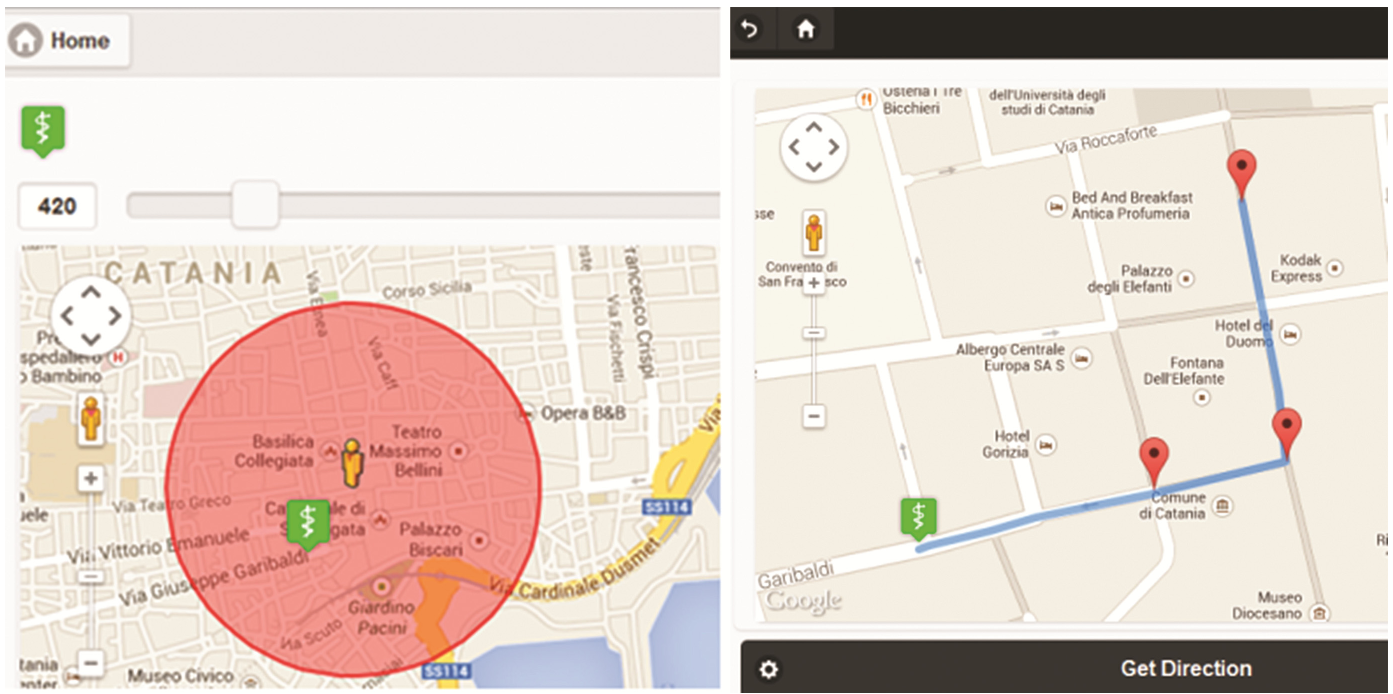 Figure 3: Mobile UI displaying recommended pharmacies and navigation paths based on fuzzy context.
Critical Analysis & Conclusion
Takeaway: Wi-City proves that intelligent cities don't just need more data; they need better ways to interpret that data through a human lens. Using Fuzzy Logic allows for "limited computational effort," making it ideal for mobile deployments where battery and latency are critical.
Limitations: While the fuzzy approach is elegant, the paper acknowledges that it currently assumes criteria are independent. In reality, qualities like "Price" and "Quality" are often correlated. Future iterations using Smart City Ontologies and the Choquet Integral might better handle these interdependencies.
Looking Ahead: As urban areas become more saturated with IoT sensors, the Wi-City framework provides a scalable way to turn "Big Data" into "Smart Decisions" that truly prioritize customer satisfaction.