
UDSP+: Bridging the Gap Between Skin Conductance and Subjective Stress in UX Evaluation
UDSP+: stress detection based on user-reported emotional ratings and wearable skin conductance sensor
The paper introduces UDSP+, a novel stress detection methodology for User Experience (UX) evaluation that fuses wearable Skin Conductance (SC) sensor data with user-reported emotional ratings. By refining training datasets through the intersection of Skin Conductance Responses (SCRs) and self-defined stress periods, the authors achieved a 2-class (stress vs. non-stress) classification accuracy of 86.4% using Support Vector Machines.
TL;DR
Researchers have developed UDSP+, a stress-detection framework that combines wearable skin conductance (SC) data with retrospective user feedback. By focusing on physiological "spikes" that occur specifically during user-identified stressful moments, the system achieves an impressive 86.4% accuracy in distinguishing stress from calm, providing a more reliable way to identify usability friction points.
Context: Why Physiological Tracking in UX Often Fails
In the world of Human-Computer Interaction (HCI), identifying exactly when a user feels frustrated is the "Holy Grail" of usability testing. While questionnaires are standard, they suffer from memory recall limitations. Conversely, physiological signals like Skin Conductance (SC) are objective but "noisy"—not every spike in sweat levels means a user is stressed; it could simply be a physical movement or a momentary distraction.
Previous models (the "UDSP" baseline) tried to use entire blocks of user-reported time as training data. However, because these blocks are often long and inconsistent, the models struggled with low accuracy (approx. 61%).
The Insight: The Power of Intersection (UDSP+)
The authors hypothesized that stress is best captured at the intersection of biology and cognition.
The UDSP+ methodology works by:
- Recording SC via a NeXus-10 wearable during a task.
- Conducting a Retrospective Think Aloud (RTA) session where users mark stressful periods on an Affect Grid.
- The Filter: Only training the model on Skin Conductance Responses (SCRs) that fall within those user-defined periods.
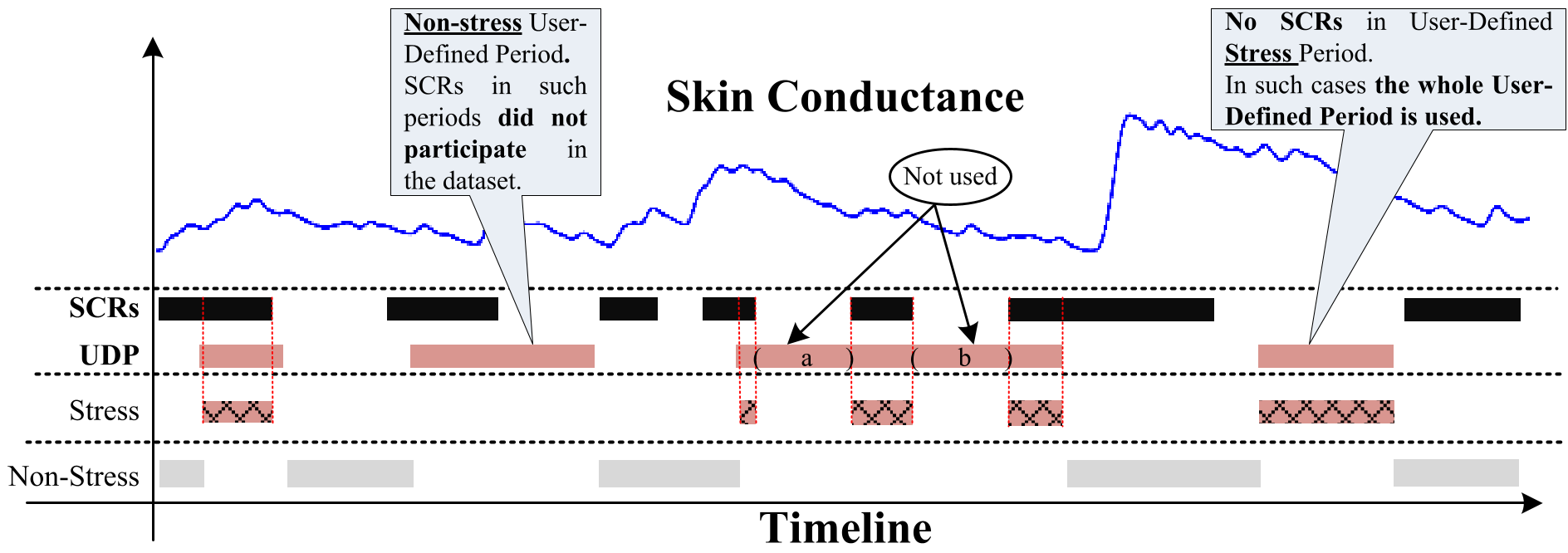 Figure 1: Visual representation of how UDSP+ selects signal segments (SCR ∩ UDP) to create a high-quality training dataset.
Methodology and Feature Engineering
The study involved 24 participants performing complex tasks on a mapping application. The researchers extracted 21 statistical features from the SC segments, including mean, standard deviation, and peak characteristics.
The beauty of this approach is that it uses the Affect Grid tool (a 9x9 matrix for Valence and Arousal) to validate the "stress" label, ensuring that the machine learning model is learning "perceived stress" rather than just "physiological arousal."
Experimental Results: A Significant Leap
The results confirm that the "refined" dataset provided by UDSP+ yields much better predictive power than using raw user-defined periods alone.
| Classifier | Overall Accuracy (%) | Sensitivity (Stress) |
|---|---|---|
| Linear SVM (L-SVM) | 86.4% | 85.9% |
| Cubic SVM (C-SVM) | 85.6% | 84.5% |
| Simple Tree (S-Tree) | 85.2% | 87.3% |
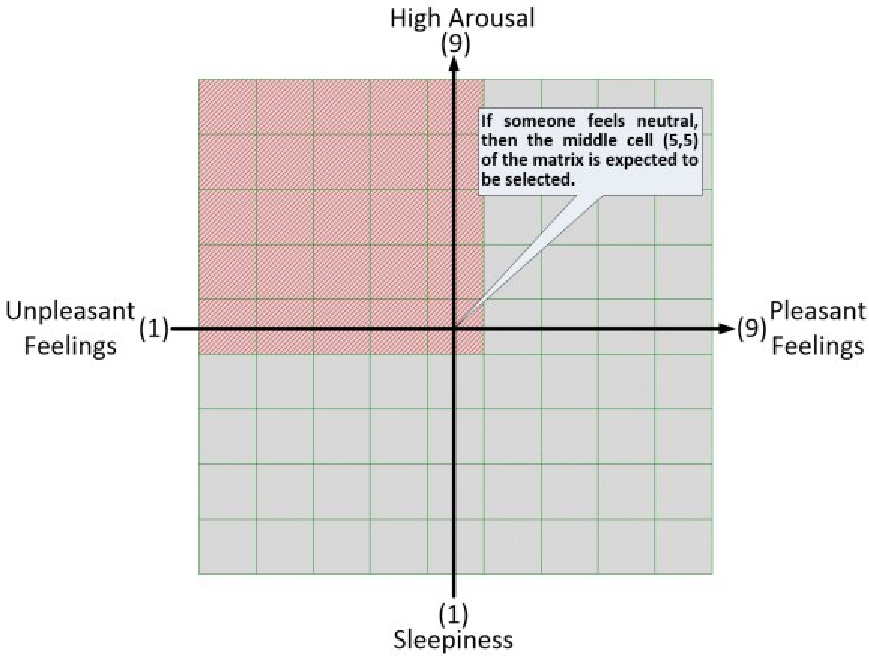 Figure 2: The Affect Grid used for ground-truth labeling. The high-arousal/low-valence quadrant (top left) is the "Stress Zone."
Critical Analysis & Future Outlook
While the 86.4% accuracy is a major milestone for "real-world" application testing (as opposed to laboratory stimuli), the study has limitations:
- Context Sensitivity: Stress varies wildly between a mapping app and, for example, a high-stakes medical interface.
- Single Modality: The authors acknowledge that adding Blood Volume Pressure (BVP) or Respiration data could further harden the model against noise.
The Takeaway: UDSP+ proves that subjective user experience labeling is not "soft data." When used as a temporal filter for high-frequency physiological sensors, it enables the creation of highly accurate, personalized stress detection models that can revolutionize how we evaluate software usability.
Conclusion
This paper serves as a blueprint for blending the "human" in the loop with the "sensor" on the wrist. By acknowledging that users are the best judges of their own internal states, and using that judgment to clean biological data, we move one step closer to empathetic systems that can detect and mitigate user frustration in real-time.